Quick Summary
Here’s what nobody tells you about infant hydration: when to introduce water to infants is a question that confuses many new parents, but the answer is clear — water isn’t appropriate before 6 months and offering it too early can actually be dangerous.
Before that milestone, breast milk and formula are doing all the hydration work, and they’re doing it perfectly. They’re 80% water already, balanced precisely for your newborn’s immature kidneys. When to introduce water to infants has a clear, research-backed answer: around 6 months, when solids begin. But getting the timing and amounts right matters for safety.
This guide covers what you actually need to know — why waiting matters, how much is safe once you start, and which cups work best — so you can introduce water confidently without the second-guessing.
Why Babies Don’t Need Water Before 6 Months
I know it feels counterintuitive. It’s hot outside, your baby seems fussy, and offering a little sip of water feels like the caring thing to do.
But here’s what I know: before 6 months, breast milk and formula are already doing everything water does — and then some. They’re not just food. They’re complete hydration, perfectly balanced for where your baby is right now.
Breast milk is roughly 80% water. Formula is mixed with water. Your baby’s fluid needs are fully met, every single feed.
The danger with water this early isn’t about germs or cleanliness. It’s about volume. A newborn’s kidneys are tiny and still maturing. They can’t handle the extra fluid load. Too much water dilutes their sodium levels and can cause something called water intoxication — which sounds extreme, but it can happen even with small amounts.
The AAP recommends that babies be fed breast milk or formula exclusively for the first 6 months of life, with no water, juice, or other liquids needed during that time.
There’s also a feeding problem hiding in there. If a baby fills up on water, they feed less. Less feeding means less milk production if you’re breastfeeding — and less of the calories and nutrients your baby actually needs to grow.
If your baby seems thirsty or unsettled, the answer is almost always another feed. That’s not a sign something is wrong. That’s just how it works at this age. If you’re noticing patterns that feel off — like unusual fussiness after feeds — it might be worth reading about baby spitting up to see if something else is going on.
The question of when to introduce water to infants has a clear answer: around 6 months, when solids begin. Not before.
When to Introduce Water to Infants: The 6-Month Milestone
Six months feels like such a specific number. And honestly, it is — but there’s a real reason for it, and it’s worth understanding.
Before 6 months, your baby’s kidneys aren’t mature enough to handle water properly. Even small amounts can dilute the sodium in their blood, which can cause something called water intoxication. It sounds dramatic, but it’s a genuine risk with a genuinely simple fix: just wait.
The AAP recommends that babies under 6 months receive only breast milk or formula — no water, no juice, no anything else. Their hydration needs are fully met by milk alone.
Then around 6 months, everything shifts at once. Solids begin. The gut starts handling new textures and flavours. And small sips of water — offered alongside food, not instead of milk — start making sense developmentally.
Here’s what I mean by developmentally ready: at 6 months, most babies can hold their head steady, show interest in what you’re eating, and start to manage a sippy cup or open cup with help. These aren’t just cute party tricks. They’re signs the body is ready for something new.
If you’re just starting solids around this time, it’s worth reading about blw finger foods — because water and food really do go hand in hand at this stage.
Small amounts is the key phrase here. We’re talking a few sips at mealtimes — not a full cup, not throughout the day. Milk is still the main event at 6 months. Water is just the supporting act.
Don’t stress about getting it perfect from day one. You’re learning this at the same pace your baby is.
How Much Water Can Your Baby Safely Drink?
Here’s the thing nobody really warns you about: giving a baby too much water is actually a real risk. It can dilute the nutrients in breast milk or formula, and in very young babies, it can cause something called water intoxication.
So the numbers matter here. Let me break it down by age.
Under 6 months: none. Zero. Breast milk and formula have all the hydration your baby needs. Full stop.

6–12 months: The AAP recommends no more than 2–4 ounces (about half a cup) of water per day once solids begin. That’s it. Milk — breast or formula — is still doing the heavy lifting nutritionally, and water shouldn’t crowd that out.
Around this stage a straw cup is worth introducing. It’s less about the amount and more about getting them comfortable with the concept.
12–24 months: transitions toward whole milk Around 8 ounces a day is a reasonable range — more if it’s hot, or if they’re running around and sweating.
2 years and up: Most toddlers can handle around 2–4 cups of water daily. You’ll know your kid — if they’re playing hard, they need more. If you’re curious about what else is developing at this age, 2 year old milestones gives a good picture of the full picture.
One thing worth watching at any stage: pale yellow pee means good hydration. Dark yellow or infrequent wet diapers? Offer a little more water, and check in with your pediatrician if it continues.
These aren’t hard rules — they’re guardrails. Your baby will guide you more than any chart will.

Safe Ways to Introduce Water: Cup Options and Technique
Here’s something nobody really prepares you for: handing your baby a cup of water for the first time is genuinely awkward for both of you.
They don’t know what to do with it. You don’t know if you’re doing it right. That’s completely normal.
The good news is there’s no single “correct” cup — it’s more about what works for your baby at each stage.
An open cup is actually the gold standard for learning to drink. It sounds terrifying, and yes, there will be spills. But it teaches real swallowing mechanics and jaw development in a way other cups don’t. Start with just a few sips, hold it with them, and go slow.
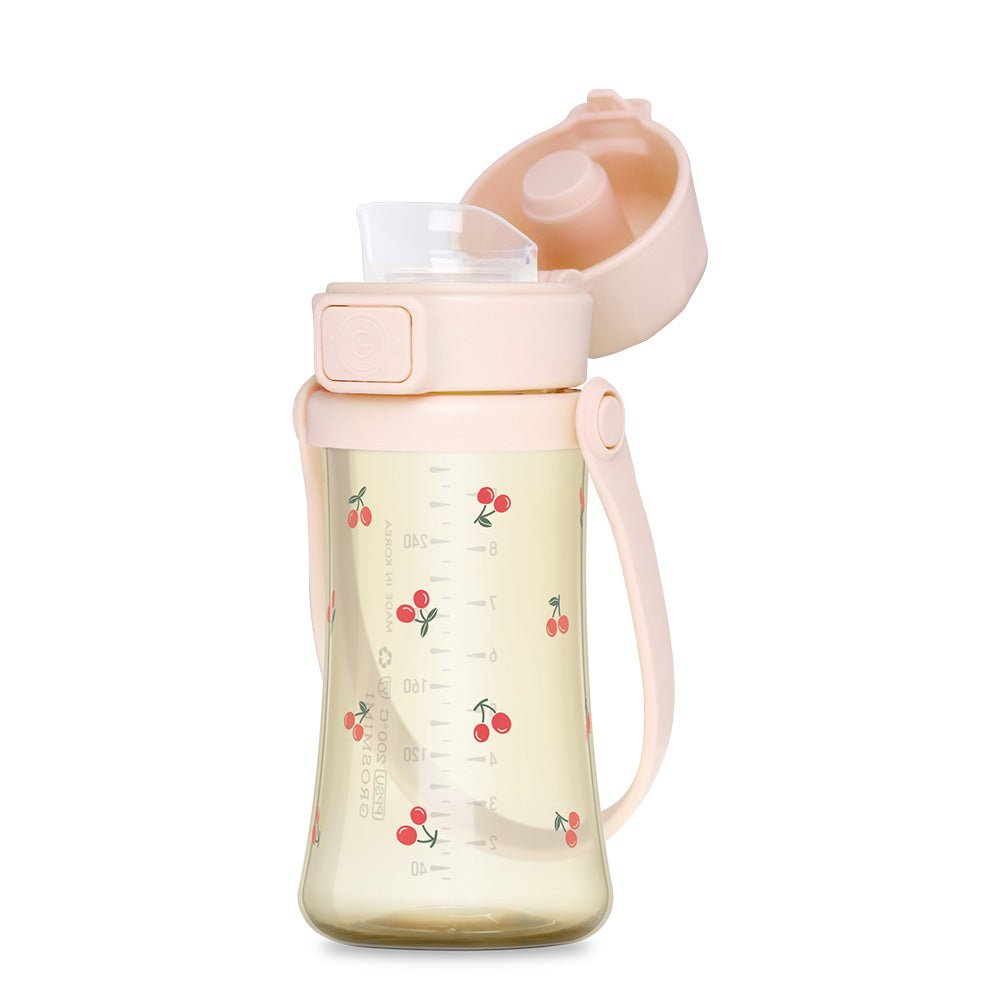
Straw cups are a great middle ground. They build the lip and tongue strength babies need, and most kids take to them pretty naturally around 9–12 months. The Grosmimi straw cups available at Onzenna are designed with little mouths in mind — the flow is gentle enough for early sippers and the construction holds up to the daily drop-and-retrieve cycle that comes with this stage.
Sippy cups are fine for short-term use, but the hard spout can actually work against the oral development you’re trying to support. Use them when you need convenience, just don’t make them the only option.
As for when to offer water — meals are your best entry point. It feels natural, it’s low pressure, and it ties the habit to something familiar.
One thing worth knowing: gagging during early cup drinking is common and usually not dangerous, but it can be scary. If you’re ever unsure about the difference, baby choking vs gagging is worth a read before you start.
Keep the amounts small. Keep the pressure low. They’ll figure it out.
Signs Your Baby Is Ready for Water
Here’s the thing nobody tells you — knowing when to introduce water to infants isn’t really about picking a date on the calendar. It’s about watching your baby and trusting what you see.
The clearest sign is sitting up with support. If your baby can hold their head steady and stay upright, they’re in a much better position to swallow safely. Before that point, it’s genuinely not worth rushing.
Watch for the loss of the tongue-thrust reflex too. That’s the instinct that makes babies push everything out of their mouths — it’s protective in the early weeks. When it starts to fade, usually around four to six months, swallowing something other than milk becomes a lot more coordinated.
Interest in what you’re eating and drinking is a big one. If your baby is eyeing your glass, reaching toward the table, or opening their mouth when they see you eat, that’s their way of saying they’re curious about the wider world of food and drink.
You might also notice this aligns with other developmental leaps happening around the same time — things like baby growth spurt signs, increased alertness, and more intentional reaching and grabbing.
What you’re not looking for is a specific age in isolation. Six months is the general guide, yes. But a baby who hits six months and still has a strong tongue-thrust reflex and wobbly head control isn’t ready, and that’s okay.
Your baby will tell you. You just have to know what to look for.

Common Water Introduction Mistakes to Avoid
Here’s the thing nobody warns you about: water seems so harmless. It’s just water. But for a young baby, it genuinely isn’t.
The biggest risk is water intoxication. Babies have tiny kidneys that can’t process large amounts of fluid. Even a few ounces of water can dilute the sodium in their blood to dangerous levels — causing seizures, swelling, and in serious cases, worse.
The AAP recommends that babies under six months receive no water at all, because breast milk and formula already provide everything they need for hydration.
Over-hydration is the other side of that same coin. If your baby is filling up on water, they’re not filling up on milk. And milk is where all the calories, fat, and nutrients actually live. Water has none of that.
So if water is replacing feeds — even accidentally — your baby’s growth can take a hit. Watch for fewer wet diapers, slower weight gain, or a baby who seems satisfied but isn’t nursing or taking a bottle as much. Those are flags worth bringing to your pediatrician.
Contamination is also real, and it gets overlooked. Tap water safety varies depending on where you live. If you’re unsure about your local water supply, filtered or cooled boiled water is worth the extra step — especially in those early months of solid introduction when to introduce water to infants often comes up as a question for the first time.
And if you’ve recently introduced solids and noticed changes in your baby’s digestion, that’s completely normal. You can read more about what’s typical in our guide to baby constipation — it’s one of the most common things that shifts when food enters the picture.
The short version: less is more, later is safer, and milk stays the main event.
Water Quality and Safety for Babies
Here’s something nobody really warns you about: even when your baby is ready for water, the water itself matters. Not all water is created equal, and with a baby this small, that’s worth paying attention to.
In most places, tap water is safe for infant use — but safe doesn’t always mean ideal. If your home has older plumbing, there’s a real chance of lead leaching into the water, and that’s not something you want your baby drinking.
Boiling tap water and letting it cool is the standard move for the first several months. It kills bacteria and gives you a bit more peace of mind, especially if you’re not sure about your local water source.
A good home water filter can also help — just make sure it’s certified to remove lead and bacteria, not just improve taste. If you’re filtering water for a baby daily, a pitcher specifically certified for lead and bacteria removal is worth the investment.
As for bottled water — it’s not automatically better. Some varieties are high in sodium or minerals that aren’t appropriate for babies. If you do use it, look for low-sodium still water, and check the label.
The AAP recommends that babies under six months get no water at all — breast milk and formula provide everything they need, including hydration. Giving water too early can actually interfere with nutrient absorption and even cause a dangerous condition called water intoxication.
The question of baby teeth order comes up around the same age water often enters the picture — and fluoride levels in your water become relevant then too. Worth a conversation with your pediatrician once teeth start arriving.
Bottom line: when water does come into the picture, a little prep goes a long way.
Sources
- American Academy of Pediatrics (AAP) — Guidance on introducing solids and water at 6 months.
- CDC — Breastfeeding and infant hydration recommendations.
Frequently Asked Questions
Can I give my baby water before 6 months?
No. Before 6 months, babies’ kidneys are too immature to process water safely, and even small amounts can dilute sodium levels and cause water intoxication. Breast milk and formula provide complete hydration — no water is needed.
How much water should a 6-month-old drink per day?
At 6 months, offer only small sips of water during meals — roughly 1-2 ounces per day as solids are introduced. Water should never replace milk feeds, which remain the primary nutrition source.
What type of cup should I use to introduce water to my baby?
Start with an open cup with your help, a soft-spout sippy cup, or a straw cup around 6 months. Open cups teach the most natural drinking motion, though sippy cups with handles are easier for babies learning coordination.
Is tap water safe for babies or should I use bottled water?
Tap water is generally safe if your local water supply is tested and regulated. For extra safety, you can boil tap water and let it cool, or use bottled water if you’re unsure about your water quality. Avoid mineral-heavy bottled water.
What is water intoxication in babies and how do I prevent it?
Water intoxication happens when a baby drinks too much water relative to their body weight, diluting blood sodium to dangerous levels. Prevent it by never offering water before 6 months, keeping water amounts tiny after 6 months, and never replacing milk feeds with water.
 Grosmimi
 PPSU Straw Cup - 6oz (6 Months+)
$22.80
Grosmimi
Grosmimi PPSU Straw Cup - 6oz (6 Months+)
$22.80
 Grosmimi
 PPSU Straw Cup with Flip Top - 6oz (12 Months+)
$25.90
Grosmimi
Grosmimi PPSU Straw Cup with Flip Top - 6oz (12 Months+)
$25.90
 Grosmimi
 PPSU Kids Tumbler - 10oz (18 Months+)
$34.80
Grosmimi
Grosmimi PPSU Kids Tumbler - 10oz (18 Months+)
$34.80
 Grosmimi
 Stainless Steel Kids Tumbler - 10oz (18 Months+)
$49.80
Grosmimi
Grosmimi Stainless Steel Kids Tumbler - 10oz (18 Months+)
$49.80
 Grosmimi
 PPSU Straw Cup - 10oz (6 Months+)
$24.90
Grosmimi
Grosmimi PPSU Straw Cup - 10oz (6 Months+)
$24.90
 Grosmimi
 Stainless Steel Straw Cup with Flip Top - 6oz (12 Months+)
$38.90
Grosmimi
Grosmimi Stainless Steel Straw Cup with Flip Top - 6oz (12 Months+)
$38.90