

Buying Guides
Best Portable High Chair for Travel: Reviews & Buying Guide for On-the-Go Feeding
Soyeon Park·11 min read

Build a smart newborn shopping list without overspending. Learn what you actually need, what you can skip, and how to budget wisely for feeding, sleep, and gear.
Here’s what nobody tells you about a newborn shopping list: most of what’s marketed as “must-have” is actually marketing. The things your baby genuinely needs — feeding gear, safe sleep setup, diapers, and a few quality basics — fit into a much smaller budget than the industry wants you to believe. Most families end up at midnight, cart full, having added things because the description said “essential.” This guide exists to fix that.
Below is a breakdown of what actually belongs on your newborn shopping list, what you can safely skip, and how to build a realistic registry before birth without the guilt or the clutter.
Feeding gear is where most people overbuy. You don’t need every bottle brand on the market — you need a small, reliable set and the flexibility to adjust once your baby arrives.
Start with four to six bottles. If you’re planning to breastfeed, hold off on stocking up until you know whether bottle supplementing will even be part of your routine.
For bottle-feeding setups, look for bottles with slow-flow nipples and anti-colic design. Your baby’s latch, flow preference, and gas situation will tell you more than any Amazon review — learning the right bottle feeding positions early on makes a real difference too.
A sterilizer is worth having. Electric steam sterilizers are fast and genuinely useful in the early weeks when you’re doing everything on no sleep. Microwave bags are a cheaper backup that actually work.
You’ll also want a bottle brush, a drying rack, and a formula dispenser if formula is part of your plan — the kind that pre-measures portions so 3am doesn’t require actual math.
If you’re breastfeeding, a pump is non-negotiable. Check your insurance first — many cover it. Add nursing pads, lanolin cream, and at least two nursing bras to your list before you hit the hospital.
If you want something well-designed for the transition between breast and bottle, Grosmimi is worth looking at — the nipple shape tends to work for babies who get particular about that kind of thing.
For the broader picture of what’s genuinely useful versus what’s just taking up shelf space, the newborn essentials checklist breaks it down without the fluff.
Here’s the thing about newborn clothes: babies grow out of them before you’ve finished doing the first load of laundry.
Skip “newborn” sizing almost entirely. A lot of babies arrive too big for it, and those who don’t outgrow it within weeks. Start with 0–3 months and buy a handful of 3–6 month pieces too — you’ll use them sooner than you think.
For fabric, 100% cotton or cotton-blend is your baseline. It breathes, it washes well, and it doesn’t irritate sensitive skin the way synthetic fabrics can.
A realistic capsule wardrobe looks like this: 5–7 onesies, 3–4 sleepers with zip closures (snaps at 3am are a special kind of misery), 2–3 pairs of pants, and a couple of lightweight layers for warmth. That’s it.
The layering rule is simple — dress your baby in one more layer than you’re comfortable in. A onesie plus a sleeper usually covers it indoors. Add a zip-up swaddle or light cotton cardigan for outings.
Avoid anything with drawstrings, hood toggles, or decorative buttons near the face. Cute is fine. Practical and cute is better.
You don’t need ten outfits for every size. You need enough to get through a day of blowouts with a buffer. For a fuller look at what actually earns a spot on your prep list, newborn care tips covers the practical side without the overwhelm.
Buy less than you think you need. Accept hand-me-downs. Wash before wearing. Done.

Where your baby sleeps matters more than how it looks on the Instagram grid. The AAP is clear: firm, flat surface, on their back, in their own space. That’s the framework everything else builds on.
Bassinet or crib — both work. A bassinet is easier in the early weeks because it lives next to your bed and you’re not walking across a dark room at 2 a.m. A crib works from day one too, especially if you’re short on space and don’t want to buy both.
Side-sleeper attachments that hook onto your bed frame look convenient. Most aren’t certified safe sleep surfaces. Check for CPSC compliance before you consider one.
Bedding rules are simple and non-negotiable. No pillows, no bumpers, no positioners, no stuffed animals, no loose blankets. A fitted sheet on a firm mattress. That’s it. Everything else is a suffocation risk, regardless of how it’s marketed.
Swaddles are fine — until your baby can roll, then they’re not. Sleep sacks replace them. sleep sacks with inverted zippers
Room temperature around 68–72°F reduces SIDS risk. A fan improves air circulation and also helps. A white noise machine isn’t mandatory, but it works — and if you’re building any kind of newborn sleep routine, consistent sound cues are one of the few things that actually stick early.
When you’re putting together your newborn shopping list, sleep setup is one category where less is genuinely safer. A firm mattress, fitted sheet, and sleep sack cover it. The rest is noise.
Newborn skin is not just sensitive — it’s a completely different organ than adult skin. It absorbs more, reacts faster, and has almost no tolerance for fragrance, dyes, or harsh surfactants.
For diapers, you need enough to cover the first few weeks without overstocking a size your baby will blow through in days. Most newborns go through 8–12 diapers a day in the beginning. Buy one small pack in newborn size, then move to size 1 — that’s where you stock up.
Diaper rash prevention starts before there’s a rash. A simple zinc oxide cream applied at each change creates a barrier between skin and moisture. You don’t need a shelf of specialty products — you need consistency.
For bath time, a gentle, fragrance-free cleanser is the whole list. Newborns don’t need daily baths, and they definitely don’t need separate shampoo, body wash, and lotion with twelve ingredients each. One clean formula for hair and body is enough.
The ingredient rules to follow: no fragrance (even “natural”), no parabens, no sulfates. If you wouldn’t put it near your own eyes, it doesn’t belong near a newborn’s scalp.
Moisturizer matters more than most people expect. Newborns often peel after birth — that’s normal. A fragrance-free emollient applied after the bath helps support the skin barrier while it adjusts to life outside the womb.
The Cha&Mom body wash at Onzenna is formulated specifically for this — no fragrance, no unnecessary additives, just the basics done cleanly. It’s the kind of thing you want already on the shelf before you need it.
One thing to skip entirely: baby powder. It’s not recommended, and it’s not necessary. If you’re also thinking through the broader newborn setup, the baby registry must haves guide cuts through the marketing noise in the same way.
This category is where budgets blow up fast. Car seat, stroller, carrier — each one has a $150 version and a $900 version, and the marketing will work hard to convince you the price difference is about safety.
It’s not. Safety standards are regulated. A budget car seat that meets federal standards protects your baby the same way an expensive one does. What you’re paying for at the top end is usually convenience features, aesthetics, and brand.
The car seat is non-negotiable — you need one before you leave the hospital. Everything else can wait until you know how you actually live.

Strollers are the biggest wildcard. Some families use one daily. Others realize they prefer a carrier and the stroller collects dust. Don’t buy a $700 stroller before you know which parent you are.
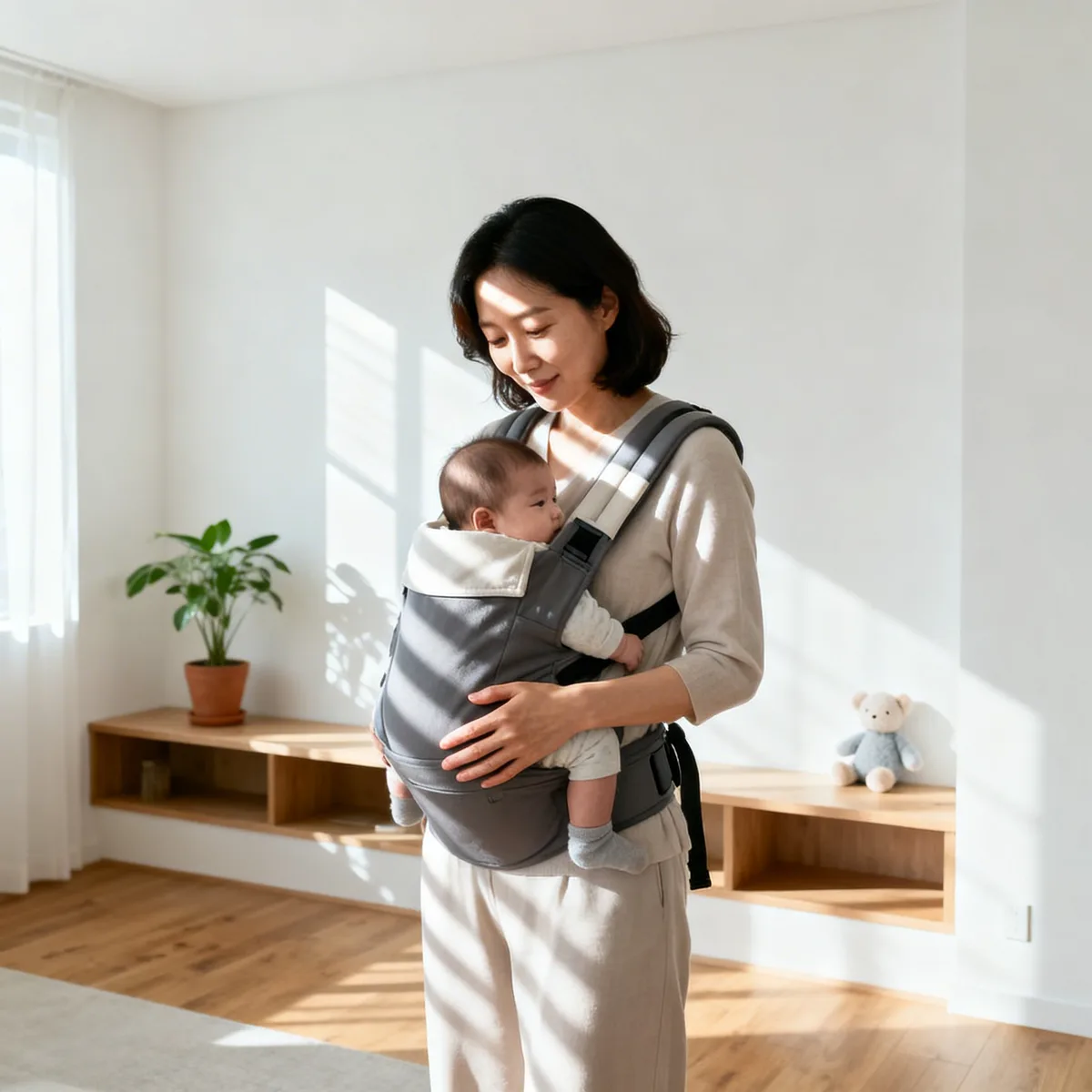
A soft structured carrier or ring sling is genuinely useful in the early weeks — hands-free, baby is settled, you can move. If you plan to spend time outside with your newborn, outdoor activities for babies breaks down what actually makes sense at each stage, which helps you decide what gear is worth having early versus later.
The other on-the-go stuff — diaper bag, changing pad, portable sound machine — buy the basics. A well-organized bag matters more than a designer one.
When you’re building out your newborn shopping list, travel gear is the easiest place to overspend on things you won’t use. Borrow where you can. Buy secondhand when it’s safe to do so (car seats are the exception — always buy new or verify the history).
Start with what you need for the first month. Add from there based on reality, not a registry checklist.
The wipe warmer. The diaper pail with the proprietary refills. The six-piece bath set for a baby who gets sponge baths for the first two weeks. These things end up in the back of a closet before your baby is two months old.
Newborns don’t need much. They need to be fed, held, kept clean, and kept warm. Most of the gear marketed at you exists to solve problems you don’t have yet — or problems that never materialize.
The swing is a classic example. Some babies love it. Some don’t care. You won’t know which camp yours falls into until they’re here. Borrow one first if you can.
Same goes for the bassinet with seventeen settings, the bottle sterilizer that does what your dishwasher already does, and the baby monitor with a subscription fee. Start cheaper. Upgrade if you actually need to.
What’s worth the spend: a good carrier, quality swaddles, and a white noise machine that doesn’t require your phone. These things get used every single day.
If you’re breastfeeding, a well-fitted nursing bra and a reliable pump matter more than any novelty feeding gadget. And if you run into digestive issues down the line, knowing what’s actually worth trying for baby gas relief will save you from buying half the pharmacy shelf on impulse.
The real move: build a short list of essentials, leave room in your budget, and buy reactive. You’ll spend less money and end up with less stuff you resent.
Most families can set up essentials for $1,500–$2,500, depending on whether you’re buying secondhand gear and what feeding method you choose. The biggest expenses are usually the crib, car seat, and stroller — not decorative items or duplicate gear.
Newborn sizing is much tighter and shorter. Many babies arrive too large for true newborn clothes, and those who fit typically outgrow them within 2–3 weeks. Starting with 0–3 months and having a few 3–6 month pieces on hand means less waste and more flexibility.
Boiling water works and costs nothing, but an electric steam sterilizer saves time and mental load in those hazy early weeks. Microwave sterilizer bags are a solid middle ground — affordable, effective, and take up minimal space.
Size 1 is the safer bet for most babies. Newborn diapers fit roughly 5–8 pounds, and many babies are already above that at birth or hit that weight within the first week. You can always size up; you can’t size down if the fit is wrong.
Look for bottles with slow-flow nipples, anti-colic venting, and materials that are BPA-free and free of other concerning chemicals. The “safest” bottle is ultimately the one your baby will latch onto and tolerate — some babies are picky about nipple shape and flow, so starting with four to six bottles from one brand lets you test before overbuying.