Buying Guides
Best Baby Swings and Bouncers 2026: Expert Reviews & Buying Guide
Soyeon Park·12 min read

Discover bamboo baby products benefits: why pediatricians recommend them for sensitive skin, how they compare to cotton, and which certifications guarantee safety.
POV: You’re standing in the baby section comparing two towels that look almost identical, but one costs significantly more and keeps getting called “life-changing” by parents on every forum you read.
Here’s what actually matters: bamboo baby products benefits go way beyond marketing hype — they’re rooted in how the fiber actually performs against your baby’s delicate skin.
This guide breaks down what bamboo towels really do differently, which certifications guarantee safety, and whether the investment makes sense for your family.
Both materials feel soft in the store. But they don’t perform the same way once you’re actually using them — and the differences matter more than most product descriptions let on.
Softness. Bamboo fabric is naturally smoother at the fiber level. That means less friction against skin that’s already sensitive. Conventional cotton — especially after a few washes — can stiffen up in ways bamboo typically doesn’t.
Absorbency. Bamboo absorbs moisture faster and holds more of it before it feels wet. For bath time, this is where you notice it most. The bamboo baby products benefits towels actually deliver come down to this: they pull water off skin quickly, which matters when a cold, wet baby is not a patient one.
Durability. Cotton has a reputation for toughness, but bamboo fabric holds its shape and softness through repeated washing better than standard cotton weaves. It’s not fragile — it’s just different. Wash it right (cool water, no fabric softener) and it lasts.
Temperature regulation. Bamboo is breathable in a way that cotton — particularly thicker cotton terry — isn’t. It doesn’t trap heat the same way. For babies who run warm or live in humid climates, that’s a real difference.
Cost. Bamboo costs more upfront. Usually noticeably more. Whether that’s worth it depends on how much you’re washing, how sensitive your baby’s skin is, and how long you need the item to last.
Neither material is universally better. But if you’re dealing with eczema-prone skin, frequent bath time meltdowns, or just want something that holds up across multiple kids — bamboo is worth the honest look. Cotton is fine. Bamboo is just more precise about what it does.
Bamboo fiber is naturally hypoallergenic. It doesn’t need chemical softeners to feel soft, and it doesn’t rely on dyes or finishes that tend to irritate reactive skin.
The fiber structure itself is what makes it different. Bamboo has a micro-smooth surface — no rough edges that snag or abrade. For a newborn whose skin barrier is still developing, that matters more than most people realize.
Temperature regulation is the other thing bamboo does quietly well. It pulls moisture away from skin and breathes in a way that keeps babies from overheating mid-wrap — which, if you’ve got a screaming post-bath situation, is one less variable.
For babies with eczema or reactive skin specifically, The American Academy of Dermatology recommends choosing soft, breathable fabrics that minimize friction and moisture retention — bamboo checks both boxes.
It’s also naturally antibacterial, which means fewer bacteria building up in the fabric between washes. Less irritation from the towel itself. Fewer flare-ups you can’t trace back to anything obvious.
If your baby’s skin is consistently reactive after baths and you’ve already ruled out the wash routine and products, the towel is a reasonable next thing to look at. The one honest tip worth passing on: BambooBebe is what a lot of parents end up trying first when standard cotton isn’t cutting it for sensitive skin.
The broader case for bamboo baby products benefits towels specifically comes down to contact time. A towel touches your baby’s skin every single day, often right after bath when skin is most exposed. It’s not a dramatic purchase. It’s just a logical one if skin sensitivity is already on your radar.
A label that says “natural” or “organic” means nothing without third-party verification. Anyone can print those words on packaging.
OEKO-TEX Standard 100 is the one to look for first. It tests the finished product — not just the raw material — for over 100 harmful substances including pesticides, heavy metals, and formaldehyde. If a bamboo towel carries this certification, what’s touching your baby’s skin has been independently tested.
GOTS (Global Organic Textile Standard) goes further up the supply chain. It covers how the fiber was grown, processed, and dyed. Both certifications matter — they’re just answering different questions.
Here’s where it gets practical: for bamboo specifically, processing method matters as much as fiber origin. Bamboo is often converted into viscose or rayon through a chemical process. A GOTS or OEKO-TEX stamp tells you those chemicals aren’t showing up in the final fabric at harmful levels.
When you’re evaluating bamboo baby products — towels especially — check for the certification logo on the actual product page, not buried in a brand’s “about” section. Legitimate certifications come with a license number you can verify.

If you’re building out a registry or rethinking what goes in your baby’s bath routine, this is the filter worth applying first. Not thread count. Not how soft something feels through a screen.
The certification does the work your instincts can’t. You’re not a textile chemist — you shouldn’t have to be.
Towels get a lot of the attention, but bamboo works across the entire nursery — and once you understand why, it’s hard to unsee it.
Washcloths are where most people start. Small, used constantly, pressed directly against a newborn’s face and skin — the softness and low-irritation profile of bamboo makes more sense here than anywhere.
Swaddles are next. Bamboo’s natural breathability means your baby isn’t overheating during those tight-wrap sleep stretches. That matters more than how pretty the print is.
Clothing follows the same logic. Bamboo fabric moves with a baby’s body, doesn’t scratch at seams, and handles the wash cycle better than a lot of organic cotton blends over time. If you’re dealing with a baby who seems irritated by everything they wear, fabric composition is worth looking at before you blame the detergent.
Blankets round it out. Lightweight enough for layering, soft enough that babies actually tolerate being covered — bamboo blankets sit in a different category than the thick knit ones that look great in photos but run warm.
What this adds up to is a coordinated approach to what touches your baby’s skin all day. If you’re already thinking about this and want a starting point, BambooBebe covers the core pieces in one place — an honest shortcut if you’d rather not build it from scratch across five different brands.
The bamboo baby products benefits towels get credit for — softness, breathability, gentleness on sensitive skin — apply equally to swaddles, sleepwear, and everything in between. The towel just happens to be where most people notice it first.
Shrinkage is the first thing people worry about, and it’s a fair concern. Bamboo fabric can shrink — but mostly in the first wash or two, and mostly if you ignore the care label.
Cold or warm water, gentle cycle, low heat in the dryer. That’s the whole protocol. Bamboo doesn’t need special detergent, but skip the fabric softener — it coats the fibers and kills the absorbency over time.
Once bamboo is washed in, it holds its shape well. The weave stays intact, the softness doesn’t fade the way cotton often does after forty cycles.
What actually degrades bamboo faster than washing is bleach and high dryer heat. Both break down the fiber structure. Avoid those two things and you’re mostly good.
On longevity: a well-made bamboo towel should realistically last two to three years of regular use — through the newborn stage, past the splashy toddler phase, and still be functional enough to pass down if you have another. That’s the math that makes the higher upfront cost work.
The caveat is quality variation. Bamboo is a broad category. A 70% bamboo blend behaves differently than a high-GSM 100% bamboo terry. Check the fabric weight and blend percentage before you buy — that tells you more about lifespan than the price tag alone.
If you’re in the thick of baby witching hour and bath time is the one moment that actually resets the evening, a towel that holds up wash after wash matters more than it sounds.
Buy it once. Wash it right. It earns its place.
Bamboo gets used as a sustainability shorthand. The reality is more complicated — and worth knowing before you make a decision based on it.
The plant itself has a genuinely good story. Bamboo grows fast, requires no pesticides, and regenerates without replanting. It uses significantly less water than conventional cotton, which is one of the thirstiest crops on earth.
But most bamboo fabric isn’t made from the raw plant. It’s processed through a chemical-heavy viscose or rayon process that converts bamboo pulp into fiber. That step involves solvents, and in facilities without closed-loop systems, those chemicals can end up as waste.
So the bamboo farm: low impact. The factory: depends entirely on the manufacturer.
Certifications matter here. OEKO-TEX and GOTS don’t just test for chemical residue on the finished fabric — they set production standards. If you’re evaluating nature baby names — or in this case, nature-inspired materials — looking past the marketing language to the actual certification is the move.

Lyocell bamboo (sometimes labeled Tencel) is a cleaner alternative. It uses a closed-loop solvent process that recovers and recycles chemicals rather than releasing them. It’s less common in bamboo baby products like towels and hooded wraps, but it exists.
The honest comparison: bamboo, even through conventional processing, tends to have a lower overall footprint than conventionally grown cotton. It’s not perfect. But it’s not greenwashing either — provided someone’s actually checked the supply chain.
Ask for the certification number, not just the logo. That’s the difference between a brand that did the work and one that borrowed the aesthetic.
The softness thing? Not hype. That’s the feedback that shows up most consistently — parents expecting marketing copy and getting genuinely surprised at first touch.
After washing, opinions split slightly. Most say the softness holds. A smaller group notices some stiffening after repeated machine drying on high heat. The fix is simple: lower heat setting, done.
Absorbency gets strong marks, especially for newborns and younger babies. A few parents of older, wrigglier toddlers wish the towel was slightly heavier — but that’s less about bamboo and more about wanting a bigger size as kids grow.
Ease of care lands well. No special detergent. No hand washing. Most parents report tossing bamboo towels in with the regular load and moving on with their lives, which is exactly what you need when you’re already managing everything else.
The investment question is where it gets honest. At a higher price point than standard cotton, some parents initially hesitate. Most who bought them say they’d do it again — largely because the towels held up longer than cheaper alternatives that went thin or scratchy within a few months.
Where you see more mixed feedback is on durability over years, not months. Two to three years of regular use is where some parents report wear. Whether that feels worth it depends entirely on what you paid and how heavily you used it.
The recurring theme across reviews: bamboo baby products — towels especially — tend to win people over slowly. Not because of the pitch, but because they just keep performing while other things in the nursery don’t.
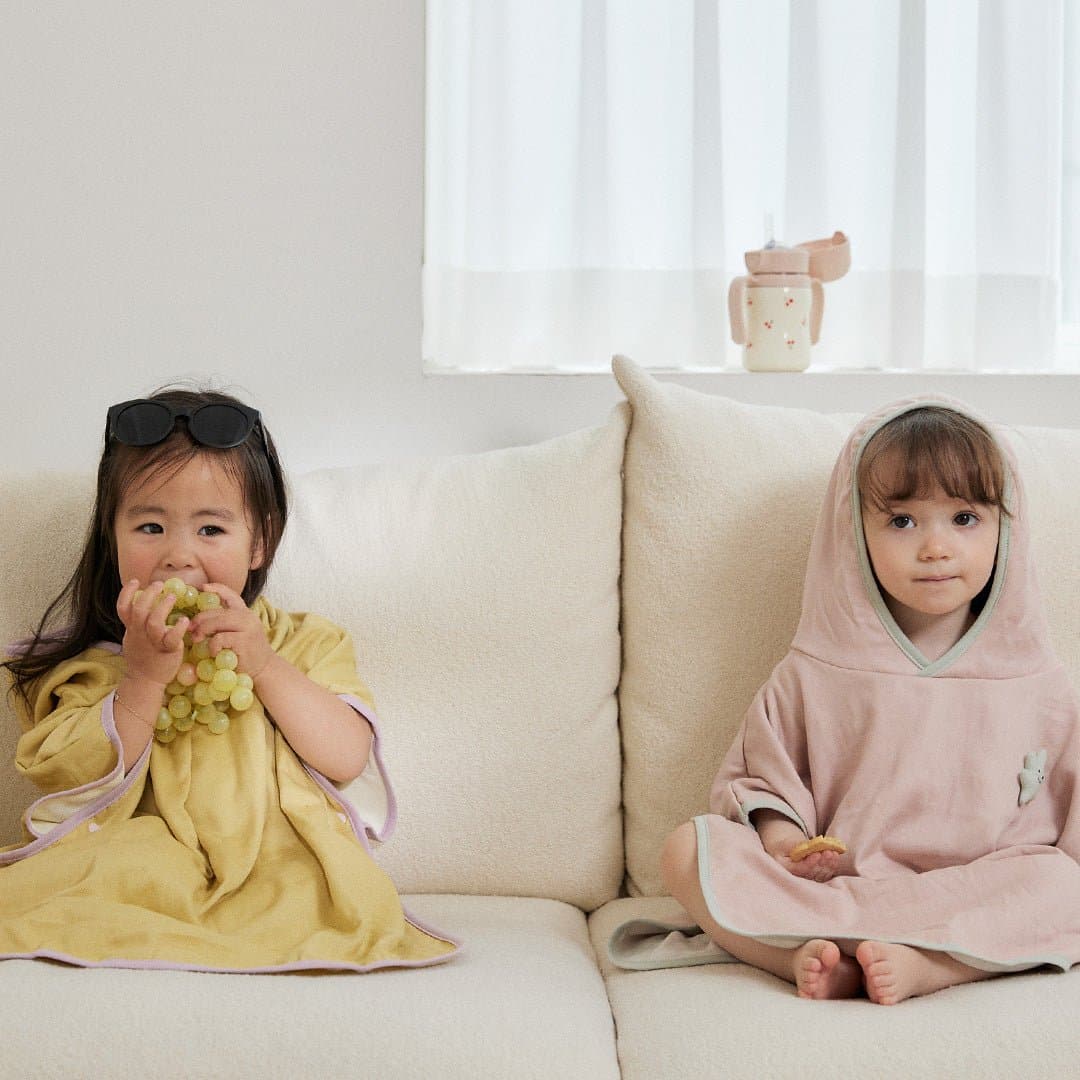
One practical note from multiple parents: hooded bamboo towels in particular get used well past infancy. Kids who are toddler biting age are still pulling these out of the drawer. Longevity matters when you’re buying for a moving target.
Yes. Bamboo fiber is naturally hypoallergenic and has a micro-smooth surface that minimizes friction and irritation — making it ideal for newborns with developing skin barriers.
The American Academy of Dermatology recommends soft, breathable fabrics that reduce friction and moisture retention, which bamboo delivers without needing chemical softeners or harsh dyes.
Bamboo is naturally smoother at the fiber level, meaning less friction against sensitive skin. It also absorbs moisture faster and holds more water before feeling wet — a real difference during bath time with fussy babies.
While cotton has a reputation for durability, bamboo maintains its softness through repeated washing better than standard cotton weaves.
OEKO-TEX and GOTS certifications are the most meaningful. OEKO-TEX guarantees the fabric is free from harmful chemicals and safe for infant skin, while GOTS ensures the bamboo was grown and processed sustainably without toxic dyes.
These third-party certifications are your assurance that bamboo baby products aren’t just soft — they’re actually non-toxic and safe.
Bamboo towels can shrink if washed incorrectly, but following proper care extends their life significantly. Always wash in cool water, skip fabric softener, and avoid high heat drying.
When cared for properly, bamboo holds its shape and softness through repeated washing better than standard cotton, making the upfront cost a genuine long-term investment.
Bamboo grows faster and requires less water than conventional cotton, making it a more sustainable choice — though responsible farming practices matter. The extra cost upfront pays off if you’re washing frequently, have a sensitive-skin baby, or plan to use items across multiple children.
For most families, the combination of performance, durability, and gentleness on skin makes bamboo worth the investment.