


Nursery & Home
What Not to Put on Your Baby Registry: The Honest Gear You Don’t Actually Need
Soyeon Park·10 min read

Cut through the registry chaos. Learn exactly what newborn essentials you actually need, quantities that work, and honest reasons to skip the rest.
Here’s what no one tells you about building a newborn essentials checklist: the parents who stress least are usually the ones who buy less, not more. Most registry lists are quietly padded with things that sound logical until you actually have a baby — and the sheer volume of it makes genuinely useful items harder to identify.
This guide cuts through the Pinterest fantasy and breaks down exactly what your newborn actually needs — from clothing and feeding gear to sleep setup and diaper changing — plus the honest list of what you can skip entirely. We’ll cover quantities, fabric types, safety standards, and why minimalism beats clutter every single time.
Here’s what no one tells you: newborns don’t care about the aesthetic. They care about being warm, comfortable, and not wrestling with twelve snaps at 3am.
For clothing, you need fewer pieces than you think — and almost none of them should be “newborn” size. Most babies outgrow it in two weeks. Go straight to 0-3 months and buy multiples of the same simple things: 6-8 onesies, 4-6 sleepers, a few pairs of socks you’ll lose immediately.
Fabric matters more than style. 100% cotton or a cotton-bamboo blend regulates temperature better and irritates skin less. Newborn skin is adjusting to existing outside a body — it doesn’t need anything scratchy, synthetic, or decorative.
For sleep, the rule is boring on purpose: firm flat surface, fitted sheet, nothing else in the crib. No bumpers, no pillows, no loveys yet. If you want to understand exactly why, SIDS prevention breaks down the evidence clearly — worth reading before the registry gets out of hand.
You need 3-4 fitted crib or bassinet sheets. Blowouts don’t wait for laundry day. Layer two sheets with a waterproof mattress cover between them so a midnight change takes 30 seconds, not a full remake.
Swaddles are functional, not decorative. Three to four muslin ones wash well and work for swaddling, burp cloths, a quick sun shield — whatever the moment requires.
For soft basics that actually hold up through repeated washing, BabyRabbit does cotton-bamboo blends well — the kind of thing that performs exactly as advertised, wash after wash.
The real newborn essentials checklist for clothing is short. Buy less, buy better fabric, and skip anything that requires more than two snaps when you’re running on four hours of sleep.
Feeding a newborn takes up more of your day than almost anything else. Whatever route you’re going — breastfeeding, formula, or somewhere in between — having the right gear matters more than having a lot of it.
If you’re breastfeeding, a double electric pump is non-negotiable. You’ll also want nursing pads (disposable for the first few weeks, reusable later), a haakaa for passive letdown, and lanolin cream for the days your nipples make you reconsider everything.
For bottles, start with two or three in a slow-flow nipple before you commit to a full set. Every baby has an opinion. Some take the first bottle you try. Others will reject three brands before they cooperate.
Combo feeding — where you mix breast and bottle — is more common than people talk about. It’s not giving up. It’s feeding your baby. If you’re navigating the transition, caffeine while breastfeeding is one of those topics worth understanding sooner rather than later, because you will absolutely be caffeinating.
A nursing pillow is worth having regardless of how you feed. It takes the weight off your arms during long sessions and props babies at the right angle for bottle feeding too.
Burp cloths: more than you think. You will go through four in a single afternoon. Muslin ones double as everything, but thicker terry cloth ones actually absorb.
Bottle brush, drying rack, and a small basin if you’re hand-washing — that’s it for cleaning gear. You don’t need a sterilizer if you have a dishwasher with a hot cycle.
The feeding setup on most newborn essentials checklists is bloated. Strip it down to what supports how you actually plan to feed, and leave room to adjust when the baby has other ideas.
The nursery you see on Pinterest is not the nursery your baby needs. Strip it back.
Safe sleep is non-negotiable: firm, flat surface, nothing else in the crib. No bumpers, no pillows, no stuffed animals, no sleep positioners. The AAP is clear on this, and the cute stuff can wait until they’re older.
A firm crib mattress with a fitted sheet is the entire bedding situation. That’s it. If you’re using a bassinet for the first few months — which makes night feeds easier — same rules apply.

White noise is genuinely useful, not just a trend. A dedicated machine beats a phone app because you’re not tethered to your device at 3am. Look for one with continuous play and no auto-shutoff timer.
Room temperature matters more than most people realize. Aim for 68–72°F. If you’re cold in a t-shirt, the room is probably fine. Babies can’t regulate temperature yet, and overheating is a real risk factor.
A good swaddle — the kind that stays secure — is worth getting right. Practice before the baby arrives. swaddle wraps
Blackout curtains pull double duty. They support daytime naps and help with early wake-ups once your baby starts noticing light. Install them before the baby comes, not after.
A rocking chair or glider is one piece of nursery furniture that actually earns its space. You’ll spend more time in it than you expect — feeding, settling, cluster feeds at midnight.
If you’re still building out the full list, the baby registry checklist first time parents guide breaks down what’s worth buying versus what looks useful and isn’t.
The sleep setup doesn’t need to be elaborate. It needs to be safe, functional, and ready before you come home from the hospital.
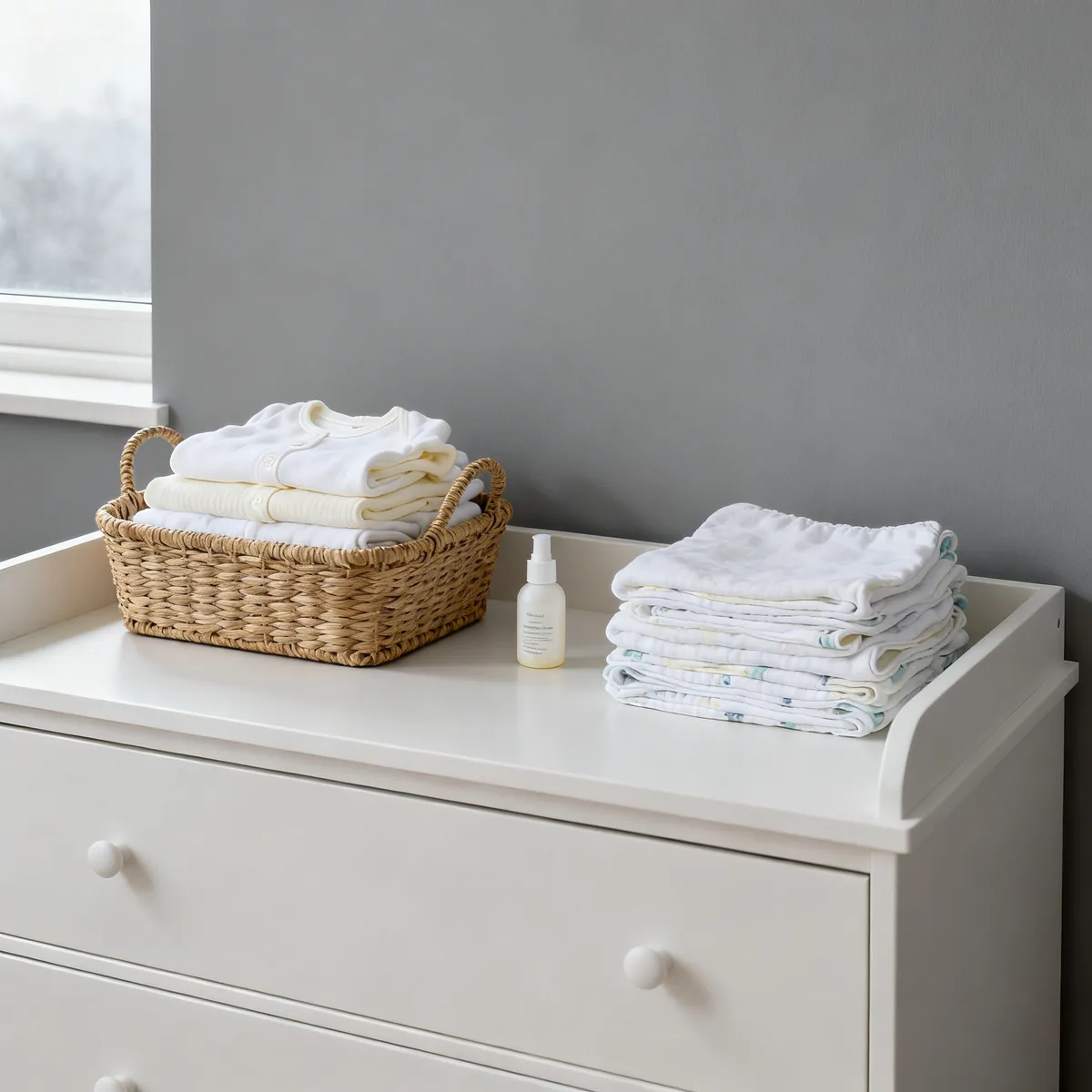
Your diaper changing station will get used more than almost anything else in your house. Set it up before you’re home, not after — because doing it one-handed at 3am is nobody’s idea of a good time.
The basics: a changing pad with a waterproof cover, diapers in newborn and size one (newborns outgrow the smallest size faster than you’d think), unscented wipes, diaper rash cream, and a dedicated spot for all of it. Everything within arm’s reach. That part matters more than the aesthetics.
For bathing, you don’t need much. A small infant tub with a hammock-style insert, a soft washcloth, and mild fragrance-free wash covers it. Newborns only need a bath two to three times a week — if you’re unsure about frequency, how often do you bathe a newborn is worth a quick read before you start.
Newborn skin is a whole thing. It peels, it flushes, it does things that look alarming and usually aren’t. Keep the product list short and the ingredient list shorter — no fragrance, no dyes, nothing that needs a chemistry degree to decode.
If your baby’s skin shows up dry or patchy, that’s extremely normal in the first few weeks. Dry flaky newborn skin breaks down why it happens and what actually helps without overdoing it.
For skincare, the priority is a short, clean ingredient list — fragrance-free, hypoallergenic, and formulated for sensitive newborn skin. BabyRabbit checks those boxes and is available at Onzenna if you want somewhere to start without reading every label from scratch.
And if something on the skin looks off — unusual spots, bumps, or texture you can’t place — tiny bumps on newborn skin is a solid reference before you spiral into a Google hole.
The newborn stage moves fast. Before you’ve fully figured out nursing or bottle feeding, your baby is already eyeing your water glass.
Around six months — usually when solid foods start — babies are ready to begin learning open cups and soft-spout sippy cups. It’s not a milestone most people think to prep for, but having the right drinkware early makes the transition easier on everyone.
What to look for: BPA-free, phthalate-free, and ideally made from materials that hold up to sterilizing without degrading. Silicone and sustainably sourced materials are worth the slightly higher upfront cost — you’re not replacing them every three months.
Tableware follows the same logic. Suction bowls, soft-tipped spoons, and divided plates sound optional until you’re trying to feed a nine-month-old who has opinions about food touching. They’re not optional.
The Grosmimi feeding range covers the newborn-to-toddler bridge — BPA-free, easy to clean, and built to last through the phase changes without requiring a completely different set every few months.
One thing worth knowing: what your baby eats matters as much as what they eat it from. Foods to avoid during pregnancy is a good read if you’re still expecting — and it primes you to think critically about ingredients long before solids even start.
Skip the novelty sets with twelve pieces you’ll never use. A few well-made, easy-to-clean items beat a full cabinet of plastic that stains, warps, or cracks after two washes.

Feeding gear doesn’t need to be complicated. It needs to be safe, durable, and actually work at 7am when nobody has slept.
Every newborn essentials checklist you find online is quietly padded with things that sound logical until you actually have a baby.
The wipe warmer: your baby will survive a room-temperature wipe. What you won’t survive is the dependency — travel, grandma’s house, anywhere without one becomes a production.
The dedicated diaper pail: a regular trash can with a lid works. The proprietary refill bags cost more over a year than you’d expect, and the smell finds a way regardless.
Newborn shoes. They can’t walk. The shoes fall off. Move on.
The baby bathtub with all the inserts and the thermometer attachment and the drain plug system — a clean kitchen sink or a $12 mesh sling does the same job for the six weeks before they outgrow it anyway.
Nursing covers tend to get abandoned fast. Most people figure out a preferred feeding situation within the first few weeks, and it rarely involves wrestling with a large piece of fabric one-handed.
Bottle sterilizers are sold hard to new parents. Your dishwasher’s hot cycle or a pot of boiling water handles sterilization. The countertop unit is one more thing taking up space you don’t have.
The “smart” baby monitor with the breathing sensor mat has a well-documented history of false alarms at 3am. If your pediatrician hasn’t recommended one for a specific medical reason, the anxiety it creates often outweighs the reassurance.
None of this is about being minimal for its own sake. It’s about knowing which purchases are solving a real problem versus which ones are selling you a feeling of preparedness.
The feeling doesn’t last. The clutter does.
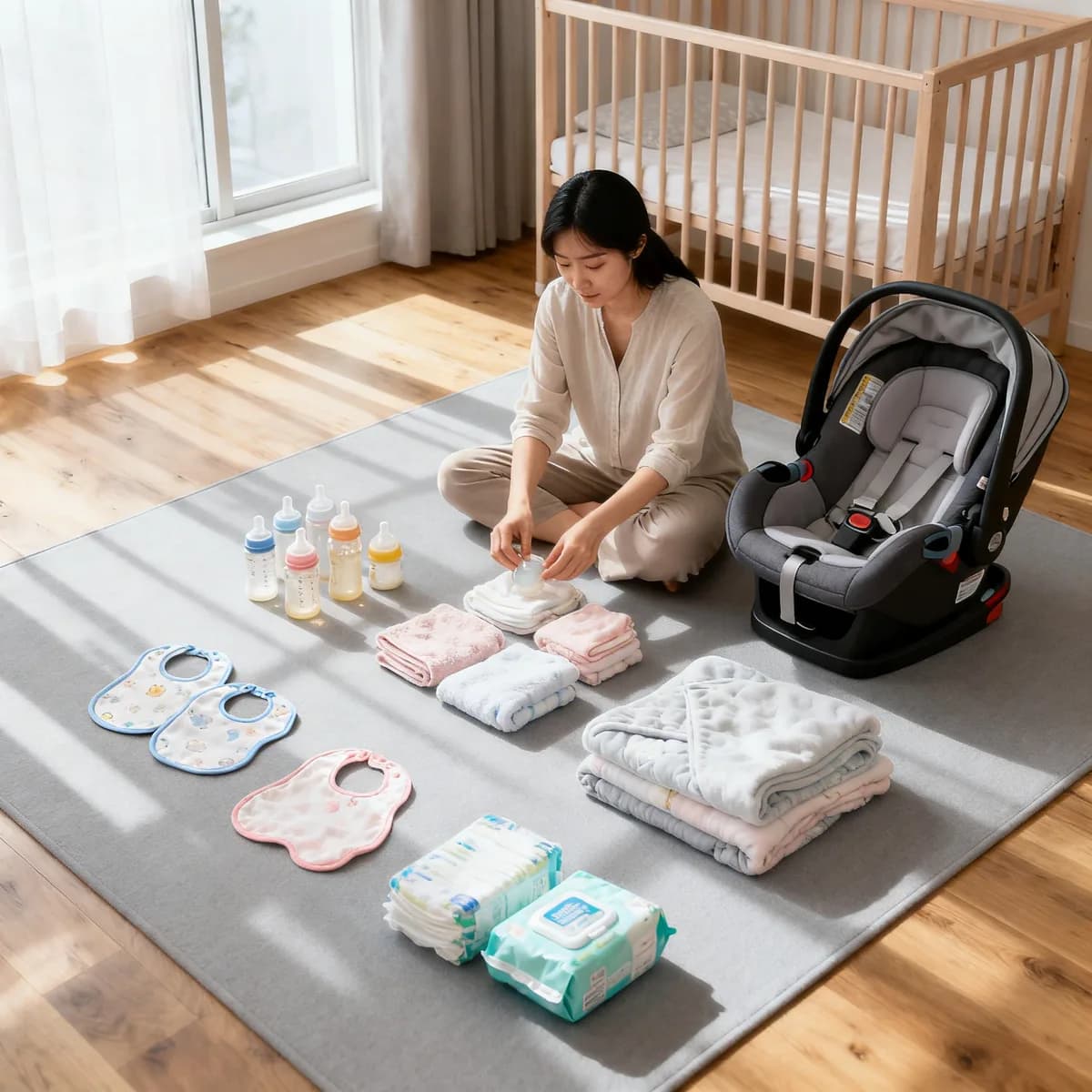
The absolute bare minimum: onesies and sleepers (6-8 pieces in 0-3 months size), fitted crib or bassinet sheets (3-4), a safe sleep surface (crib or bassinet), diapers, diaper cream, a way to feed your baby (bottle or breast), burp cloths, and a few swaddles or muslin wraps that do triple duty.
Everything else is about making your life easier, not keeping your baby alive.
Buy enough to get through 2-3 days without laundry: 6-8 onesies, 4-6 sleepers, 3-4 fitted sheets, 2-3 pairs of socks you’ll definitely lose, 3-4 swaddles, and burp cloths. Newborns outgrow newborn size in roughly two weeks, so resist the urge to stock up on tiny clothes.
You can always grab more once you see what actually works for your baby.
Yes, but not drastically. Breastfeeding parents need a pump, nursing pads, lanolin cream, and possibly a haakaa, while bottle feeders need bottles, sterilizer, and formula storage.
Both benefit from a nursing pillow, burp cloths, and a comfortable feeding space — the gear just looks slightly different depending on your route.
Stick to 100% cotton or cotton-bamboo blends for clothing and bedding — synthetic fabrics trap heat and irritate newborn skin more easily. For products that touch skin (diaper cream, lotions, lanolin), look for fragrance-free, hypoallergenic options without parabens or phthalates.
Wash all clothing and sheets twice before baby wears them to remove manufacturing chemicals.
Absolutely — and this is where quality matters. Durable basics like muslin wraps, nursing pillows, crib sheets, and burp cloths hold up through multiple kids if you wash them well. Feeding gear like bottles and pumps should be sterilized between children, and always replace mattresses for safety.
Clothes fade and stretch, so you’ll likely refresh those, but core sleep and feeding items are absolutely reusable.