

Nursery & Home
Nursery Must-Haves: The Essential List Without the Fluff
Soyeon Park·12 min read

Learn how to set up a nursery without wasting money. Skip the trends, invest in safety, and use second-hand furniture smartly—a practical guide for smart parents.
Most people wonder how to set up a nursery without breaking the bank, but budgets blow up the same way: a Pinterest session at midnight, a cart full of things that feel essential, and a baby who will sleep in a $200 crib and not notice any of it.
Here’s what actually matters when you learn how to set up a nursery: separating the non-negotiables from the nice-to-haves before you spend money you don’t need to spend. Most parents overbuy because the industry is built to make them feel like they’re missing something essential.
This guide cuts through that noise and shows you exactly where to invest, where to save, and what to skip entirely—so you can set up a functional, safe baby nursery without the buyer’s remorse.
When you start figuring out how to set up a nursery, the list of “must-haves” gets overwhelming fast. Most of it is noise.
Here’s what actually earns its place in the room: a safe sleep surface (firm, flat, bare — that’s it), a reliable white noise machine, blackout curtains, a good changing pad with a lip, and enough onesies to survive a blowout streak.
dedicated chair with arm support If you’re breastfeeding and planning to pump, get your storage system sorted before the baby arrives — knowing how to store breast milk properly is one of those things you don’t want to figure out sleep-deprived.
Now for what you can skip. The wipe warmer. The diaper pail that requires proprietary refills. The elaborate mobile that plays 47 songs. The “smart” bassinet that costs more than your first car and does roughly what rocking your arm does.
Wearable baby monitors are a gray area — they sound reassuring, but most pediatric organizations don’t recommend them as safety devices. A standard audio or video monitor does the job.
The newborn lounger that’s everywhere on social media? Not safe for unsupervised sleep, full stop. Cute. Not functional for what people actually use it for.
Your baby needs warmth, cleanliness, a safe place to sleep, and you. The rest is decoration. Buy less, buy better, and hold off on anything “optional” until you know whether your specific kid actually needs it.
The nursery furniture market is designed to make you feel like everything is essential. Most of it isn’t.
When you’re figuring out how to set up a nursery, second-hand is your best starting point — with one hard rule: never buy a used crib or bassinet. Safety standards change. You can’t verify the history. It’s the one piece that needs to be new or near-new from a brand with current certifications.
Everything else? Fair game. A solid dresser from a thrift store will hold onesies just as well as a $600 nursery-branded one. A glider from Facebook Marketplace — inspected, cleaned, structurally sound — is functionally identical to a showroom model.
Multi-functional pieces save money and space. A dresser with a removable topper doubles as a changing table. A crib that converts to a toddler bed actually gets used past 18 months. Buy furniture with a second life built in.
Timeline matters more than most guides admit. You don’t need everything done by week 36. You need a safe sleep space and basic clothing storage before baby arrives. That’s it.
The glider is genuinely useful — especially once you’re navigating contact napping in those early weeks. But it can arrive after the baby does. Same with a bookshelf, a rug, a lamp with the right “vibe.” None of that is urgent.
Spend real money on the crib. Be strategic about the dresser. Buy the rest used, late, or not at all until you know you actually need it.
Textiles are where the nursery budget quietly bleeds out. Cute quilts, themed blanket sets, decorative pillow collections — none of it is as useful as it looks on a mood board.
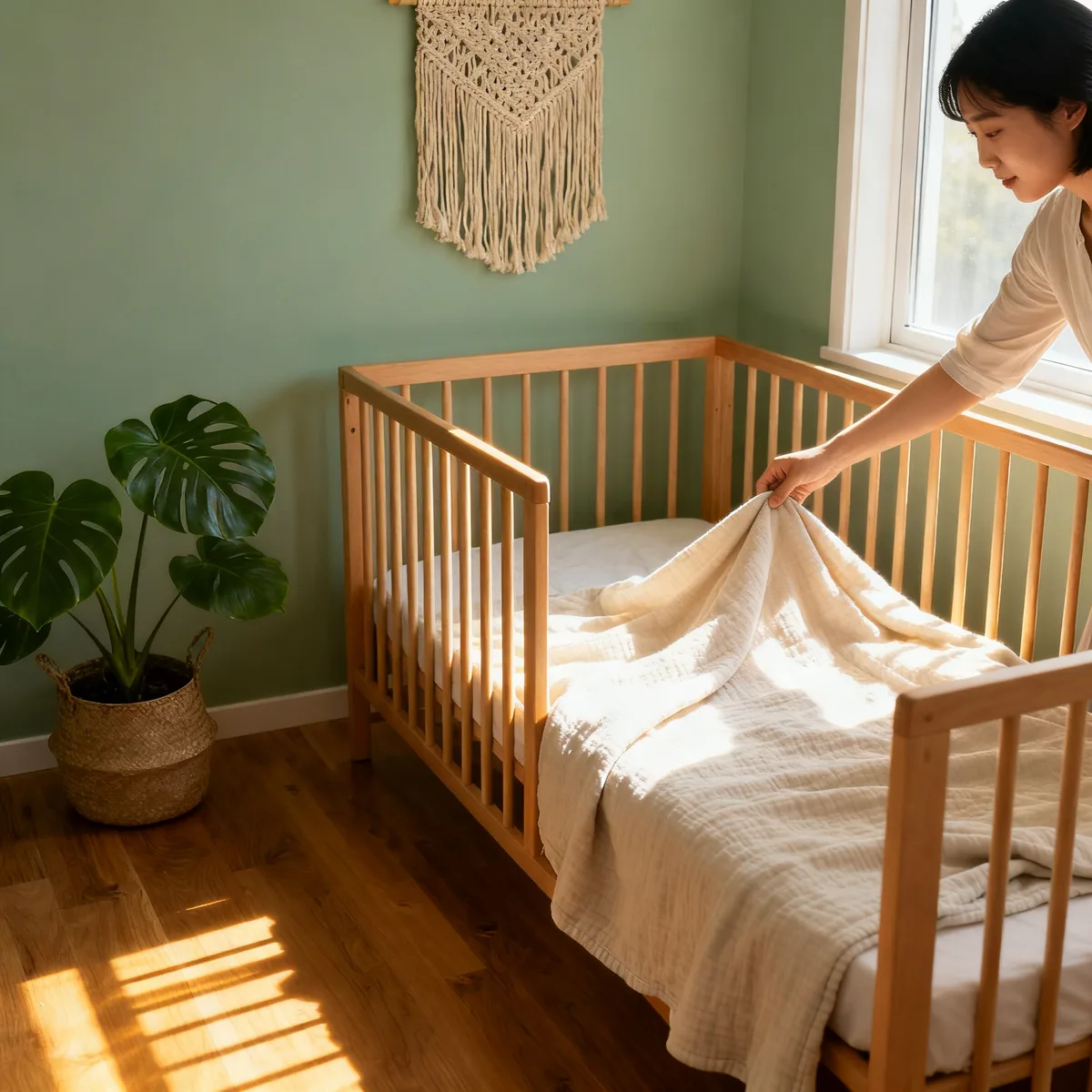
Here’s what you actually need: fitted crib sheets (three minimum), a few muslin swaddles, and a waterproof mattress cover you can wash at 2 a.m. without thinking twice.

Buy duplicates of anything that touches the mattress. Blowouts and spit-up don’t wait for laundry day.
Skip novelty fabrics and go for materials that hold up to repeated washing — cotton and bamboo are your two best options. Bamboo runs softer and regulates temperature better, which matters more once you’re dealing with a sweaty, overtired baby who won’t settle. The BambooBebe basics available at Onzenna are worth a look for exactly this reason — bamboo-based essentials that wash well and don’t pill after ten cycles.
On the swaddle front: you don’t need eight. Two or three quality ones beat a basket of thin, novelty prints that lose their stretch by week four.
Window coverings count here too. Blackout curtains aren’t a luxury — they’re a sleep tool. If you’re working out a one month old sleep schedule, a dark room gives you a real advantage.
Skip the decorative throw blanket draped over the glider. It photographs well. It does nothing else.
The rule for textiles is simple: if it can’t go in the wash on a normal cycle, it doesn’t belong in the nursery. Buy plain, buy durable, buy enough to rotate. That’s it.
Overhead lighting in most nurseries is too harsh. You don’t want to flip on a ceiling fixture at 2am — you want something dim enough to function without fully waking either of you up.
A plug-in lamp with a warm bulb costs less than $30 and does exactly what you need. Put it somewhere you can reach with one hand while holding a baby with the other. That’s the whole brief.
Blackout curtains are non-negotiable. The ones sold specifically as “nursery” curtains often cost twice as much as identical options in the regular home section of any big-box store. Check both aisles before you buy.
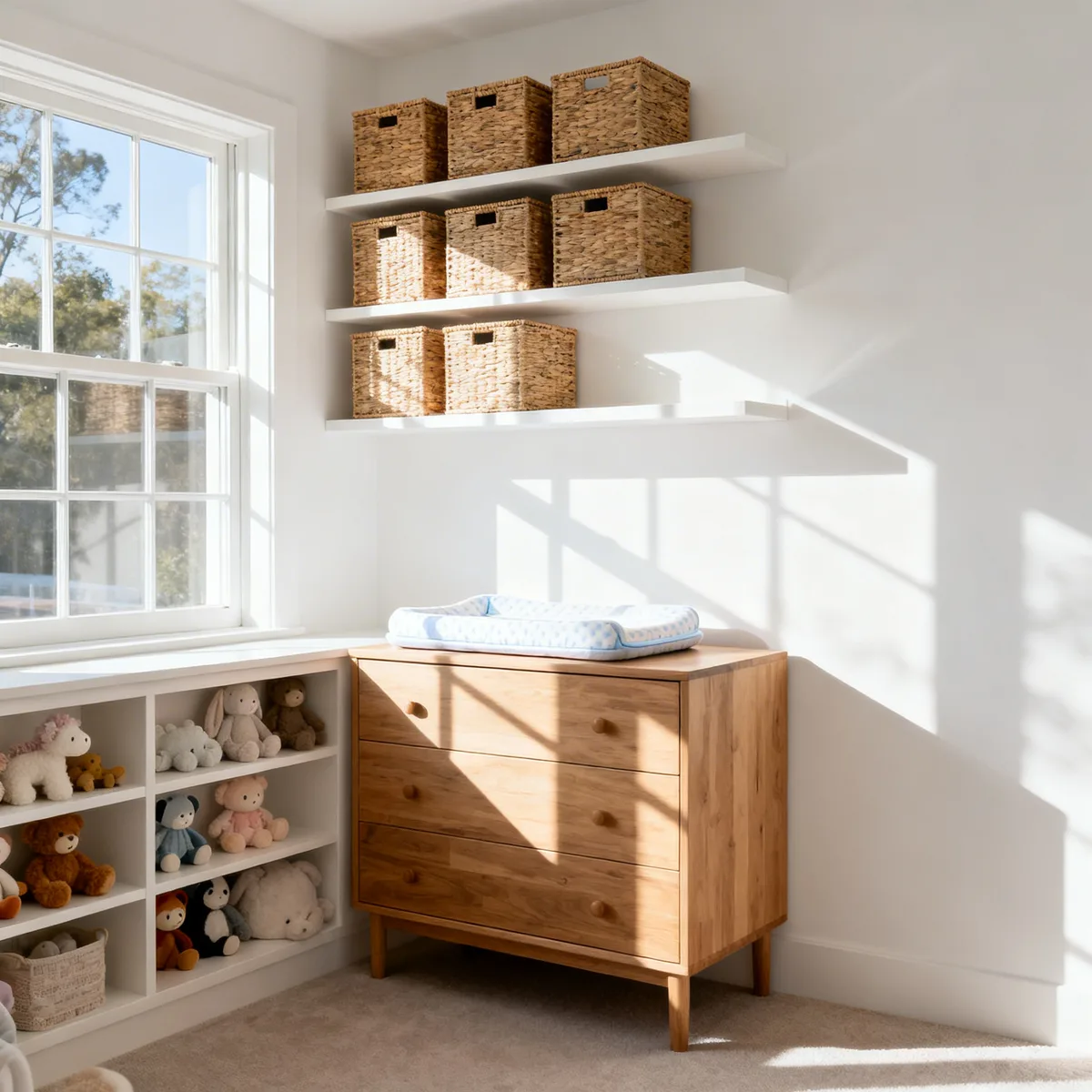
Storage doesn’t need to be a built-in system. Open bins, a basic dresser, and a few hooks on the back of the door will handle most of what a nursery actually accumulates.
Label the bins. Not for aesthetics — for 3am when you’re running on no sleep and need diapers fast. Clear bins with simple labels beat a beautiful setup you can’t navigate in the dark.
Think in zones: one area for diapering, one for clothes, one for feeding supplies. When you’re figuring out how to set up a nursery that actually functions, zones matter more than storage products.
A small basket clipped or hung near the diaper area holds the things you grab every single time — wipes, cream, a spare onesie. Keep that stocked and everything else is secondary.
Vertical space is free. Wall shelves above the dresser, hooks behind the door, a hanging organizer on the closet rod. You’re not trying to win a design award. You’re trying to not lose the nail clippers at midnight.
Some things in a nursery are worth spending on. Others aren’t. Knowing the difference is what keeps you from blowing the budget in the wrong places.
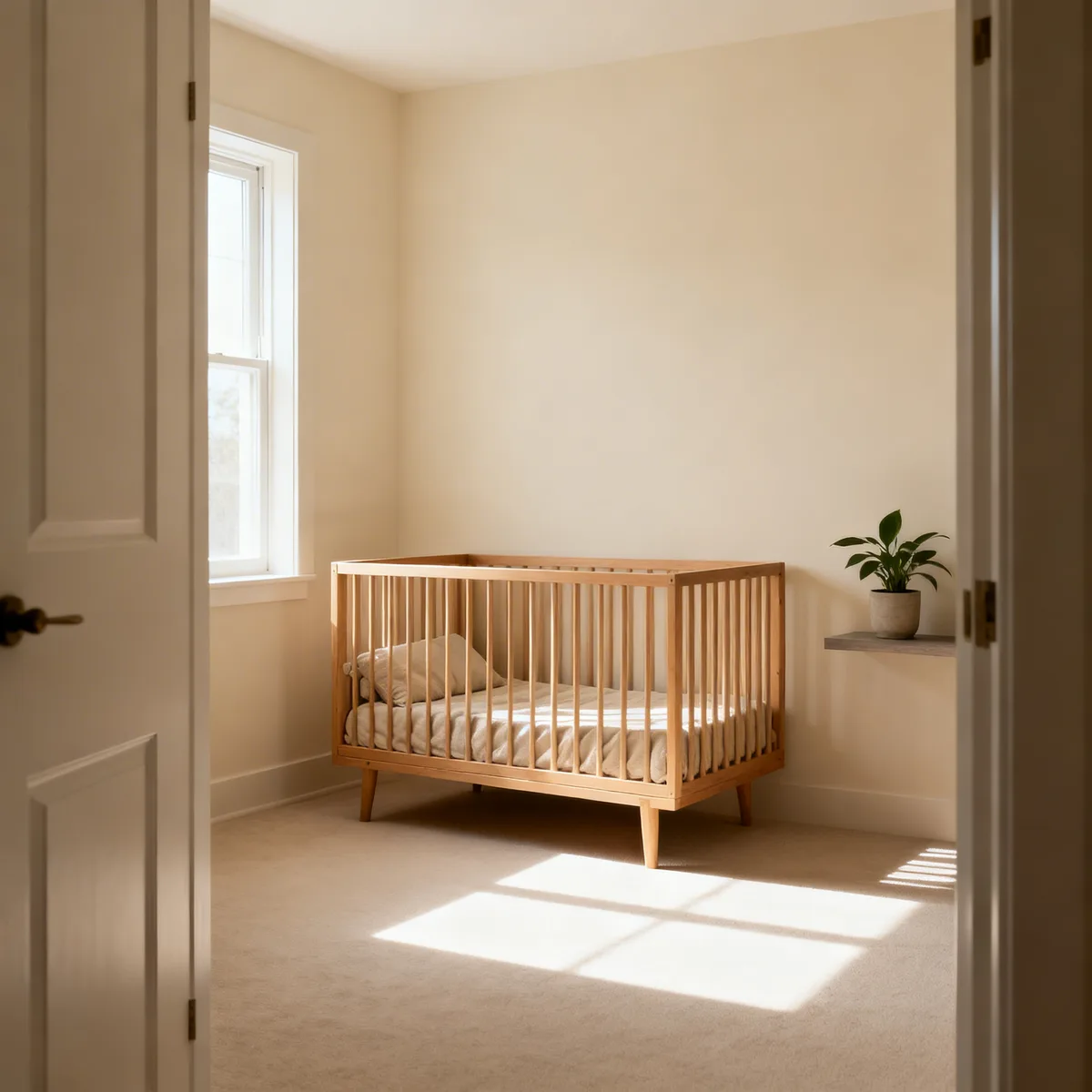
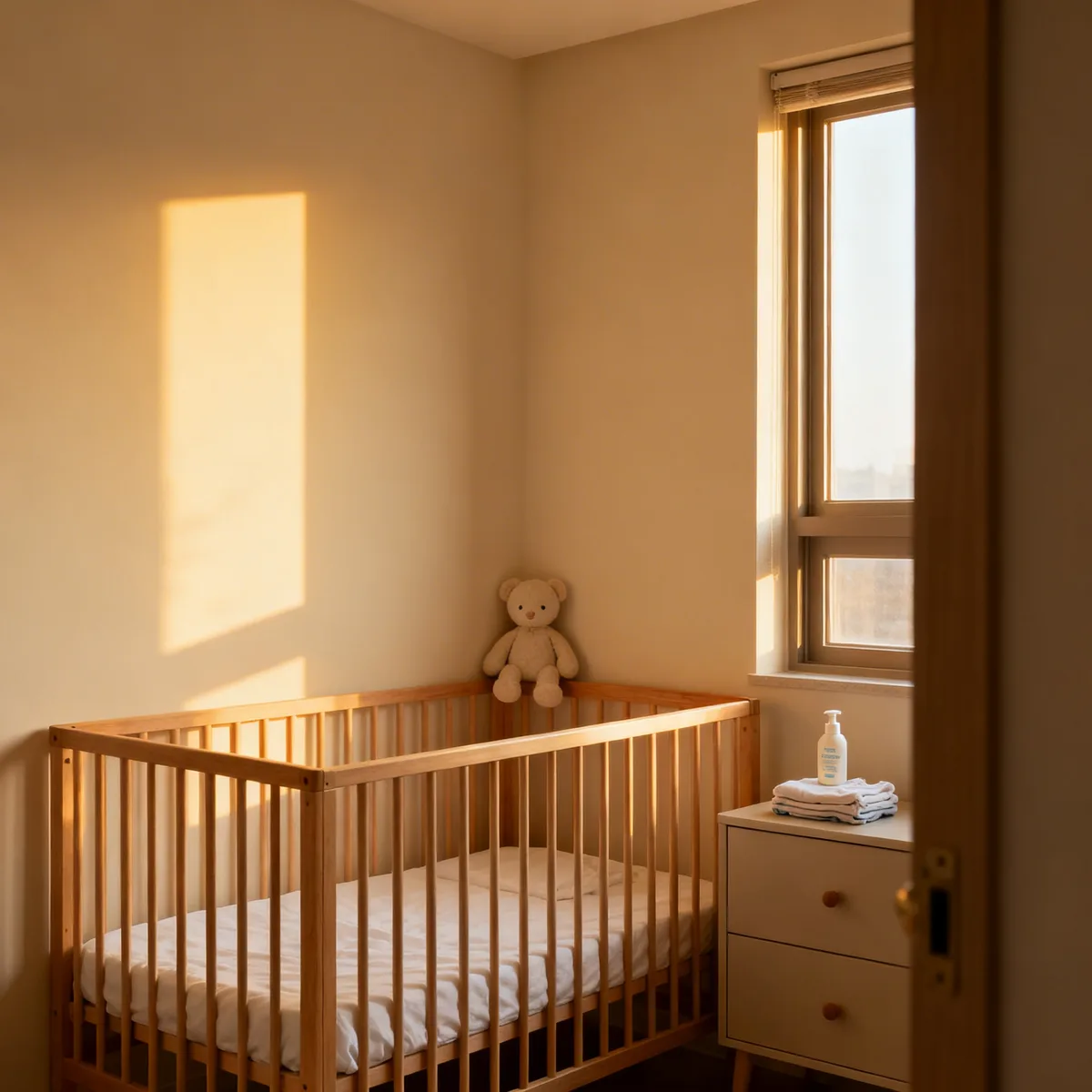
The crib is non-negotiable. It needs to meet current CPSC safety standards — that means no drop-side rails, slats no more than 2⅜ inches apart, and a firm, flat mattress with no gaps at the edges. A secondhand dresser is fine. A secondhand crib is a gamble you don’t want to take.
The AAP recommends placing babies on their back on a firm, flat sleep surface with no soft bedding, pillows, or bumpers — every single sleep, every caregiver, no exceptions. That’s the standard. Everything else marketed as a “sleep aid” is noise.

The baby monitor is worth investing in if you have a larger home or you’re a deep sleeper. For smaller spaces, a basic audio monitor does the job. You don’t need a breathing sensor mat unless a medical provider has specifically recommended one.
The car seat is the other hard line. Buy new, or buy secondhand only if you can verify the full history — no accidents, not expired, never recalled. Car seat expiration dates are real, usually six to ten years from manufacture.
On the flip side: the changing pad cover, the laundry hamper, the swaddle blankets — buy these wherever’s cheapest. Safety standards don’t apply. Personal preference does.
As your baby grows, new skin and health questions will come up — things like dry flaky newborn skin or rashes you weren’t expecting. Budget for the items that protect them structurally, and leave room for the everyday surprises.
The biggest mistake people make when figuring out how to set up a nursery? Buying for the aesthetic, not the reality.
The matching furniture sets look incredible on Instagram. In practice, you’re paying for a dresser, a nightstand, and an armoire your baby will never use — when a single chest of drawers would’ve done the job.
Wipe warmers. Diaper Genie refill subscriptions. A dedicated nursing chair that costs more than your first car. These feel essential in the planning phase. Most of them collect dust by month three.
Trend-driven items age fast too. That millennial pink everything? Your kid doesn’t care. Buy neutral basics and spend the saved money on things that actually get used daily — like an extra set of crib sheets, because blowouts happen at 3am and you will need a backup.
Baby gear also has a short runway. A newborn lounger is useful for maybe four months. A bassinet, maybe six. Before you buy something full-price, ask yourself how long it actually fits your child’s size and stage.
Clothing is its own trap. Newborn size is a lie. Many babies skip it entirely. Buy a few pieces in newborn, a lot in 3-month, and don’t touch 6-month until you know what you’re working with.
Sleep is where people really overspend. You don’t need a $400 sound machine with an app. You need something that makes white noise consistently. If you’re deep in sleep research mode, understanding approaches like the Ferber method will tell you more about what actually shapes sleep habits than any gadget will.
Buy less. Use it. Then buy more if you actually need it.
A safe sleep surface (firm, flat, bare crib or bassinet), a changing pad, blackout curtains, a white noise machine, clothing storage, and a comfortable chair for feeding or night wakings. Everything else is optional until you know your baby’s actual needs.
Yes—except for cribs and bassinets, which should always be new or near-new to ensure they meet current safety standards and you can verify their history. Dressers, gliders, and storage pieces from Facebook Marketplace or thrift stores are safe and often better quality than new nursery-branded furniture.
A functional nursery can be set up for $800–$1,500 if you buy essentials new and furnishings second-hand. The crib, mattress, and safety items deserve the investment; everything else benefits from smart shopping and waiting to see what your baby actually needs.
The AAP recommends room-sharing without bed-sharing for at least the first six months, ideally the first year. A separate nursery is convenient but not essential—many families room-share longer or skip a dedicated nursery entirely and still create a safe, organized space for the baby’s things.
Buy new: cribs, bassinets, mattresses, car seats, and any safety-critical items with certification dates. Buy second-hand: dressers, gliders, changing tables, storage, rugs, and decor. Soft goods like sheets and blankets can be second-hand if they’re clean and undamaged, or new from durable, washable brands.