Quick Summary
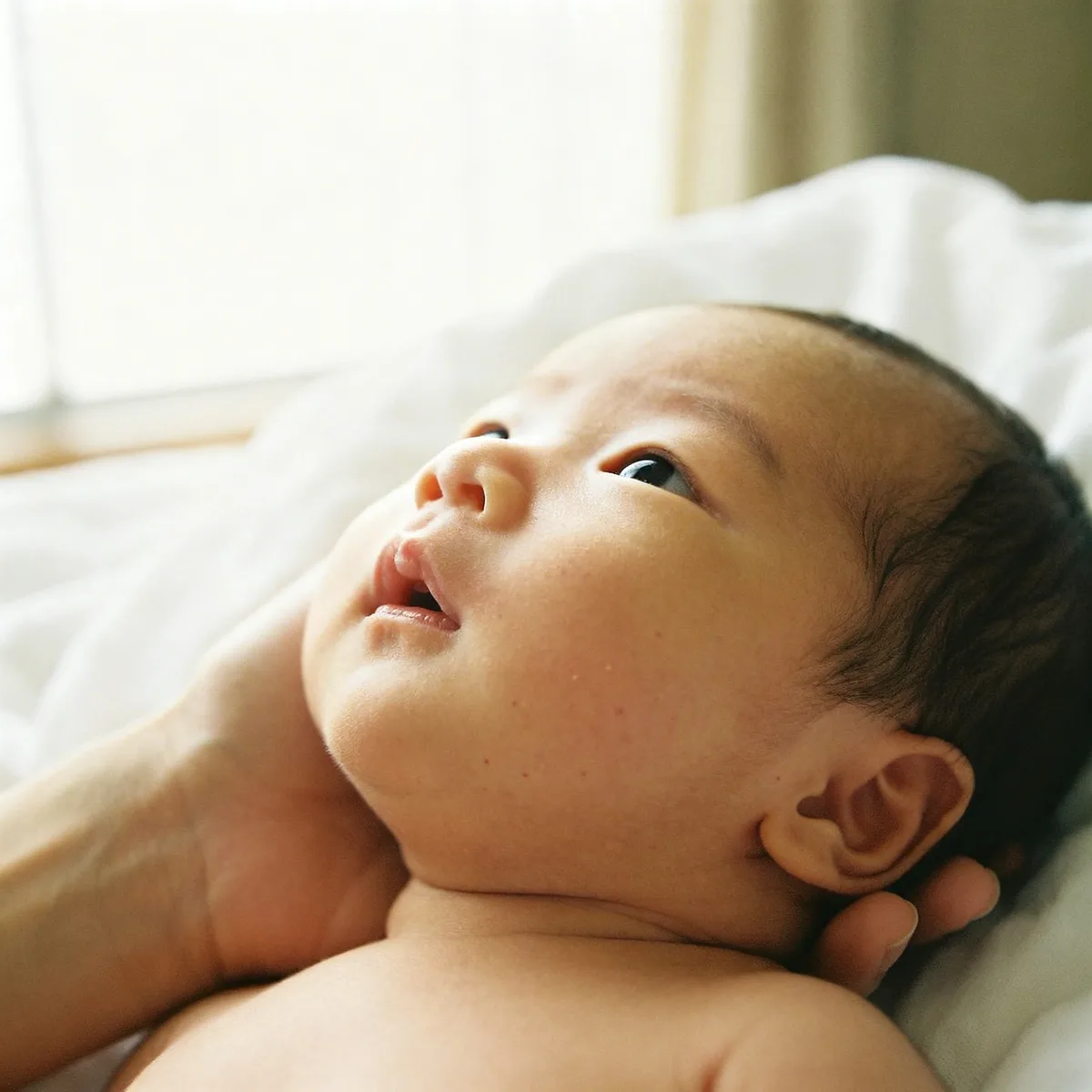
Here’s what nobody tells you about tiny bumps on newborn skin: they’re almost never what you think they are, and they’re almost never dangerous. Most parents assume their baby has an infection or that they did something wrong during pregnancy or birth. In reality, those little red spots and white dots are usually just your baby’s skin doing exactly what it’s supposed to do — processing maternal hormones and establishing its first microbial community. This article breaks down what’s actually happening, how to tell baby acne from milia, and when those bumps are genuinely normal versus when you need to call your pediatrician.
Why Tiny Bumps on Newborn Skin Happen: The Hormone & Colonization Story
Your baby’s skin doesn’t arrive ready-made for the outside world. Two distinct biological processes — maternal hormone transfer and microbial colonization — are largely responsible for the tiny bumps on newborn skin that appear in the first days and weeks of life.
During pregnancy, androgens and other hormones cross the placenta in significant quantities. After birth, those hormone levels drop sharply in your baby’s bloodstream. But before they clear, they stimulate sebaceous glands in the skin — the same oil-producing glands involved in adult acne. The result is often milia (small white or yellow cysts from trapped keratin) or neonatal acne-like eruptions, typically clustered on the nose, cheeks, and forehead. These are not an infection. They are a hormonal exit process.
Colonization tells a separate but equally important story. From the moment of birth, your baby’s skin begins acquiring its first microbial community. Early colonizers — including Staphylococcus epidermidis and Cutibacterium acnes — interact with immature skin barrier function and can trigger mild inflammatory responses that show up as small raised spots. The AAP notes that newborn skin is structurally thinner and more permeable than adult skin, which is why even routine microbial contact can produce a visible reaction that would go unnoticed on older skin.
Bathing practices matter here. Frequent washing can disrupt the acid mantle — the skin’s protective film — before it has fully established. If you’re looking at how bath routines affect new skin, korean baby skincare offers a useful framework for understanding gentle, barrier-focused newborn care.
Most hormone-driven bumps resolve within four to six weeks as maternal hormones clear. Colonization-related reactions typically settle as the skin barrier matures. Neither process usually requires treatment.
Baby Acne vs. Milia: How to Tell the Difference
Both conditions produce tiny bumps on newborn skin, but they look different, appear in different places, and follow different timelines. Knowing which you’re looking at helps you respond appropriately — or simply wait with confidence.
Baby acne typically appears between two and four weeks of age. The bumps are red or pink, often with a small white center, and they tend to cluster on the cheeks, forehead, and chin. The skin around them may look slightly inflamed. This is the condition most likely driven by residual maternal hormones and the skin’s early encounter with environmental bacteria. It can flare when your baby is warm, crying, or in contact with fabric or saliva.
Milia look distinctly different. They are very small — typically 1 to 2 millimeters — pearly white or yellowish, and perfectly smooth. There’s no redness around them. They appear because keratin becomes trapped just beneath the skin’s surface. You’ll often see them across the nose, cheeks, and chin, and sometimes on the palate (where they’re called Epstein’s pearls). Unlike baby acne, milia can be present from birth. The AAP notes that milia occur in roughly 40 to 50 percent of newborns and resolve on their own without any treatment.
The practical distinction: baby acne has texture, color, and occasional inflammation. Milia are flat, white, and entirely calm. Neither requires creams, scrubbing, or intervention. Squeezing either type of bump risks introducing bacteria and damaging the still-forming skin barrier.
If you’re uncertain what you’re seeing — or if the bumps are spreading, weeping, crusting, or accompanied by fever — that’s worth raising with your pediatrician. A broader look at newborn face red rash patterns can also help you understand when a skin change moves beyond the expected range.
When Tiny Bumps on Newborn Skin Are Totally Normal (And When to Worry)
Most tiny bumps on newborn skin have a name, a timeline, and a predictable end. Erythema toxicum — despite its alarming name — is a benign rash that appears in roughly half of all full-term newborns, typically within the first two to three days of life. It looks like small yellow or white pustules surrounded by blotchy red skin. It causes no discomfort and clears on its own within one to two weeks.
Neonatal acne follows a similar pattern. Hormones passed through the placenta stimulate oil glands, producing small red or white pimples across the cheeks, forehead, and nose. The AAP notes that neonatal acne typically resolves without treatment within a few weeks and does not require medicated creams or washes. Plain water and a soft cloth are enough. Using anything abrasive — or fabric that isn’t genuinely gentle against skin — can prolong irritation rather than resolve it.
Pustular melanosis is another condition that looks worrying but isn’t. It’s more common in darker-skinned newborns and presents as small blisters that rupture quickly, leaving behind dark freckle-like spots. Those spots fade over weeks to months without any intervention.
The red flags are different in character. Contact your pediatrician if you see bumps that weep, crust over, or smell unusual — these can signal bacterial infection. A rash accompanied by fever, lethargy, or difficulty feeding moves out of the “wait and watch” category entirely. Blistering along the scalp or near the mouth may indicate herpes simplex virus, which requires urgent evaluation. If you’re already planning to discuss skin at your baby’s first checkup, what to expect at baby’s first pediatrician visit walks through how those early appointments are typically structured.


Gentle Skincare for Bumpy Newborn Skin: What Actually Works
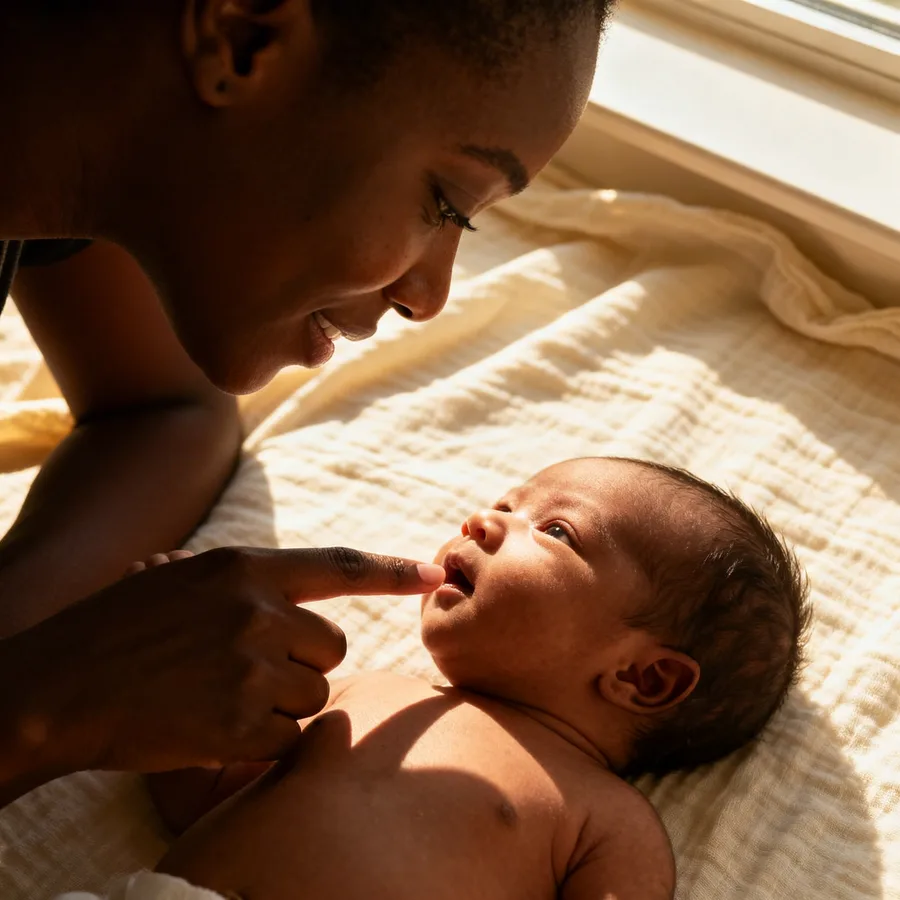
The AAP’s guidance is straightforward: most newborns need very little. For the first few weeks, plain warm water is enough for daily cleaning. Skin this new has a fragile acid mantle — the thin protective barrier that keeps moisture in and irritants out. Harsh soaps, fragranced wipes, and adult skincare products can disrupt it before it has a chance to stabilize.
When you do introduce a cleanser, the AAP recommends choosing one that is fragrance-free, dye-free, and formulated specifically for newborn skin. The same applies to any moisturizer. The NIH notes that petroleum-based ointments and bland emollients tend to be better tolerated than lotion-style products, which often contain more preservatives and alcohol.
For tiny bumps on newborn skin like milia or erythema toxicum, no product is going to speed resolution — and that’s actually the right answer. The CDC’s guidance on newborn skin care reinforces that these conditions resolve on their own. Trying to exfoliate, pop, or treat them with active ingredients can cause more irritation than the bumps themselves.
Bathing frequency matters too. The AAP recommends sponge baths until the umbilical cord stump falls off — typically within one to three weeks. After that, two to three baths per week is sufficient. Daily bathing can strip the skin’s natural oils faster than they replenish. If you want to understand what else to keep clean and why, umbilical cord care newborn covers the stump stage in detail.
If you do want a cleanser formulated specifically for this window, Cha&Mom is worth a look — it’s designed for newborn-sensitive skin and leaves out the ingredients most likely to cause irritation.
Pat skin dry rather than rubbing. Skip the powder. And when in doubt, less is more — newborn skin is doing exactly what it’s supposed to do.
How Long Does Baby Acne and Milia Last?
Baby acne typically appears in the first two to four weeks of life and clears on its own within four to six weeks. Milia — those small, pearly white cysts that look like tiny bumps on newborn skin — often resolve even faster, usually within the first month. Both conditions are self-limiting, meaning your baby’s skin works through them without any intervention needed.
The AAP advises against applying acne creams, lotions, or home remedies to newborn skin, noting that most infant skin conditions in the early weeks resolve on their own and that unnecessary products can cause more irritation than the condition itself.
The underlying driver of baby acne is hormonal — maternal hormones passed to your baby before birth stimulate oil glands in the skin. Once those hormone levels taper off, the skin settles. Milia have a different mechanism: they form when dead skin cells become trapped near the surface while the outer layer of skin is still maturing. In both cases, the timeline is governed by your baby’s own biology, not by what you apply.
Washing your baby’s face once a day with plain warm water is enough. Avoid scrubbing, picking, or pressing on the bumps. Fragranced products and heavy creams can trap sebum and slow the process. Soft, breathable fabrics against your baby’s face — including the material of any towels or cloths you use at bath time — matter more than most parents expect. A gentle pat-dry with something like bamboo baby towels keeps friction low without depositing residue on the skin.
If bumps are spreading beyond the face, appear yellow or fluid-filled, or your baby seems uncomfortable, check in with your pediatrician. Those signs fall outside the normal pattern and are worth a closer look.
Common Myths About Newborn Bumps (And the Truth)
Parenting communities are full of well-meaning advice about tiny bumps on newborn skin. Some of it is harmless. Some of it can make things worse.
Myth: Breast milk clears up newborn bumps. Applying breast milk to milia or neonatal acne is widely shared as a remedy. There is no clinical evidence to support it. The AAP does not recommend breast milk as a topical treatment for any newborn skin condition. Most bumps resolve on their own — breast milk applied topically has no documented role in that process.
Myth: Bumps mean your baby’s skin needs more washing. The opposite is often true. Over-washing strips the skin’s natural barrier. The AAP recommends sponge baths only until the umbilical cord falls off, and full baths no more than three times a week after that. Frequent scrubbing can irritate skin and prolong the appearance of bumps.
Myth: Bumps are caused by something you ate while breastfeeding. Neonatal acne and milia are driven by hormonal changes and developing pores — not by maternal diet. There is no evidence linking specific foods to these conditions.
Myth: You need a medicated cream. For common, non-infected bumps, the CDC and AAP both advise against applying over-the-counter treatments without a pediatrician’s guidance. Most newborn skin conditions are self-limiting. Introducing a topical product adds variables without clinical benefit.
Myth: If the bumps last more than a week, something is wrong. Milia can persist for several weeks before fading. Neonatal acne typically peaks around three to four weeks of age. A longer timeline is not automatically a warning sign — but if you’re uncertain, your pediatrician is the right person to ask.
The most reliable guidance stays consistent: leave the skin alone, keep it clean with plain water, and avoid unnecessary products.
When to Call Your Pediatrician About Newborn Skin Bumps
Most tiny bumps on newborn skin resolve on their own without any intervention. But there are specific signs that warrant a call to your pediatrician rather than a wait-and-see approach.
Contact your pediatrician if you notice any of the following:
- Bumps that are yellow or honey-colored and crusting — this can indicate a bacterial infection such as impetigo
- Blisters or fluid-filled lesions, particularly in the first weeks of life
- Redness or swelling that spreads beyond the original bump
- Bumps accompanied by fever — in a newborn under two months, any fever above 100.4°F (38°C) is a medical urgency
- Signs of discomfort: your baby seems to be in pain when the affected area is touched
- Bumps that appear in clusters near the eyes, mouth, or genitals
The AAP recommends that parents contact a pediatrician immediately if a newborn under two months develops a fever, as young infants have limited ability to fight infection and the cause needs to be identified quickly.
Conditions like milia, neonatal acne, and erythema toxicum do not cause fever, pain, or spreading redness. If the bumps you’re seeing are isolated, your baby is feeding and sleeping normally, and there’s no fever, these are generally signs you can monitor at home. Tracking how many times should a newborn poop and watching for other changes in behavior or output can also give you a fuller picture of how your baby is doing overall.
When in doubt, describe what you’re seeing in detail — location, size, color, texture, and how long it’s been present. That information helps your pediatrician make a faster, more accurate assessment, whether over the phone or in person.
Sources
Frequently Asked Questions
Are tiny bumps on my newborn’s face dangerous or contagious?
No. Common newborn bumps like baby acne and milia are neither dangerous nor contagious. They’re caused by maternal hormones and normal skin colonization, not infection. They don’t spread to other babies or other parts of your baby’s body, and they resolve on their own as your baby’s skin matures.
How can I treat baby acne and milia at home without making it worse?
The best treatment is usually no treatment at all. Avoid picking, squeezing, or applying harsh products. Use lukewarm water and a gentle cleanser during baths, pat skin dry gently, and keep your baby’s face clean and dry. Resist the urge to apply adult acne treatments — your baby’s skin is far too delicate. If you want to support healing, focus on barrier-protective skincare designed for newborns.
Why does my newborn have red bumps if I kept my pregnancy skin clean?
Newborn bumps have nothing to do with your hygiene during pregnancy. They’re caused by hormones that naturally cross the placenta and by your baby’s skin encountering bacteria for the first time after birth. Maternal hormones trigger oil glands; early bacterial colonization triggers mild inflammation. Both are completely normal biological processes, not signs of anything you did or didn’t do.
Should I pop milia on my newborn’s skin?
Never. Milia are small keratin-filled cysts just beneath the skin’s surface. Squeezing or picking them can introduce bacteria, damage the delicate skin barrier, and leave marks or scars. They resolve on their own — typically within a few weeks to a few months — without any intervention.
When will these tiny bumps go away completely?
Baby acne usually fades within four to six weeks as maternal hormones clear your baby’s system. Milia can take longer — often 6 to 12 weeks — but both conditions resolve completely without treatment in the vast majority of cases. If bumps persist beyond three months or show signs of infection, contact your pediatrician.


Keep Reading

What Makes PPSU Different From the Plastic Cups You Grew Up With

Teething + Feeding: What to Give Your Baby When Chewing Hurts

What "I Don't Like It" Actually Means at Snack Time: A Toddler-to-Parent Translation Guide

How to Choose the Right Feeding Seat for Easier Bottle Time

BPA-Free Isn't Enough: What "BPA-Free" Labels Don't Tell You