

Buying Guides
Best Portable High Chair for Travel: Reviews & Buying Guide for On-the-Go Feeding
Soyeon Park·11 min read

Cut through the noise on BLW starter kit essentials. Learn what you actually need, skip the overpriced bundles, and start baby-led weaning smart on any budget.
POV: You’ve decided on baby-led weaning and now you’re researching blw starter kit essentials, only to find bundles that cost more than your first car payment. Suddenly you’re wondering if your baby actually needs a special divided plate, ergonomic utensils, and a $200 high chair — or if you’re just falling for extremely good marketing. Here’s the truth: a solid setup exists, but it’s about half the price and a quarter of the items the internet is trying to sell you.
This guide breaks down the blw starter kit essentials you actually need, exposes the products that are pure hype, and gives you a budget-friendly approach so you can start confidently without the guilt or the credit card bill.
Baby-led weaning skips the spoon-feeding script entirely. Instead of purees on your timeline, you put soft, appropriately sized food in front of your baby and let them take the wheel. They grab, smoosh, gum, and eventually eat — on their own terms, from the start. No airplane sounds required.
The appeal is real. BLW builds motor skills, exposes babies to textures early, and turns mealtimes into something that actually resembles eating rather than a performance. Parents who’ve done it tend to be loud about it. Hence the hype. If you’re still weighing both approaches, the honest breakdown lives in this piece on blw vs purees.
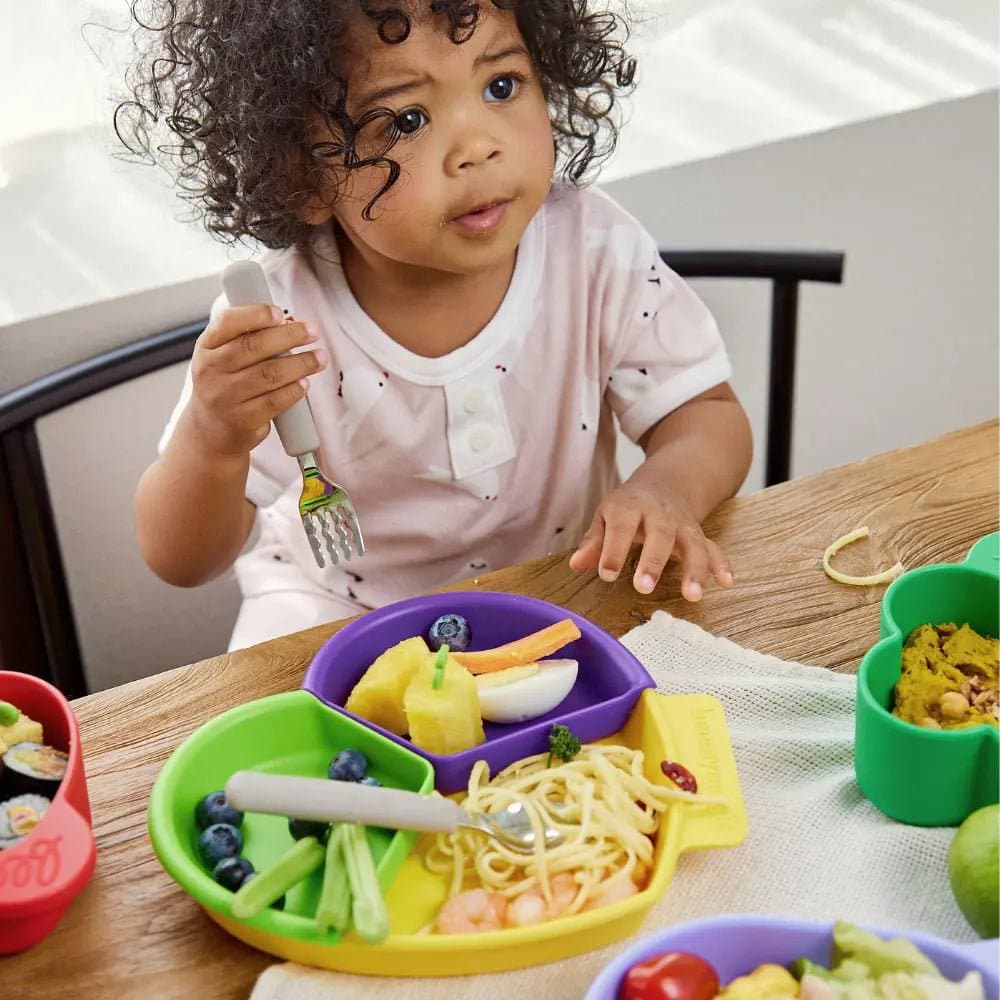
Now, the starter kit part. Search that phrase and you’ll find bundles priced like a car payment. Here’s what the blw starter kit essentials actually come down to: a high chair that reclines slightly and has a removable tray, a few silicone bibs with a catch pocket, a suction plate or bowl so food stops launching off the table, and soft-tipped utensils for when your baby starts attempting to self-feed with something other than their fist. That’s the core of it.
The rest — the specialty cutting tools, the portion containers, the forty-dollar food mashers — is mostly noise. Useful for some, unnecessary for most. A sharp kitchen knife and a steamer basket do the same job.
What actually makes BLW work isn’t the gear. It’s consistency, low expectations about how much gets eaten in the early weeks, and a high chair positioned at the family table so your baby understands they’re part of a meal. The products support the process. They don’t replace it.
You don’t need a curated box or a fifteen-item checklist. The actual blw starter kit essentials are shorter than the internet suggests. Here’s what you genuinely can’t skip.
High chair. Upright, stable, easy to wipe clean. That’s the criteria. Footrest is a bonus — it gives babies something to push against, which helps with the work of eating. Skip anything with too many crevices. You will be cleaning this three times a day.
Suction plates and bowls. Babies will absolutely try to launch their food across the room. A plate that sticks to the tray buys you a few extra seconds. If you want a real breakdown of what actually stays put, the best suction bowls for babies guide is worth five minutes of your time.
Pre-spoons and starter utensils. Short handle, wide easy-grip base, soft tip. They’re learning the motion — not eating efficiently. Expectations calibrated accordingly.
Bibs with a catch pocket. Silicone, not fabric. Fabric absorbs. Silicone catches. That distinction will matter at 7am. If you want something that holds up past the third wash, Silicone bibs with a deep catch-pocket are what a lot of BLW parents quietly switch to once the cheap ones fall apart.
A cup for water from day one. Open cup or 360 — not a traditional sippy. It’s a small thing with a longer-term payoff. If you’re not sure where to start, when to start sippy cup covers the actual timeline without the noise.
A drop mat. For the floor, not the high chair. Your sanity will thank you. Cheap ones work fine.
That’s the list. Everything else is optional.
Honest answer: kind of both, depending on what you buy.
Regular plates work fine in theory. In practice, your baby will launch them across the room within thirty seconds. Suction plates solve that — not perfectly, but well enough to matter. A distracted eight-month-old can still pop one loose, but it buys you time. That’s the actual value proposition.

Divided plates are more about you than them. Babies don’t care if the peas touch the chicken. But separation does make it easier to offer variety without visual chaos — yours and theirs. If that helps you plate up faster and stress less, it’s worth it.
On materials: silicone wins on safety and cleanup, not just aesthetics. It’s free of BPA, phthalates, and melamine — which matters more once you know that some painted or printed kids’ plates can leach at high temperatures. Silicone also survives the dishwasher without warping or staining. Ceramic looks nice. It also breaks spectacularly.
Durability is where cheap sets fail. Thin silicone loses its suction fast, the dividers collapse, and the whole thing feels flimsy by month two. If you’re building out your organic rice puffs for babies rotation and a proper feeding setup, it’s worth spending slightly more on tableware that actually lasts through the whole BLW window.
The Beemymagic silicone suction bowls are one of those — thicker silicone, real suction, dishwasher-safe — if you want something you won’t be replacing in three months.
Where divided plates genuinely don’t matter: texture exploration, mixed dishes, anything you’re already serving in pieces. You don’t need divided plates to do BLW right. But if you’re assembling your blw starter kit essentials and want tableware that holds up, silicone with proper suction is the move — just don’t over-buy it.
Everything else in feeding setup is negotiable. The chair is not.
BLW depends on your baby being able to use both hands freely, maintain their own trunk, and actually focus on the food in front of them. A chair that doesn’t support that creates problems before the meal even starts. Slumping, sliding, constant repositioning — none of that is a baby being difficult. It’s a seating problem.
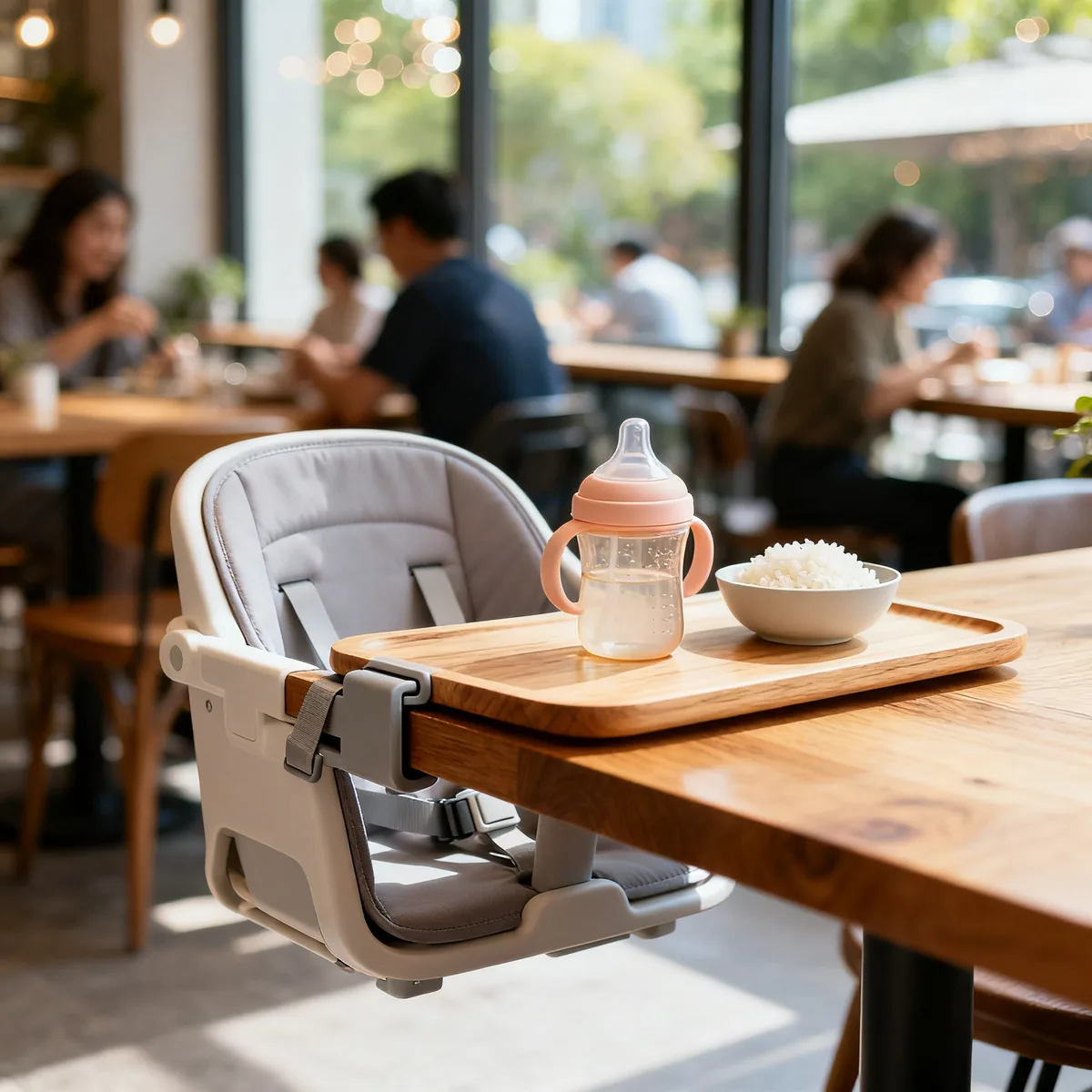
What you’re looking for: feet flat on a footrest (not dangling), hips at roughly 90 degrees, a tray or table surface close enough that your baby isn’t leaning forward to reach. That hip-knee-ankle alignment isn’t a nice-to-have. It’s what gives them the core stability to self-feed without constantly bracing themselves. Without it, a lot of the motor control BLW is supposed to build just doesn’t happen the way it should.
Red flags in chair design: no footrest or an adjustable one that’s hard to lock in place, a bucket-style seat that rounds the lower back, a reclined position marketed as “supportive,” and straps so complex you’re fighting them at every meal. You want upright. You want stable. You want your baby seated, not sunk.
The other thing worth knowing: a chair with a removable tray or one that pulls up to your table changes the social dynamic of mealtimes. Babies who eat alongside adults — facing the same direction, part of the same meal — tend to be more engaged and more adventurous with food. That matters for organic teething snacks and real food alike. The chair shapes the whole experience, not just the posture.
Buy one good chair. Adjust it correctly every time you sit your baby down. That’s it.
The feeding gear aisle — physical or digital — is a trap. Half of what gets marketed as essential is just aesthetically pleasing clutter. Here’s what actually does something.
Utensils first. At six months, your baby doesn’t need a full silverware set. They need one or two short-handled, soft-tipped spoons with a wide grip. The handle is for them, not you — chunky and easy to fist-grab. As self-feeding develops, pre-loaded spoons work well. You load it, hand it over, repeat. Adaptive utensils with angled heads or thicker grips are worth considering if fine motor control is developing more slowly. They’re not a specialty item. They’re just better engineering.
Bibs: silicone wins for mess containment. The deep pocket at the bottom catches what doesn’t make it to the mouth, which — especially in the early weeks — is most of it. Fabric bibs are fine for drool stages but get saturated fast during actual eating. For a proper blw starter kit essentials haul, two or three silicone bibs with stiff pockets are doing more work than a ten-pack of cotton ones.
Cleanup tools matter more than people admit. A splat mat under the chair is optional if you have hard floors and a good vacuum, but it cuts cleanup time significantly on carpet. A damp cloth within arm’s reach before the meal starts — not after — means you’re not chasing down messes while your baby is still in the chair. Grosmimi makes open cups and straw cups built for this age range; if you’re curious how they hold up, the grosmimi review breaks it down honestly.
Skip the matching sets. Buy the thing that survives the dishwasher. Function first, always.

The moment you search anything BLW-related, an algorithm decides you need a very specific plate. Suction base. Divided sections. Pastel colorway. Matching spoon. The whole set. Here’s the thing: your baby doesn’t care. A regular plate from your own cabinet works the same way. Suction bases sound smart until your six-month-old figures out the exact torque needed to launch it across the room — which happens faster than you’d expect.
Feeding pillows marketed for BLW are another one to skip. They’re positioned as posture supports that keep baby upright at the table, but a properly adjusted high chair already does that job. You don’t need a pillow for sitting. (Nursing pillows are a different conversation — if you’re comparing options there, best nursing pillow alternatives is worth a read — but that’s not what these BLW versions are.)
Branded bibs with BLW in the name cost three times as much as a standard silicone bib with a food catcher. They perform identically. The logo on the front doesn’t catch more broccoli.
What actually makes up blw starter kit essentials has nothing to do with branding. A high chair with a removable tray. A few silicone bibs. Some small plates or bowls that go in the dishwasher. That’s the list. Everything else is padding designed to make you feel like you’re doing it right if you buy the matching set.
The brands selling you a “complete BLW system” are betting on the fact that new parents want to feel prepared. Preparation is good. Over-purchasing is just expensive clutter. Before you add anything to cart, ask yourself: does my baby need this, or did a well-targeted ad decide I did?
Here’s what actually matters, sorted by what you need now versus what can wait — or skip entirely.
Under £50 — the real blw starter kit essentials: A full-coverage silicone bib (the kind with a deep pocket, not the flat decorative ones). A suction bowl or two. A soft-tipped silicone spoon. A wipe-clean highchair with removable tray, which you may already have. That’s genuinely it. If you’re starting BLW, your baby is largely eating what’s on your plate anyway. You don’t need a dedicated set of anything.
£50–150 — comfort additions worth considering: A splat mat if you have hard floors you care about. A second set of bibs so you’re not hand-washing between meals. A few divided suction plates if your baby is the type to sweep everything off in one clean motion — the suction buys you maybe 30 extra seconds, which some days feels priceless. A small open cup for introducing water around 6 months. A long-sleeved smock bib if your baby eats enthusiastically and your washing machine is tired.
Nice-to-haves (honest assessment): A dedicated BLW cookbook. Useful if you like structure; unnecessary if you’re happy searching recipes as you go. A suction placemat. More effective in theory than practice — most babies crack the removal technique by week two. A food processor sized for small portions. Handy, not essential, especially when a fork and a bit of elbow grease does the same job.
The honest version: spend under £50, see what you actually reach for, and buy more only when a gap becomes obvious. Your baby will tell you what’s missing. They’re loud about it.
Yes, you can absolutely skip fancy branded BLW plates. A regular ceramic plate works fine for baby-led weaning. What actually matters is a suction plate or bowl that prevents food from launching across the room — that’s the only plate feature worth paying for. If suction isn’t essential to your setup, a standard plate does the job.
Silicone utensils with soft tips are better for BLW beginners because they’re gentler on developing gums and less likely to cause injury as babies are learning to self-feed. Stainless steel utensils are durable and easier to clean, but they’re harder on the mouth. Many parents use soft-tipped silicone first, then transition to stainless steel once their baby is more coordinated.
You don’t need a special BLW high chair, but you do need one with good ergonomics. Look for an upright chair with a removable tray, stable footrest, and minimal crevices (for easy cleaning). The chair should position your baby at table height so they can reach food and feel included in family meals. Avoid chairs that recline too far or have too many creases.
Start with 3-4 silicone bibs (they’re washable and reusable), 2-3 suction plates or bowls, and 2-3 sets of soft-tipped utensils. This gives you enough to rotate through wash days without buying excessive amounts. You’ll quickly learn what your baby actually uses and can add more of those specific items if needed.
Buying pieces separately is usually better value and gives you more control over quality. Most starter kit bundles include items you don’t need (specialty plates, food mashers, branded containers) that drive up the price. By purchasing essentials individually — a good high chair, silicone bibs, suction plates, and soft utensils — you’ll spend less and get exactly what works for your family.