


Nursery & Home
What Not to Put on Your Baby Registry: The Honest Gear You Don’t Actually Need
Soyeon Park·10 min read

Cut through the noise. Learn the real baby registry must haves, what to skip, and where new parents waste money on items they'll return.
Most baby registry must haves are 40% essentials and 60% things the baby industry convinced you were essentials. The wipe warmer. The Bluetooth white noise machine. The diaper pail with the subscription refill system. None of it is what actually gets you through the first weeks.
A real baby registry must haves list cuts through the marketing noise and focuses on what actually matters in those first weeks: feeding supplies, sleep basics, safe transport, and daily care items that prevent chaos.
This guide breaks down exactly what belongs on your registry, what’s genuinely optional, and where new parents waste money on things they’ll return by month two.
The baby industry is very good at making everything feel urgent. A wipe warmer. A diaper pail with a subscription refill system. A white noise machine with Bluetooth. None of that is an essential — it’s a comfort upgrade dressed up as a necessity.
True baby registry must haves share one quality: you cannot reasonably do without them in the first weeks. Think feeding supplies, sleep basics, diapering, and safe transport. That’s the actual skeleton of a newborn setup.
Everything else — the themed nursery decor, the gadgets that sync to an app, the fourth swaddle variant — falls into the “nice if gifted, not needed” category. The distinction matters because registry bloat costs other people money and fills your space with things you’ll return by month two.
A useful starting filter: ask yourself what happens if you don’t have it on day one. If the answer is “nothing collapses,” it’s optional. If the answer is “my baby can’t sleep safely” or “I can’t leave the house,” it stays on the list.
Feeding is often where registries get overcomplicated fast. Whether you’re planning to breastfeed, formula feed, or some combination, your actual needs depend on how feeding goes — which you won’t fully know until the baby arrives. Stocking one direction before you know where you’re headed is a gamble. Our breakdown of breastmilk vs formula can help you think through that before you over-register in either direction.
The honest version of a registry isn’t minimal for the sake of it. It’s specific. It accounts for your living situation, your feeding plan, and the fact that babies are unpredictable. Build from actual need, not from what the registry completion discount makes look appealing.
Bottles are where registries go sideways fast. You don’t know which shape, nipple flow, or venting system your baby will accept until they tell you — so register for a starter set of two or three from different brands before committing to a full collection.
Sterilizing is non-negotiable in the early months, but a dedicated sterilizer isn’t. A microwave steam bag works. A countertop electric sterilizer works. What doesn’t work is skipping it because the gear feels excessive.
Feeding seats are worth putting on your list earlier than you think. feeding seat
Tableware is where the waste conversation gets real. Suction bowls that actually stick, divided plates that don’t tip, soft-tipped spoons for new eaters — these aren’t extras, they’re what make the transition to solids less of a daily cleanup event. The Beemymagic suction sets are worth registering for specifically; they hold up to actual use in a way a lot of cheaper options don’t.
If you’re still mapping out the full picture, the baby registry checklist first time parents guide breaks down what genuinely earns its spot — and what’s just taking up counter space.
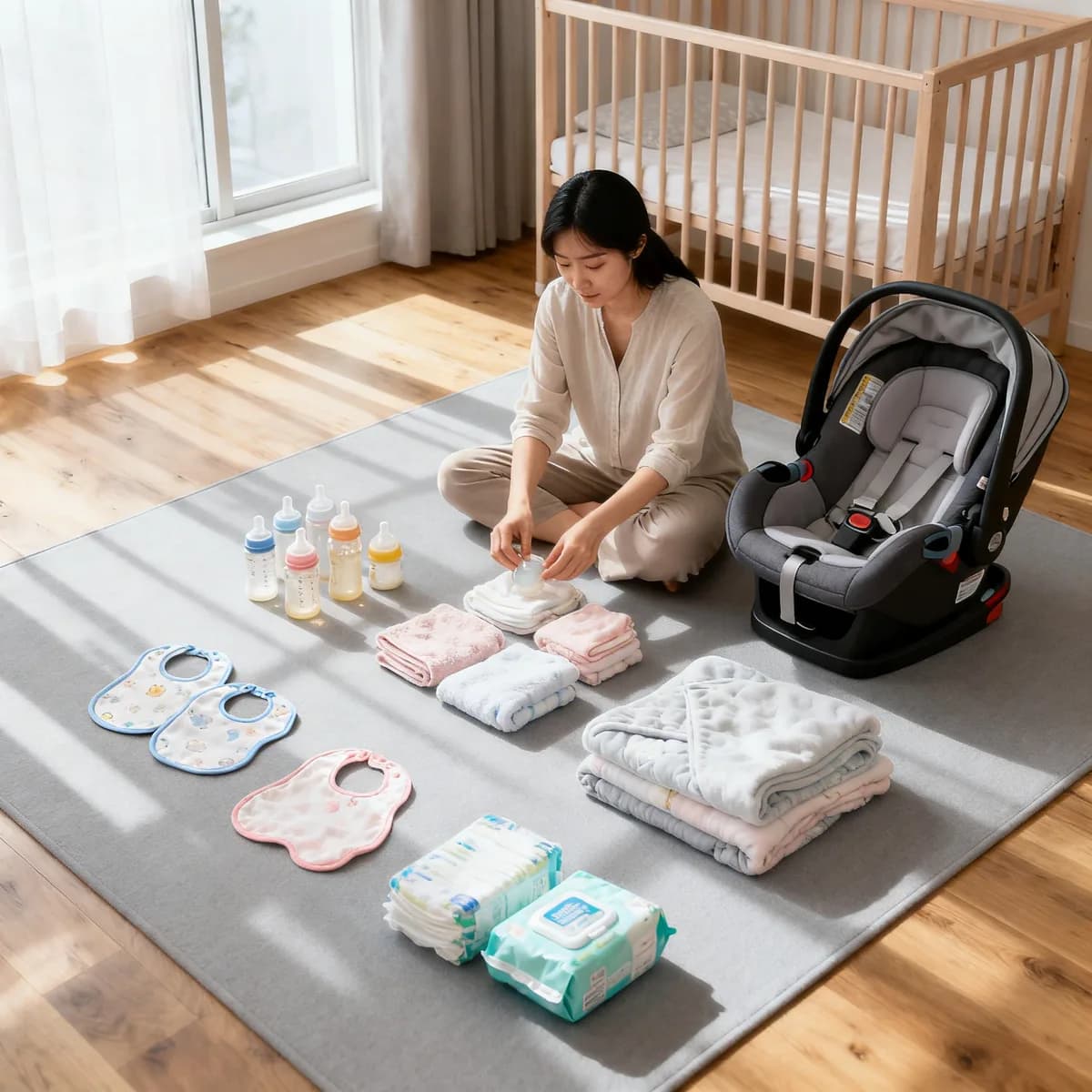
One thing that gets overlooked: bibs and burp cloths in quantity. Not as an afterthought. Feeding is messy from day one, and running out mid-week because laundry didn’t happen is a specific kind of annoying you can easily avoid.
Register for the basics across all feeding stages, not just the newborn window. Babies move through phases fast, and you won’t want to rebuild your list from scratch every three months.
Sleep is the category where registry lists go off the rails fast. Everyone has an opinion, and half of it is someone else’s expensive mistake.
Here’s what’s actually non-negotiable: a safe sleep surface, fitted sheets that stay put, and a firm flat mattress. That’s the foundation. The AAP guidelines are clear — baby sleeps alone, on their back, in a bare environment. No bumpers, no positioners, no soft bedding.
A bassinet for the first few months makes sense. Having baby close overnight is practical, not precious. When they outgrow it, a crib with a quality mattress takes over — and that mattress matters more than the crib frame.
Two to four fitted sheets minimum. Blowouts don’t wait for morning, and you will change sheets at 3am more than once.
A white noise machine is borderline non-negotiable for most families. It drowns out household noise and cues sleep transitions. Inexpensive models work just as well as the premium ones.

Now for what’s optional: the elaborate bassinet that rocks, bounces, and plays a lullaby playlist. The “smart” monitor with a subscription fee. The dedicated nursing chair that costs as much as a couch. These things exist on baby registry must haves lists because they’re aspirational, not essential.
Learning newborn swaddling techniques costs nothing and works. A good swaddle and a dark room will do more for early sleep than most gear you can buy.
If you ever do start thinking about sleep training down the road, understanding something like the Ferber method ahead of time means you’re not making that decision at four months on no sleep.
Keep the nursery boring. Boring is functional. Functional is what actually helps you survive the first year.
This is the category where the baby registry must haves are actually must haves — not because they’re clever, but because you’ll use them multiple times a day, every day.
For diaper changes, the math is simple: a waterproof changing pad, unscented wipes, a barrier cream, and somewhere to put the dirty diapers without your whole house smelling like one. That’s it.
Skip the wipe warmer. Your baby will survive room-temperature wipes.
For bathing, a small infant tub with a mesh or foam insert keeps things safe and your back intact. Newborns don’t need baths more than a few times a week — their skin dries out fast, and sponge baths handle the rest.
Fragrance-free everything for the first few months. Baby skin is more permeable than adult skin, so what goes on it gets absorbed. Fragrance is an irritant. It’s not worth the risk.
One thing that catches new parents off guard: the umbilical cord stump. It needs to stay dry and clean until it falls off, usually within one to three weeks. If you want a clear breakdown of how to actually care for it, umbilical cord care newborn covers exactly that.
Beyond that, keep skincare minimal. A gentle wash, a fragrance-free lotion if their skin is dry, and a solid diaper cream for rash prevention. You don’t need a ten-step routine for a two-week-old.
A small nasal aspirator and a digital rectal thermometer round out the essentials. Knowing when to take infant to er for fever matters more than the brand of thermometer you buy — but you do need an accurate one.
Daily care doesn’t have to be complicated. Consistent and safe is the whole goal.
Here’s the clothing math most registries get wrong: you don’t need 30 newborn onesies. You need maybe 6–8 newborn pieces, a solid stack in 0–3 months, and then go heavy on 3–6 months.
Newborns grow fast — sometimes jarringly fast. Buying too deep in one size means you’ll have pristine outfits your baby wore once, maybe never.
Skip anything with complicated snaps, buttons down the back, or anything that goes over the head without a stretchy neck. Middle-of-the-night outfit changes are not the time for a puzzle.
Zip-up sleepers are your best friend. So are kimono-style tops for the early weeks when the umbilical stump is still healing.
On the comfort side: swaddle blankets, a couple of wearable blankets in different tog weights, and at least one or two softer “lounge” outfits you’ll reach for constantly. If you want something genuinely gentle against new skin, the Beemymagic pieces hold up well — soft enough to actually feel like a comfort item, not just a filler outfit.
For the postpartum side of things — because you matter too — think about what you’ll be wearing during those early weeks. You’ll want something easy for feeding, easy to move in, and not demoralizing to look at.
When you’re building out your diaper bag list for newborn outings, clothing layers factor in there too — a spare outfit or two lives in that bag from day one.
The baby registry must haves for clothing really come down to versatility and ease. Cute is fine. Functional is non-negotiable.

Some things on your list aren’t about preference — they’re about protection. Baby gates, a reliable video monitor, outlet covers, cabinet locks, and a carbon monoxide detector aren’t optional extras.
Start with the monitor. You want video, not just audio. Night vision, two-way talk, and temperature display in the room are features you’ll actually use — not upsell fluff.
Baby gates matter more than most people anticipate before they have a mobile baby. Get one rated for stairs and one rated for doorways. Pressure-mounted gates work for doorways; hardware-mounted gates are non-negotiable at the top of stairs.
Cleaning products deserve more thought than they usually get. Whatever you’re spraying on high chairs, counters, and play surfaces is ending up in your baby’s orbit. Look for fragrance-free, non-toxic formulas — there are good ones that actually clean.
A first aid kit specific to infants is something people routinely skip and then scramble for. Infant acetaminophen (ask your pediatrician about dosing before you need it at 2am), a nasal aspirator, a digital rectal thermometer, and saline drops. That’s your kit.
If you’re putting together your baby registry must haves list and safety feels like a separate category — it isn’t. It’s the foundation everything else sits on.
One thing worth knowing before your baby arrives: knowing what to expect at baby’s first pediatrician visit can help you get ahead of safety questions too. Your pediatrician is a real resource for what’s actually worth worrying about versus what isn’t.
Lock the cabinets, get the gates up before you need them, and swap out anything with a warning label you wouldn’t want near your face. Future you will be grateful past you handled it early.
Not everything on a “baby registry must haves” list actually belongs there. A lot of it is marketing dressed up as necessity.
The wipe warmer. The diaper pail with the proprietary refills. The bottle sterilizer when your dishwasher already runs hot. These are things people buy, use twice, and then shove in a closet next to the baby shoe bronzing kit.
The infant bathtub is borderline. Most newborns get sponge baths anyway, and a folded towel in a regular sink works fine until they can sit. Borrow one if you want it. Don’t register for it.
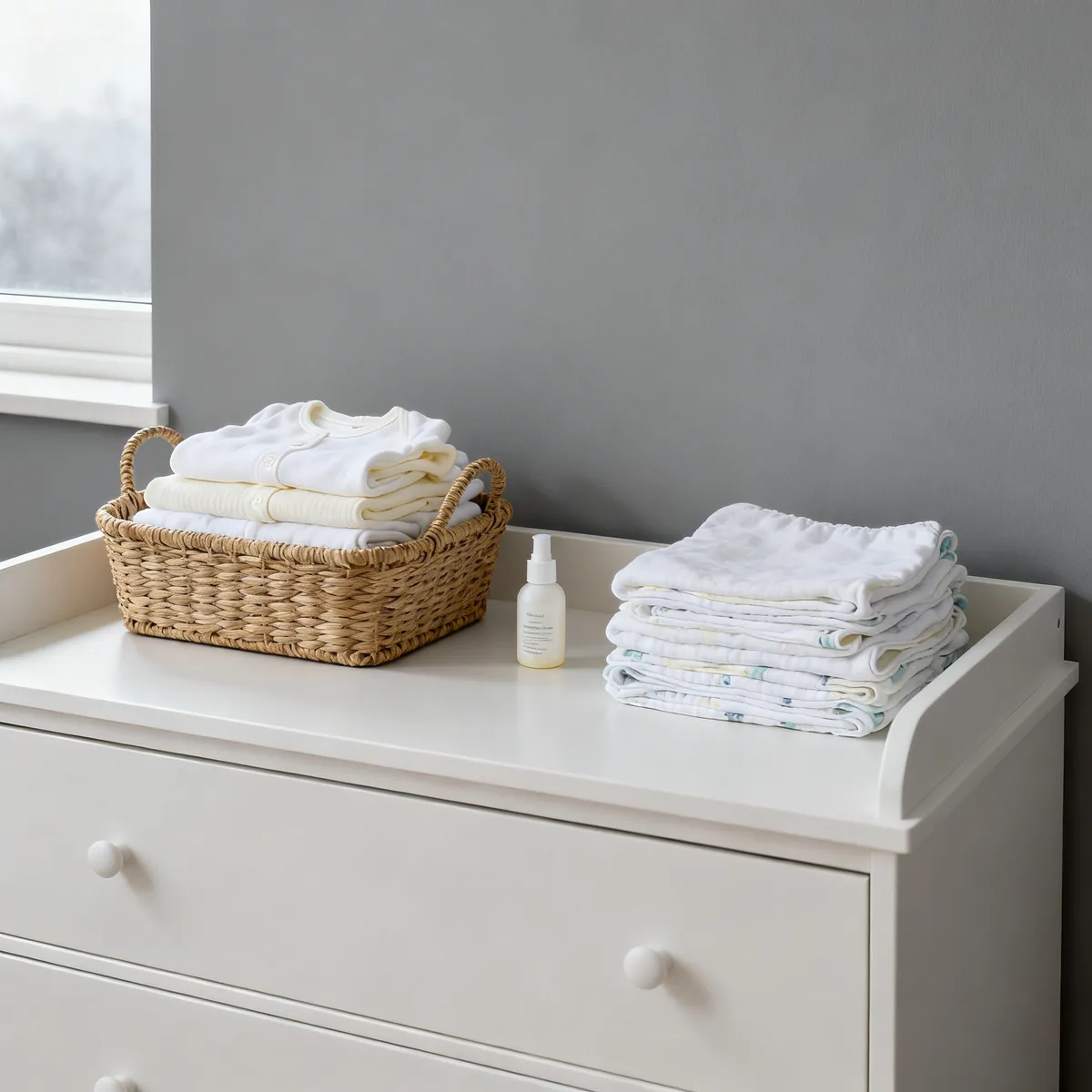
Changing tables are another one. A changing pad on top of a dresser does the same job and takes up less room. You’ll be changing diapers on the floor, in the car, on a restaurant table in a moment of desperation — a dedicated piece of furniture isn’t what makes that easier.
Newborn clothes in general. People will give you onesies. You will receive more onesies than your baby could wear in three lifetimes. Skip sizing 0-3M on the registry entirely and go straight to 3-6M.
Baby food makers, bottle warmers, and elaborate nursing pillows with brand-specific positioning systems — most of these have cheaper workarounds. A regular pillow. A bowl of warm water. A blender you already own. The gear doesn’t make breastfeeding positions work better; practice and support do.
The honest version of registry advice: if you can borrow it, rent it, or improvise it with something you already have, take it off the list. Register for the things that are genuinely hard to replace and genuinely used every single day. Everything else is clutter with a bow on it.
True essentials fall into four categories: feeding supplies (bottles or breastfeeding gear, sterilizer, feeding seat), sleep basics (bassinet or crib, sheets, safe sleep items), diapering (changing table or dresser, diapers, wipes, diaper cream), and safe transport (car seat, stroller). Everything else is a comfort upgrade, not a necessity.
A realistic budget for core essentials ranges from $800–$1,500, depending on your choices around feeding (breast vs. formula), sleep setup (bassinet vs. crib), and whether you’re buying new or accepting hand-me-downs. The key is registering for what you actually need first, then adding nice-to-haves only if budget allows.
Prioritize multiples of: fitted crib sheets (3–4), sleep sacks (2–3), onesies and bodysuits in multiple sizes, burp cloths, and washcloths. Skip multiples of: strollers, car seats, bassinets, and changing tables — one is enough, and you’ll quickly know if you want a second.
Expensive doesn’t mean better. A $200 sterilizer and a $15 microwave steam bag do the same job; a $300 bassinet and a $100 pack-and-play serve the same purpose. Invest in safety items (car seat, crib mattress) and things you’ll use daily (feeding seats, sheets); save money on gadgets and decor.
Common regrets include: wipe warmers (babies don’t mind cold wipes), themed nursery decor (impractical and limiting), multiple swaddle types (one or two work fine), diaper pails with subscription systems (regular trash cans work), and items sized for newborn-only (register for items that grow with your baby instead).