Quick Summary
Here’s what nobody warns you about before solids start: your baby is born with a built-in iron supply, borrowed from you during pregnancy — and it runs out around six months.
Most parents think of iron as just another nutrient on a checklist. But the best high iron foods for babies are actually foundational to brain development, oxygen transport, and preventing deficiency that can affect cognition long-term.
This guide covers the iron-rich foods that matter most, how to maximize absorption, and exactly when to worry about whether your baby has enough.
Why Iron Matters: What You Actually Need to Know About Baby Iron Requirements
Here’s something nobody warns you about before solids start: your baby is born with a built-in iron supply, borrowed from you during pregnancy. It’s enough to last about six months. And then it runs out.
That timing isn’t a coincidence. It’s why solid food introduction matters so much — not just for the experience of eating, but for what your baby’s body genuinely needs right now.
Iron does two things that nothing else can do. It carries oxygen through the blood. And it builds the brain.
That second one is the one that stops you in your tracks. The brain grows faster in the first year of life than at any other point. Iron is directly involved in how neurons connect, how cognitive function develops, and how your baby processes the world around them. Low iron in infancy isn’t just a numbers problem on a blood test — it can affect development in ways that are hard to reverse later.
The AAP recommends that babies be screened for iron deficiency around 12 months, and specifically flags that breastfed babies need additional iron sources starting at 4-6 months because breast milk alone doesn’t provide enough.
Formula is typically iron-fortified, so formula-fed babies have a bit more coverage. But once you’re introducing solids either way, iron needs to be part of the picture intentionally — not an afterthought.
This is exactly where knowing the best high iron foods for babies becomes genuinely useful, not just nutritionally interesting. If your baby is eating and you’re not sure what to prioritise, iron-rich foods belong at the top of that list.
And if you’re still getting set up for mealtimes, our high chair buying guide can help you figure out what you actually need before that first spoonful.
Best High Iron Foods for Babies: Meat, Legumes, and Fortified Options
Here’s the thing nobody tells you clearly enough: not all iron is absorbed the same way. There are two types — heme iron, which comes from animal sources, and non-heme iron, which comes from plants and fortified foods.
Heme iron wins on absorption. Your baby’s body absorbs it at roughly 15–35%, compared to just 2–20% for non-heme iron. That gap matters when you’re working with a tiny stomach and limited meal windows.
The best high iron foods for babies in the heme category are red meat (think pureed beef or lamb), dark poultry like chicken thighs, and fish. These are genuinely the most efficient iron sources you can offer.
On the plant side, lentils and beans are solid choices — especially red lentils, which cook down beautifully and blend easily. Iron-fortified infant cereals are another option, particularly for babies who aren’t eating much meat yet.
The AAP recommends that iron-rich foods be among the first foods introduced at around 6 months, noting that iron deficiency in infancy can affect brain development and cognitive function long-term.
One thing that actually helps with non-heme absorption: pair it with vitamin C. A little mashed sweet potato or pureed mango alongside lentils makes a real difference in how much iron your baby actually takes in.
And a practical note — if mealtimes are inconsistent or intake is hard to track, that is worth raising with your pediatrician, who can advise on whether anything further is needed.
Also worth knowing: calcium competes with iron for absorption, so spacing out dairy and iron-rich foods where you can is genuinely useful, not just overthinking it.
Boosting Iron Absorption: Pairing Foods for Maximum Nutrition
Here’s something that took me a while to actually understand: it’s not just about what iron-rich foods you serve. It’s about what you serve alongside them.
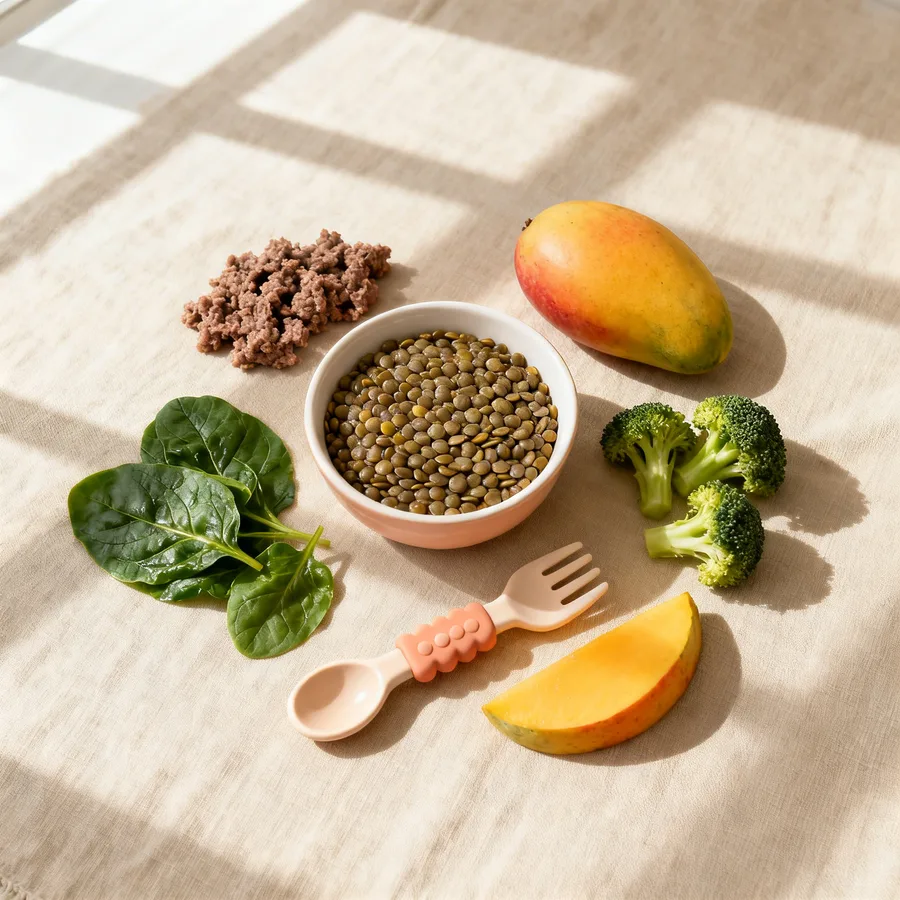
Plant-based iron — the kind found in lentils, beans, tofu, and fortified cereals — is called non-heme iron. Your baby’s body doesn’t absorb it as easily as the iron in meat. But vitamin C changes that equation significantly.
When you pair a vitamin C source with a non-heme iron food, absorption can increase dramatically. Think beans mashed with roasted sweet potato. Lentil purée with a little soft mango stirred in. Spinach blended with strawberry and banana.
The AAP notes that iron deficiency is the most common nutritional deficiency in children, which is exactly why getting the most out of every meal matters — especially in those early months of solids when you’re figuring out what your baby even likes.
When you’re building plates around the best high iron foods for babies, these pairings aren’t fussy nutrition tricks. They’re just smart combinations that actually work.
Now, what to avoid near iron-rich meals. Cow’s milk, cheese, and yoghurt contain calcium, which competes directly with iron for absorption. You don’t have to eliminate dairy — just don’t serve it in the same sitting as your main iron sources where you can help it.
Tea is another one. Even herbal teas contain tannins that can block iron absorption. Not something most babies drink, but worth knowing for toddlers.
And if your little one is showing interest in what’s on your plate while you’re looking for more ideas on how to engage them at the table and beyond, diy baby toys has some lovely ways to build that curious, exploratory energy that makes mealtimes more fun too.
Small shifts. Real difference. That’s what this stage is about.
Easy Iron-Rich Baby Food Recipes and Meal Ideas
Here’s the thing about cooking for babies — it doesn’t have to be complicated. Simple is good. Simple is actually better.
These are the combinations I’d come back to again and again. They’re easy to make, easy to adapt, and they cover some of the best high iron foods for babies in ways little ones actually eat.
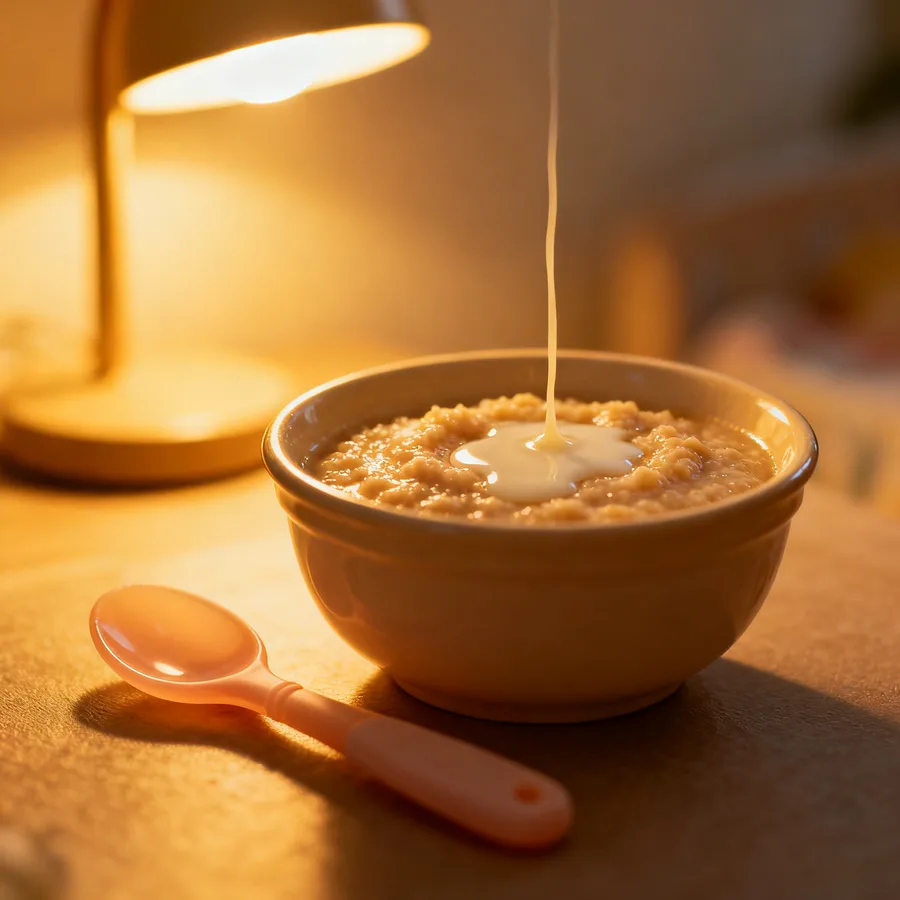
Iron-fortified cereal with mashed banana. Mix iron-fortified oat or rice cereal with breast milk or formula, then stir in mashed ripe banana. The vitamin C in banana helps the iron absorb. It’s one of the easiest first combos you can offer.
Beef and sweet potato purée. Simmer minced beef until fully cooked, then blend with steamed sweet potato and a little water. Smooth or slightly textured depending on where your baby is at. Beef is one of the richest iron sources you can offer — don’t skip it just because it feels grown-up.
Red lentil blend. Cook red lentils with a small piece of carrot and a pinch of cumin. Blend smooth. Lentils are gentle on tiny digestive systems and genuinely iron-dense. Pair with a vitamin C-rich veggie to make the most of it.
Chickpea and spinach mash. Mash cooked chickpeas with wilted spinach and a squeeze of lemon. This one works well for babies around 8–9 months who are moving toward lumpier textures.
Soft beef or chicken strips (finger food). For babies closer to 10–12 months, slow-cooked beef or chicken that pulls apart easily is a brilliant finger food. Soft enough to gum, substantial enough to matter. If you’re navigating the kitchen at this stage, our guide on how to baby proof kitchen is worth a read before the real exploring begins.
Rotate these through the week. Variety is the whole game at this age.


Signs Your Baby Might Be Low in Iron (And When to Test)
Here’s the thing about iron deficiency — it doesn’t always look dramatic. It can creep in quietly, and you might chalk the signs up to just a tired baby or a fussy phase.
Some of the subtler signs to watch for: unusual tiredness, pale skin (especially around the lips and inner eyelids), low appetite, and a baby who seems less engaged or harder to settle than usual.
Slow weight gain can also be a flag. So can a baby who’s been exclusively breastfed past six months without iron-rich solids introduced — breast milk alone doesn’t carry enough iron to meet a growing baby’s needs after that point.
The AAP recommends universal iron screening at 12 months for all babies, with earlier screening for high-risk infants — including premature babies and exclusively breastfed babies who haven’t had iron supplementation.
That 12-month mark isn’t arbitrary. It lines up with the window when iron stores from birth are running low and solid food intake is still building. It’s also right when you’re ideally ramping up the best high iron foods for babies — things like pureed meats, lentils, and fortified cereals.
If you’re breastfeeding, your own iron intake matters too. A solid breastfeeding diet plan can help you stay on top of your levels while supporting your baby’s.
Don’t wait for the 12-month check if something feels off. You know your baby. If the tiredness seems different, or they’re losing interest in feeding, bring it up at your next appointment and ask specifically for a blood test. Pediatricians won’t always offer it unprompted.
Trust your gut. It’s usually worth the ask.
High Iron Foods for Picky Eaters and Texture Preferences
Some babies just will not do meat. The texture, the smell, the whole situation — they want nothing to do with it. That is so normal, and it does not mean you’re failing at feeding them.
The good news is that meat is not the only path to iron. You have real options here.
Lentils are one of the best high iron foods for babies who reject meat textures — they cook down soft, blend easily into purées, and disappear into tomato sauces without a fight. Mashed chickpeas, black beans, and kidney beans work the same way.
Tofu is another quiet winner. Soft tofu has a mild flavor and a texture many babies accept when other proteins get refused. Pan-fry it lightly and it gets a little grip — easier for babies working on self-feeding.
For sneaky add-ins: stir a spoonful of smooth nut butter into oatmeal. Fold puréed lentils into mashed sweet potato. Add finely chopped spinach into scrambled eggs. Small amounts, consistent exposure, no pressure.
Pairing iron-rich foods with vitamin C genuinely helps absorption. A little mashed strawberry alongside lentil purée. Roasted red pepper mixed into bean mash. It does not have to be complicated.
And here’s the honest part about refusal: some days your baby will eat everything. Some days they will eat nothing. That is developmentally normal, especially between 8 and 12 months when novelty is still being processed.
If your baby is consistently refusing most solids — not just iron foods, but solids generally — and it has been going on for weeks, it’s worth mentioning to your pediatrician. Sometimes there’s a sensory piece, sometimes silent reflux baby feeding aversion is at play. It is not always just pickiness.
Keep offering. Keep varying textures. You are doing more than you think.
Sources
- American Academy of Pediatrics (AAP) — iron requirements for babies starting solids and screening guidelines for iron deficiency.
- CDC — iron supplementation recommendations for breastfed infants.
Frequently Asked Questions
What are the best high iron foods for babies starting solids?
Red meat (beef, lamb), dark poultry (chicken thighs), fish, lentils, beans, and iron-fortified infant cereals are the most efficient sources. Heme iron from meat is absorbed at 15–35%, compared to 2–20% for plant-based iron.
How much iron does a 6–12 month old baby need per day?
Babies aged 6–12 months need 11 mg of iron daily. The amount is the same whether they’re breastfed or formula-fed, but breastfed babies need intentional iron sources from food or supplementation because breast milk alone doesn’t provide enough.
Can I give my baby too much iron from food?
Iron from food is very difficult to overdose on — your baby’s body absorbs only what it needs and excretes the rest. Iron supplements (if prescribed) do carry overdose risk, so follow your pediatrician’s dosing exactly.
How do I know if my baby has iron deficiency anemia?
Signs include pale skin or pale coloring inside the lower eyelid, fatigue, slow growth, and delayed development. The AAP recommends screening around 12 months, but mention these concerns to your pediatrician earlier if you notice them.
Do iron-fortified baby cereals work as well as whole food sources?
Iron-fortified cereals are a convenient option and contain bioavailable iron, but absorption is lower than heme iron from meat. They work best paired with vitamin C sources (like sweet potato or fruit) to boost absorption.
Loved by real parents — shop the essentials
Curated Korean baby essentials from the Onzenna shop.


Keep Reading

What Makes PPSU Different From the Plastic Cups You Grew Up With

Teething + Feeding: What to Give Your Baby When Chewing Hurts

What "I Don't Like It" Actually Means at Snack Time: A Toddler-to-Parent Translation Guide

How to Choose the Right Feeding Seat for Easier Bottle Time

BPA-Free Isn't Enough: What "BPA-Free" Labels Don't Tell You