Quick Summary
Here’s what nobody tells you about bottle weaning: it’s not about taking something away from your baby — it’s about recognizing they’ve already grown past needing it the same way.
Around 12 months, most babies develop the oral motor skills to drink from a cup, and their solid food intake naturally increases, shifting how much milk they actually need. The AAP recommends starting the transition to wean baby off bottle between 12 and 18 months, partly because prolonged bottle use is linked to tooth decay and can crowd out iron-rich foods.
This guide walks you through the signs your baby is ready, practical weaning strategies, and how to handle the emotional attachment that makes this transition harder for parents than for kids.
Why 12 Months Is the Right Time to Wean Baby Off Bottle
Nobody tells you how attached you get to the bottle too. It’s a feeding tool, yes — but it’s also comfort, and quiet, and a thing that worked. Letting it go feels bigger than it sounds.
But here’s what I know: twelve months is genuinely the right window, and it’s not arbitrary.
Around their first birthday, most babies have developed the oral motor skills to actually manage an open or sippy cup. Their lips can seal around a rim. They can tilt, swallow, and control the flow in a way a younger baby simply can’t.
They’re also eating more solid food now, which changes how much they need to drink — and how they need to drink it. A cup supports that shift in a way the bottle doesn’t.
The AAP recommends transitioning away from the bottle by 12 to 18 months, noting that prolonged bottle use is linked to tooth decay and can contribute to iron-deficiency anemia — partly because babies who bottle-feed on demand tend to drink more milk than they need, which crowds out iron-rich solid foods.
That’s the part that surprised me. It’s not just about teeth. It’s about what too much bottle feeding can quietly displace in their diet.
If you’re also navigating the big developmental shifts that come with this age — and there are a lot of them — it helps to know that the 12 month sleep regression often lands right around the same time. A lot is changing at once for your baby.
Knowing that 12 months is a real developmental milestone — not just a guideline someone made up — can make it easier to hold the line when the process gets hard. And it will get hard. That’s normal.
Learning how to wean baby off bottle at 12 months is really about working with where your baby already is, not against it.
Signs Your Baby Is Ready to Wean Off Bottle
Here’s the thing about timing — your baby will actually show you when they’re getting ready. You just have to know what to look for.
One of the clearest signs is curiosity about cups. If your baby is grabbing at your glass, reaching for sippy cups, or trying to drink from whatever you’re holding, that’s real interest. That’s not random. That’s readiness.
Watch their hands too. A strong pincer grasp — where they pick up small pieces of food between their thumb and finger — tells you their fine motor skills are catching up. That same coordination is exactly what makes cup-drinking manageable for them.
You might also notice they’re finishing less of their bottle, or getting distracted partway through. At 12 months, a lot of babies naturally start getting more nutrition from solids. The bottle becomes less urgent to them.
Another one people don’t talk about enough: reduced comfort-seeking from the bottle specifically. If your baby is finding other ways to self-soothe — a stuffed animal, coming to you for a cuddle, settling with a familiar routine — that emotional flexibility matters. It means the bottle isn’t carrying all the weight anymore.
Sleep associations are worth paying attention to here too. If your baby still needs a bottle to fall asleep every single time, that’s a sign the transition will need some extra gentleness around bedtime — not a reason to wait, just something to plan for. If you’ve already navigated the 8 month sleep regression, you’ve already done hard sleep work before. This is more of the same.
None of these signs have to all show up at once. Even two or three of them together is enough to know your baby is ready — and that working on how to wean baby off bottle at 12 months is the right move right now.
How to Wean Baby Off Bottle: Step-by-Step Approach
Here’s the honest truth: there’s no magic script. But there is a sequence that makes this easier — for both of you.
Start by replacing one bottle at a time. Not all of them at once. Pick the bottle your baby cares about least — usually a mid-day one — and swap it for a cup with a small amount of whole milk or water.
Do that for a few days until it feels normal. Then replace the next least-important bottle. You’re building a new habit slowly, not ripping something away.
Time cup offers around meals. Babies accept new things more easily when food is already on the table — they’re in “eating mode,” not “comfort mode.” Offering a cup with lunch or a snack is a much softer entry point than replacing the bedtime bottle cold.

Speaking of bedtime — save that one for last. It’s usually the hardest because it’s tied to sleep and settling. If you know your baby uses that bottle to wind down, start shifting the routine so the cup comes earlier in the sequence — before the book, before the cuddle, before the lights go down.
Keep everything else the same. Same songs, same order, same room. Routine is what makes the bottle feel less necessary — because the comfort is still there, just in a different form.
For the cup itself, you want something with a soft spout that doesn’t feel totally foreign. A lot of moms I know had real luck with Grosmimi — the spout is gentle enough that babies who refused hard sippy cups actually took to it.
And if your baby is also going through any new transitions right now — like first day of daycare — just know that stacking big changes rarely helps. One thing at a time, when you can manage it.
Choosing the Right Cup for Bottle Weaning Success
Here’s the thing nobody tells you: not every cup works for every baby, and that’s not a failure — it’s just how it goes.
The three main options you’ll encounter are sippy cups, straw cups, and open rim cups. Each one asks your baby to use their mouth differently, and that actually matters more than most people realize.
Sippy cups with hard spouts can encourage the same sucking motion as a bottle, which sounds helpful but sometimes just prolongs the transition. A soft-spout sippy is a gentler bridge — less jarring for a baby who’s still adjusting.
Straw cups are honestly where a lot of families land when figuring out how to wean baby off bottle at 12 months. Straw drinking uses the tongue and jaw in a way that’s closer to how older kids and adults drink — it actually supports the natural oral development you want to encourage at this stage.
Open rim cups are the end goal, but they’re messy and require coordination that most one-year-olds are still building. Totally worth introducing, just maybe not as your first move.
On materials: look for BPA-free, phthalate-free options. Silicone spouts tend to be softer and more accepted by babies who are resistant. Stainless steel bodies hold temperature well, which can help if your baby is used to warm milk from a bottle.
If you’ve already gone through something like switching baby formula, you already know that transitions take a little trial and error before something clicks. Same principle here.
Buy one or two cups first. See what your baby actually reaches for. That tells you more than any recommendation will.


Managing Bottle Attachment and Comfort Weaning
Here’s the part nobody really prepares you for. The bottle isn’t just a feeding tool by this point — it’s a comfort object. It’s warmth, closeness, the thing that signals safety to your baby.
So when you’re figuring out how to wean baby off bottle at 12 months, you’re not just swapping a cup for a bottle. You’re replacing a ritual. That’s a bigger ask than it sounds.
Your baby isn’t being difficult. They’re telling you the bottle means something to them. That’s actually a good thing — it means they feel secure. It just means the transition needs to be about connection, not just containers.
What actually helps is building new rituals around the cup. Same cozy chair. Same soft blanket. Same slow, quiet moment — just a different vessel in their hands.
Start with the daytime bottles first. Those are habit, not deep comfort. Bedtime and morning bottles are the ones wrapped in emotion, so save those for last.
If your baby is clinging hard to that pre-sleep bottle, think about what else you can layer in. An extra song. A longer cuddle. Something that fills the same emotional space the bottle was filling. The goal is to transfer the feeling, not just remove the object.
This kind of attachment at transitions shows up in other places too — if you’ve ever dealt with baby separation anxiety daycare drop-offs, you know how much ritual and predictability matter to little ones when they’re feeling unsure.
Give it time. Some babies let go in a week. Some need a month. Neither is wrong.
You’re not failing if it’s slow. You’re just being gentle with someone who trusted the bottle to take care of them.
Common Weaning Challenges and How to Handle Them
Here’s the truth: almost every baby pushes back. Resistance isn’t a sign you’re doing it wrong — it’s a sign your baby is human.
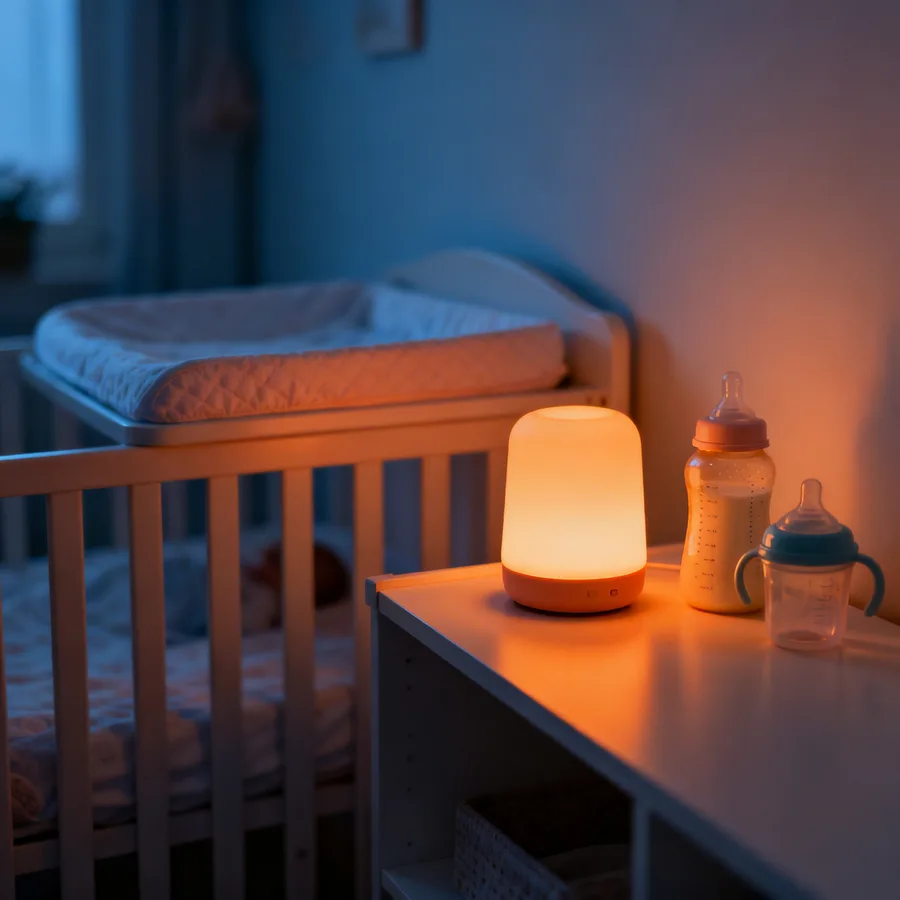
If your baby flat-out refuses the cup, don’t panic. Try a different cup style. Some babies hate spouts and actually do better with an open cup or a straw. It sounds counterintuitive, but it works.
Regression is real too. You’ll have three great days, then one terrible one where they’re screaming for the bottle like it’s the only thing they’ve ever loved. That’s normal. Hold the line, stay calm, and don’t read too much into one bad day.
Spillage frustration is its own thing. You’re mopping up milk for the hundredth time and you’re done. I get it. Stick with small amounts in the cup during practice — two or three ounces max — so when it tips over, it’s not a full pour on the floor and your last nerve.
Reduced milk intake is probably the one that worries moms most. When you’re figuring out how to wean baby off bottle at 12 months, the cup just feels less efficient at first. Babies drink less because it takes more effort. That’s okay. At this age, milk is supplementing food, not replacing it.
Keep offering milk with meals. Offer water in between. If they’re eating solids reasonably well and staying hydrated, a temporary dip in milk volume is usually not a crisis — it’s an adjustment. If you’re genuinely worried about their intake, loop in your pediatrician. That’s always a fair call.
And if the whole transition is piling onto an already exhausting season, know that mom burnout is real — and you’re allowed to ask for help before you hit empty.
Timeline and Expectations: How Long Does Bottle Weaning Take?
Here’s what I want you to hear before anything else: there is no universal finish line.
Most babies make the full transition off the bottle somewhere between two and four weeks. That’s the realistic range — not two days, not two months.
Some kids surprise you. They take to a sippy cup on day three and never look back. Others hold on hard, and you’re still negotiating at week five.
Both of those things are normal.
If you’re figuring out how to wean baby off bottle at 12 months, the two-to-four week window is a solid expectation to hold. But hold it loosely.
A lot depends on your baby’s temperament, how attached they are to the bottle as a comfort object, and what else is going on in their world. Teething, a sleep regression, a new environment — any of it can slow things down.
That’s not failure. That’s life with a baby.
When to pause: if your baby is genuinely distressed — not just fussy, but inconsolable — or if they’re refusing food and fluids across the board, it’s okay to slow the pace. A few extra days matter more than a rigid schedule.
When to keep going: a little protest and resistance is expected. If they’re eating, drinking, sleeping reasonably, and just annoyed? You’re probably on track. Stay the course.
One thing that trips people up is the bottle-sleep connection. If your baby is baby not sleeping through night territory and the bottle is their crutch for falling back asleep, that piece might take a little longer to untangle — and that’s okay too.
Give yourself the full four weeks before you decide something isn’t working.
Sources
- American Academy of Pediatrics (AAP) — Guidance on discontinuing bottle use and recommended transition timeline.
- American Academy of Pediatrics (AAP) — Solid food development and nutritional needs at 12 months.
Frequently Asked Questions
Can I wean baby off bottle cold turkey at 12 months, or does it need to be gradual?
Gradual is almost always easier on both baby and parent. Cold turkey can trigger intense resistance and increased comfort-seeking behavior, especially if the bottle carries emotional weight for your child. Most babies transition successfully over 2-4 weeks when you replace one bottle at a time with a cup, starting with the least emotionally significant feeding (usually lunch) and saving bedtime for last.
What’s the difference between weaning off bottle and weaning off formula at 12 months?
Weaning off the bottle is about the delivery method; weaning off formula is about the nutrition source. You can transition to a cup while keeping formula or milk as the drink, or transition to cow’s milk in a cup. These don’t have to happen at the same time — some families keep formula longer and move to cups immediately, while others switch nutrition sources gradually.
How much milk should my 12-month-old drink from a cup if they’re refusing the bottle?
Most 12-month-olds need 16-24 ounces of milk daily (from milk, cheese, yogurt, and other dairy sources combined). If your baby is refusing the bottle during transition, focus on cup offerings at meals and offer milk-based foods like cheese or yogurt to bridge any gaps. Reduced milk intake during weaning is common and usually temporary.
Is it normal for babies to drink less milk during bottle weaning?
Yes, this is completely normal. Babies often drink less milk from a cup initially because it requires more active effort and control than passive bottle-feeding. As long as they’re eating solid foods with calcium and getting adequate nutrition overall, a temporary dip in milk intake during transition isn’t concerning. Intake typically stabilizes within 2-3 weeks.
Should I eliminate all bottles at once, or keep one for bedtime during the transition?
Keeping one bottle for bedtime is a common and effective strategy, especially if the bottle is part of your child’s wind-down routine. This maintains predictability while you transition other feedings to cups. Once your baby is drinking confidently from cups at other meals, you can gradually phase out the bedtime bottle, or keep it as long as your pediatrician supports it.
Part of our guide: Why Your Toddler Suddenly Won’t Drink Milk
Keep Reading

What Makes PPSU Different From the Plastic Cups You Grew Up With

Teething + Feeding: What to Give Your Baby When Chewing Hurts

What "I Don't Like It" Actually Means at Snack Time: A Toddler-to-Parent Translation Guide

How to Choose the Right Feeding Seat for Easier Bottle Time

BPA-Free Isn't Enough: What "BPA-Free" Labels Don't Tell You