Quick Summary
Here’s what nobody tells you about the best first finger foods for 6 months: the calendar doesn’t decide readiness—your baby’s body does.
Most parents think six months means go ahead and hand over the finger foods. But six months is just a window, not a guarantee. Your baby needs three specific developmental signs—sitting up with minimal support, hand-to-mouth coordination, and a fading tongue-thrust reflex—before finger foods actually work safely.
Once those signs show up, you can start exploring soft textures and safe options. This guide walks you through exactly what works, what to skip, and how to prep food so your baby can actually grab it and eat it without panic.
When Is Your Baby Ready for Finger Foods at 6 Months?
Here’s the thing nobody warns you about: the calendar doesn’t decide this. Your baby does.
Six months is a starting window, not a green light. Some babies get there right at six months. Others need a few more weeks. Both are completely normal.
The AAP recommends watching for developmental readiness signs before introducing solids — not just age alone. That distinction matters more than you’d think.
So what does ready actually look like? First, your baby needs to sit up with minimal support and hold their head steady. If they’re still flopping forward in the high chair, their airway isn’t in the right position for safe swallowing. A good high chair buying guide can help you find a seat that actually supports that upright posture.
Second, watch their hands. Are they picking things up and bringing them to their mouth with some intention? That hand-to-mouth coordination is the body’s way of saying it’s starting to understand the mechanics of eating.
Third — and this one’s the big one — look for the loss of the tongue-thrust reflex. That’s the instinct that makes babies push things out of their mouths with their tongue. It’s a protective reflex for newborns. When it fades, it’s a signal that the swallowing system is maturing.
If you offer a soft piece of food and it just keeps getting pushed back out, that reflex hasn’t gone yet. Give it another week or two.
When all three signs show up together — steady sitting, hand-to-mouth coordination, and a fading tongue-thrust — that’s when exploring the best first finger foods for 6 months actually makes sense for your baby’s body.
Don’t rush it. And don’t let anyone make you feel behind if your baby’s not quite there yet.
Best First Finger Foods for 6 Months: Soft, Safe Textures
Here’s the thing nobody tells you: “soft” has to mean squishes between your fingers with almost no pressure. If you can’t smush it easily, your baby’s gums can’t handle it either.
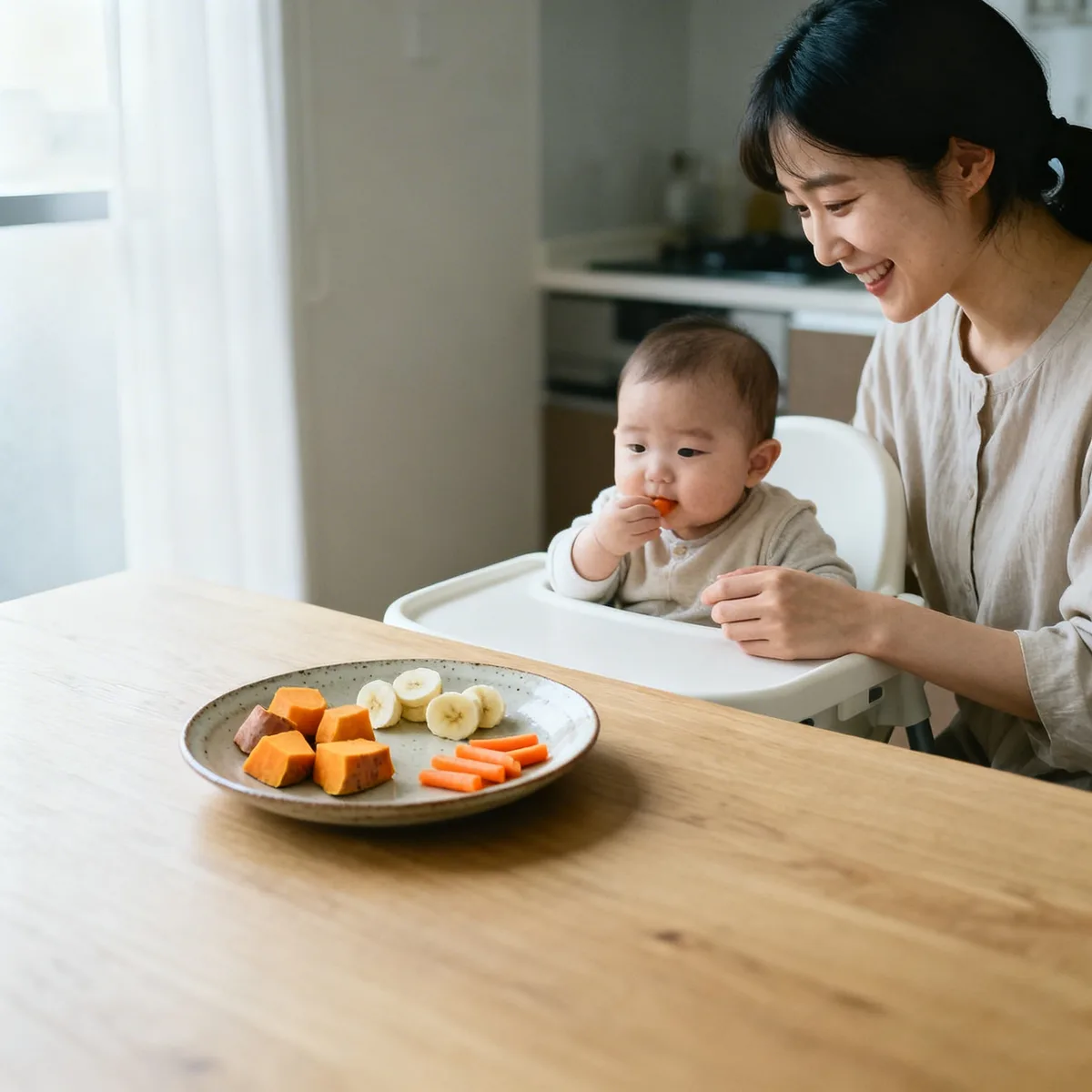
Start with vegetables like steamed sweet potato, carrot, or butternut squash — cut into strips about the length of your finger so she can grip it even before her pincer grasp kicks in. They should practically melt on the tongue.
Ripe fruits are your best friends here. Avocado, banana, and soft pear (peeled and ripe enough to indent with a fingernail) all work beautifully. No cooking required, and babies tend to love them.
For protein, soft-cooked egg yolk is a great early option. The AAP recommends introducing common allergens like egg early — around 6 months — to actually help reduce the risk of food allergies developing later.
Flaked fish — think salmon or cod, steamed and checked carefully for bones — is another gentle protein that’s easy to mash against the roof of the mouth. Soft-cooked lentils work too, and they’re easy to batch-cook.
For grains, well-cooked oatmeal fingers or soft toast strips with a thin layer of nut butter are solid options. Just make sure the toast has had time to absorb a little moisture — dry and crumbly is a choking risk.
And if your baby is starting to explore the kitchen more, it’s worth thinking ahead — our guide on how to baby proof kitchen spaces covers the things that catch most parents off guard.
Finger Foods to Avoid at 6 Months: Choking Hazards
This part is genuinely scary to think about. And that’s okay — the fear means you’re paying attention.
At six months, your baby has no molars. None. They can gum and mush, but they cannot chew through anything that needs real breaking down.
The AAP advises avoiding hard, round, or sticky foods that can block a baby’s airway — and at this age, that list is longer than most people expect.
Whole grapes are one of the biggest ones. They’re the perfect size and shape to lodge in a small throat. Always cut them into quarters, lengthwise — and honestly, most guides suggest holding them off until your baby is older and has better chewing control.
Raw vegetables — carrots, celery, apple slices — are too firm. A baby can bite off a chunk they absolutely cannot manage. Cook everything until it squashes easily between your fingers.
Nut butters straight from the spoon are another one to watch. The sticky, thick texture can cling to the roof of the mouth. If you want to introduce them, thin them out with water or spread a thin layer on toast.
Popcorn, whole nuts, and hard candies — these aren’t anywhere near the best first finger foods for 6 months. Save them for years down the road, not months.
Chunks of meat that haven’t been shredded fine, large pieces of bread that haven’t softened, and anything with a skin that doesn’t break down easily — all worth holding back for now.
Here’s the real rule: if you can’t squash it between your thumb and finger with light pressure, your baby isn’t ready for it yet.
Keep mealtimes in your sightline. Always. Not hovering — just present. That’s the most important thing you can do.
How to Prepare Finger Foods Safely for a 6-Month-Old
Prep is where a lot of the anxiety lives. You’re standing at the counter, holding a piece of sweet potato, thinking — is this right? Is this too big? Too hard? It’s a lot.
Here’s what I know: texture matters more than anything else at this stage.
Steam everything until it’s soft enough to squash between your fingers with almost no pressure. Broccoli, carrots, green beans, zucchini — they all need longer than you think. Don’t rush it.
For softer foods like banana or avocado, you don’t need heat. Just slice them into spears roughly the length of your finger and wide enough for a fist to grip. That chunky shape — not a tiny cube — is actually what works best for babies who haven’t developed their pincer grasp yet.
The AAP recommends starting solid foods around 6 months, and when you do, food should be soft enough to mash easily — no biting force required.
For meat, think shredded. Pull chicken or turkey apart into fine, soft strands. Ground meat cooked soft and moist works too. Skip anything that holds its shape under pressure.
Egg is one of the best first finger foods for 6 months — and one of the easiest to prep. Scrambled eggs cooked low and slow stay soft and pillowy. Cut them into strips rather than small pieces so they’re easier to grab.
One thing that helped me: prep a small batch on Sunday. Steam a few vegetables, hard-boil some eggs, slice some fruit. Having it ready means you’re not panicking at dinner trying to figure out what’s safe.
And if mealtimes feel like a lot of sensory stimulation all at once, pairing food exploration with something calm — like the kind of gentle music activities for babies you’re already doing — can actually help them stay regulated at the table.


Signs Your Baby Is Struggling with Finger Foods (And What to Do)
Here’s something nobody tells you clearly enough: gagging is normal. It sounds terrifying, but it’s actually your baby’s gag reflex doing exactly what it’s supposed to do.
Babies have a gag reflex that sits further forward in the mouth than adults do. That means almost every baby gags on new textures sometimes. It doesn’t mean they’re choking. It doesn’t mean you’re doing it wrong.
What you’re watching for is choking — silent, no airflow, blue around the lips. Gagging is loud and dramatic and usually resolves on its own in seconds. Know the difference, and you’ll feel a lot calmer at the table.
Refusing to self-feed is also really common. Some babies want to watch for weeks before they touch anything. That’s not failure. That’s temperament.
If your baby consistently swipes food away or cries when textures touch their hands, that could be texture sensitivity. Keep offering. Keep it low pressure. Let them explore at their own pace — touching, smearing, and mouthing are all part of learning.
A few things that actually help:
Offer the same food multiple times across different days. Research suggests it can take ten or more exposures before a baby accepts something new. Consistency matters more than variety right now.
Start soft. Even when you’re thinking about the best first finger foods for 6 months, the goal is always something that dissolves or squishes easily under gentle pressure. If you can smash it between your fingers, it’s probably safe.
Eat together when you can. Babies learn by watching. Seeing you pick up food and put it in your mouth is one of the most powerful things you can do.
And if texture sensitivity feels persistent or extreme, talking to your pediatrician about feeding therapy is a completely valid next step. Not every struggle is a phase. Asking for help early is always the right call.
Sample Finger Food Menu for a 6-Month-Old’s First Week
This is not a schedule you have to follow perfectly. It’s just a starting point — something to take the guesswork out of that first week when everything feels new and a little scary.
Milk is still the main event here. Every single day. These little food moments are just exploration.
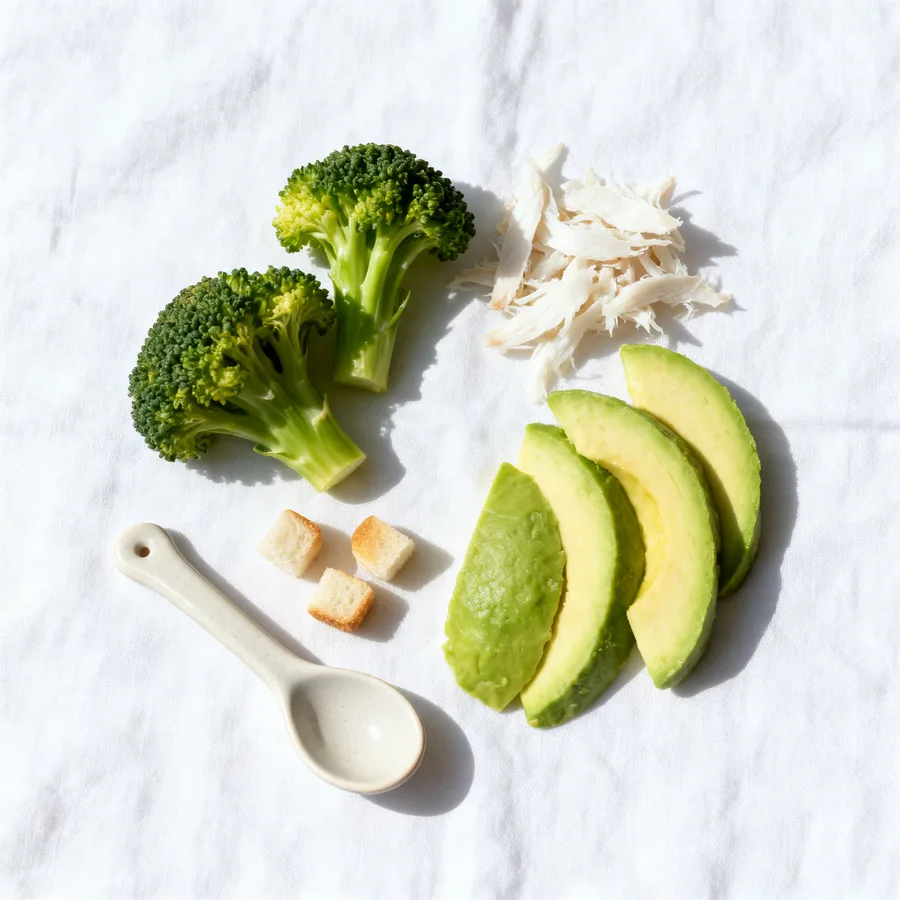
Day 1–2: Keep it to one food. A soft steamed broccoli floret or a strip of ripe avocado. That’s it. Let her look at it, touch it, maybe mouth it. There’s no goal beyond “we did it.”
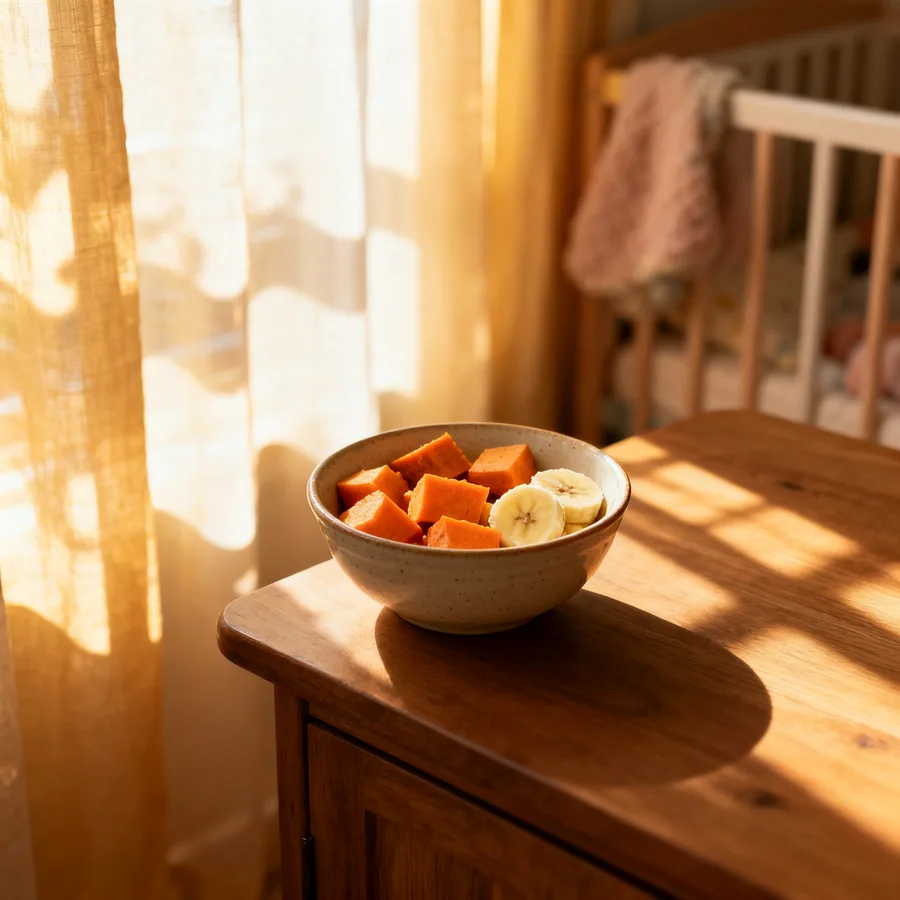
Day 3–4: Try something starchy. A soft-cooked sweet potato stick or a finger of banana. These are some of the best first finger foods at 6 months because they’re easy to grip, easy to gum, and gentle on new tummies.
Day 5: Introduce a little protein. A strip of well-cooked scrambled egg or a soft-cooked piece of chicken that she can hold and gnaw. Don’t worry if she doesn’t actually eat any of it.
Day 6–7: Mix and match from what worked. Two foods at a sitting is plenty. Watch for reactions. Keep notes if it helps you feel less anxious — some moms find that grounding.
One thing worth knowing: what your baby eats during this time can affect your own nutrition needs too, especially if you’re still breastfeeding. A solid breastfeeding diet plan makes a real difference for your energy when you’re managing feeds and solids at the same time.
By the end of week one, if your baby touched food and didn’t need a hospital visit, you did it right. Seriously. That’s the bar right now.
Sources
Frequently Asked Questions
Can my 6-month-old actually feed themselves with finger foods, or is it too early?
It depends on your baby’s developmental readiness, not their age. If your baby can sit up with minimal support, coordinate hand-to-mouth movements, and has lost the tongue-thrust reflex, they’re ready to explore self-feeding. If those signs aren’t there yet, waiting a few more weeks is completely normal.
What’s the safest way to introduce finger foods without choking risk?
Start with foods that truly squish between your fingers with minimal pressure—steamed sweet potato, ripe avocado, or soft banana. Cut them into strips long enough for your baby to grip, and always supervise closely. Watch for gagging (normal) versus choking (silent distress), and never leave your baby alone while eating.
How do I know if my baby is choking versus gagging on finger foods?
Gagging is normal and safe—your baby will cough, make noise, and usually push the food out. Choking is silent or nearly silent, with no effective cough and difficulty breathing. If you suspect choking, call emergency services immediately and begin infant CPR if trained.
Should I still do purees if I’m doing finger foods at 6 months?
There’s no rule against mixing both approaches. Some families offer soft finger foods for self-feeding while occasionally offering spoon-fed purees for variety or convenience. Do whatever works for your family and your baby’s learning style.
What if my 6-month-old doesn’t seem interested in grabbing or self-feeding?
Not all babies are interested in self-feeding right away, and that’s okay. Offer finger foods without pressure, keep them on the tray, and let your baby explore at their own pace. Some babies prefer watching and learning before they join in—nothing is wrong with that.
Keep Reading

What Makes PPSU Different From the Plastic Cups You Grew Up With

Teething + Feeding: What to Give Your Baby When Chewing Hurts

What "I Don't Like It" Actually Means at Snack Time: A Toddler-to-Parent Translation Guide

How to Choose the Right Feeding Seat for Easier Bottle Time

BPA-Free Isn't Enough: What "BPA-Free" Labels Don't Tell You