


Activities & Play
Road Trip with Toddler: Tips, Activities & Packing Strategy That Actually Works
Jeehoo Jeon·11 min read

No-prep toddler activities at home that actually keep them engaged. Kitchen sensory play, household items, and movement ideas—no setup required.
Here’s what nobody tells you about toddler activities at home: the most engaging ones usually take two minutes to set up, not two hours.
Most parents assume their toddler needs elaborate activity kits, themed play stations, or a Pinterest-worthy setup to stay engaged. But the truth is simpler — and way less stressful. Toddlers’ brains are wired for novelty and low-barrier entry points, not complexity. When you remove the setup, you remove the pressure (on both of you), and actual play happens instead.
This guide gives you no-prep toddler activities at home that actually work: kitchen sensory play, household item repurposing, movement games, quiet time activities, and rotation strategies that keep things fresh without buying anything new.
Here’s the thing nobody tells you: the elaborate activity you spent 45 minutes setting up? Your toddler will walk away from it in four minutes flat.
It’s not you. It’s not them. It’s just how toddler brains work right now.
Toddlers are wired for novelty, but their attention windows are genuinely short — we’re talking minutes, not hours. A simple activity with one or two elements gives their brain something to grab onto without overwhelming it.
The more pieces, the more setup, the more instructions — the harder it is for them to find an entry point. They shut down before they even start.
Low-barrier toddler activities at home work because the barrier to re-engagement is low too. When they wander off and come back (and they will), it’s easy to pick back up. No reset required.
And here’s the part that’s really about you: when the activity takes two minutes to pull together, you’re not white-knuckling it hoping they stay interested. You’re not invested in the outcome. That changes everything about how you show up.
Less pressure on them. Less disappointment for you. More actual play happening.
This also connects to something bigger. A lot of the stress we feel in the toddler years — the how to handle temper tantrums moments, the constant negotiating — it’s amplified when we’re already depleted from overcomplicating the small stuff.
Simpler activities aren’t a shortcut. They’re actually the smarter play, developmentally and practically.
Give yourself permission to do the easy thing. It’s usually the right thing.
Can we talk about how much money gets spent on activity kits when the best stuff is already in your kitchen? I know. I’ve been there.
The kitchen is genuinely one of the richest spaces for toddler activities at home — and none of it requires a trip to the craft store.
Start with water play. Fill a large bowl or the sink with a little water, hand over some cups and spoons, and step back. That’s it. Toddlers will pour and transfer and splash for longer than you’d expect.
Dry pasta is another one. Uncooked rigatoni, penne, whatever you have — give them a muffin tin and let them sort by shape or color. Fine motor work, focus, quiet. All three at once.
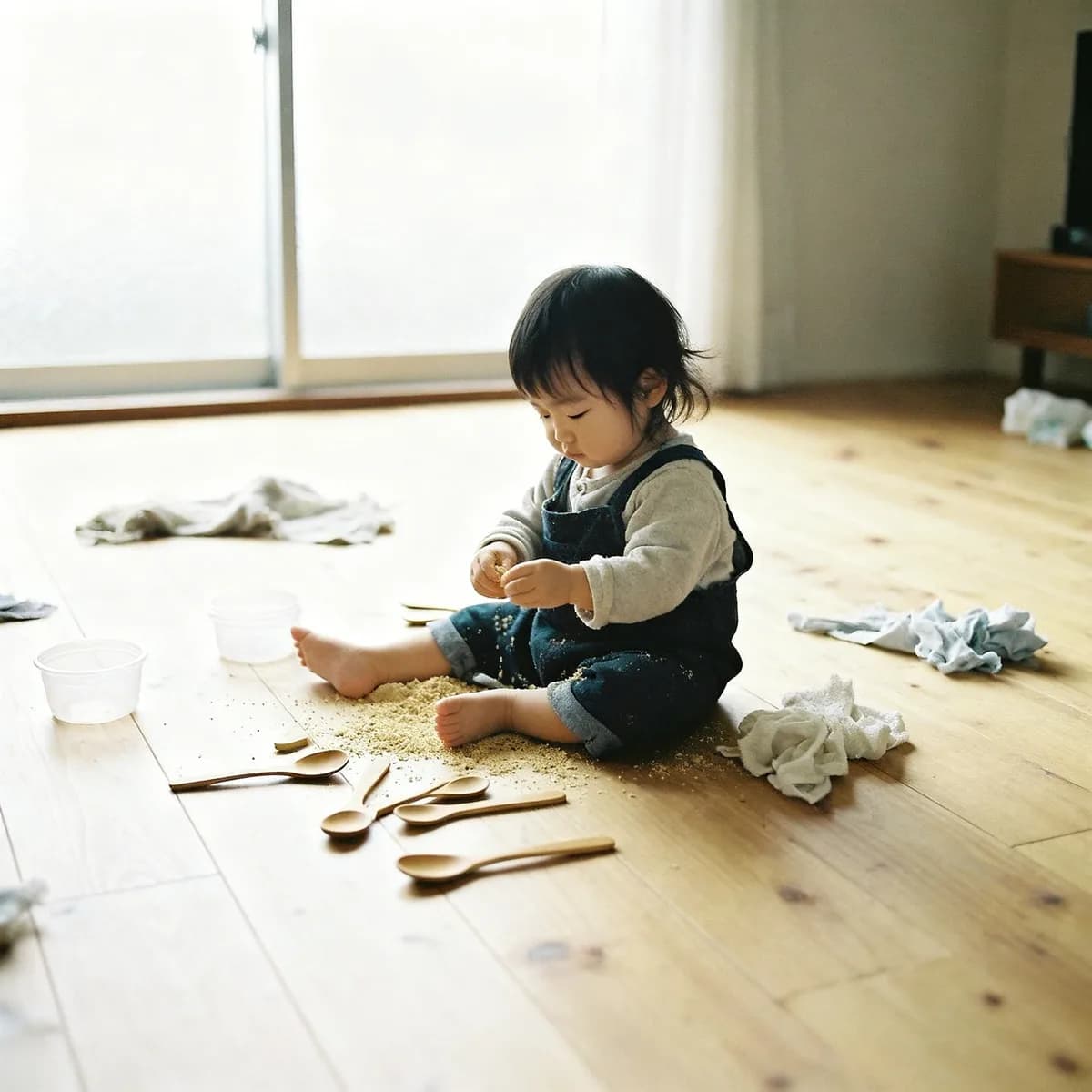
Safe food exploration is underrated too. Let them touch cooked spaghetti. Squish a ripe banana. Run their fingers through a bowl of rice. It sounds messy, and it is, but the sensory input they get from that kind of play is genuinely valuable — and if you want to go deeper on age-appropriate sensory ideas, the piece on sensory bins for 1 year olds is worth a read.
If your toddler is going through a phase where they want to help in the kitchen, lean into it. Let them wash vegetables. Let them tear lettuce. The “helping” IS the activity.
None of this is Pinterest-worthy. All of it works.
Here’s the thing nobody tells you: your toddler does not care about the toy. They care about the experience.
A cardboard box is a car, a bed, a cave, a boat. Let them climb in. Hand them a marker and let them draw on the inside. That box will buy you more time than most things you could order online.

Plastic bottles with lids are endlessly useful. Fill one with dried pasta and a little glitter — sealed tight with hot glue or strong tape — and you’ve got a shaker they’ll carry around for days. Fill another with water and food coloring. They’ll hold it up to the light and just stare.
Cushions on the floor become an obstacle course. Pull every throw pillow off the couch and lay them out. That’s it. Toddler activities at home don’t need instructions — they need permission to get messy and weird.
Blankets over chairs make the best forts. Inside the fort: a flashlight, a few stuffed animals, maybe a bowl of crackers. You’ve created a whole world for under a minute of effort.
Containers of any kind — Tupperware, empty oat canisters, yogurt tubs — become nesting toys, drum kits, sorting games. Beemeal Bowl
If potty training is also in the mix right now, knowing how to start potty training can help you figure out when your toddler is actually ready — so you’re not fighting a battle before they’re there.
The simplest stuff holds their attention longest. That’s not a hack. That’s just how toddlers work.
Here’s the thing about toddler energy — it doesn’t care that your living room is small. It doesn’t care that you’re tired. It just exists, and it needs somewhere to go.
Music is your best friend here. Put on something with a real beat and just start moving. They will follow you. Every time.
Freeze dance is magic. Play music, stop it suddenly, everyone freezes. Toddlers lose their minds over this game. It takes zero equipment and burns more energy than you’d expect from something so simple.
Marching works too. March around the couch, through the hallway, into the kitchen and back. Narrate it like a parade. They’ll march until their little legs give out.
“Hot lava” floor games — where the floor is lava and they have to jump between pillows — is another one that delivers big physical output in a small space. Couch cushions on the floor, ten minutes, genuinely worn out toddler.
Animal walks are underrated. Crawl like a bear, hop like a frog, slither like a snake. It’s silly, it uses their whole body, and it makes them laugh, which is its own kind of release.
Balloon keep-up — keeping a balloon off the ground — is another low-cost, high-chaos classic. One balloon. That’s it. You’ll be surprised how long it holds their attention.
These kinds of toddler activities at home don’t require a playroom or a Pinterest board. They just require you to get on their level for a few minutes.
And honestly? Some days, dancing badly in your kitchen together is the reset both of you needed.
Here’s the thing nobody tells you about toddler art: the mess isn’t the magic. The making is.
And you can absolutely have one without the other — at least most of the time.
Sticker play is genuinely underrated. A sheet of stickers and a piece of paper or cardboard keeps little hands busy for a surprising stretch of time. No paint, no water, no scrubbing the table after. Just pure, focused creating.
Dot markers are another quiet win. Washable, chunky enough for small fists, and they make a satisfying mark without the smear situation that comes with finger paints. Let them go to town on a paper bag or an old cardboard box.
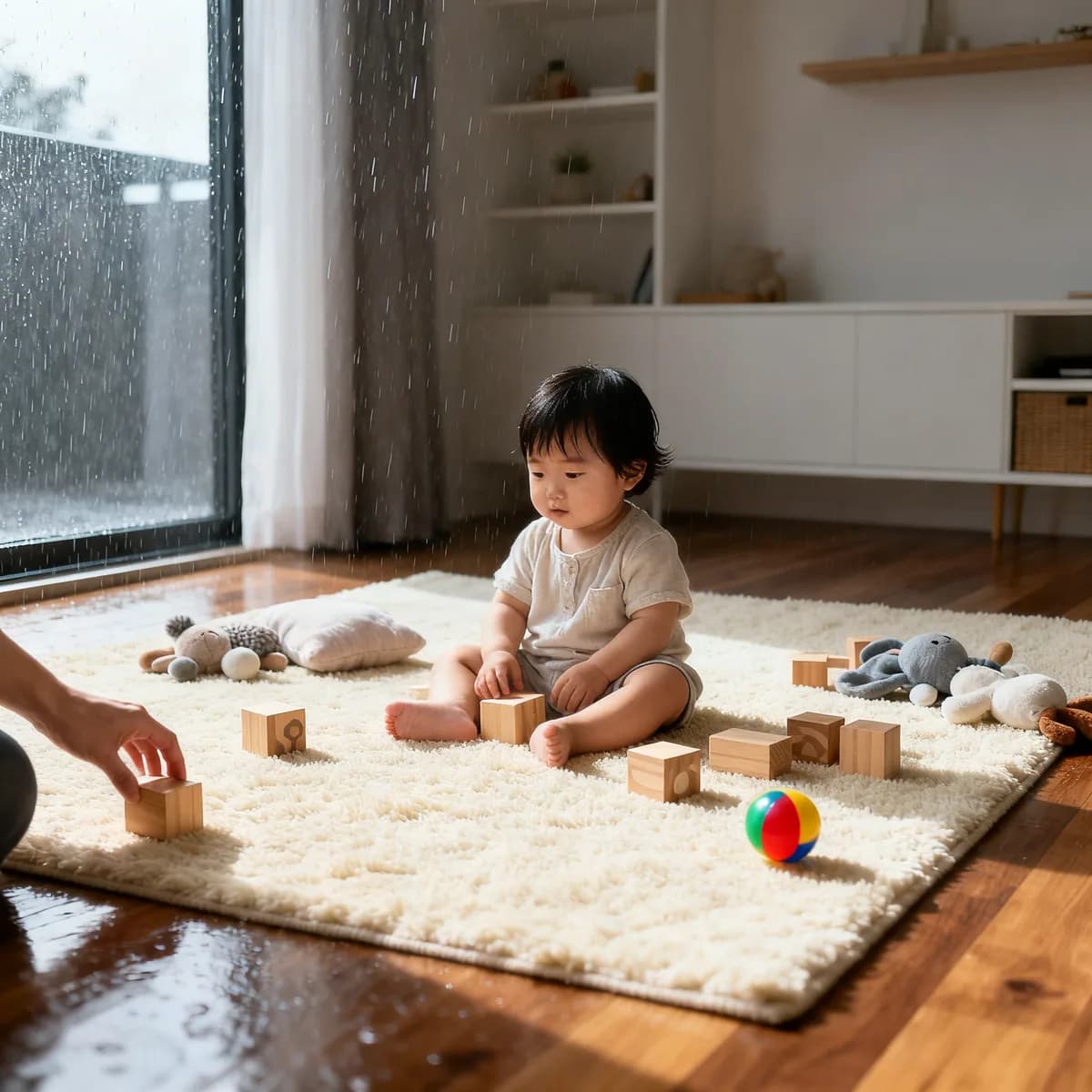
For kids who love to build, a set of simple wooden or foam blocks does more than you’d think. Stacking, knocking down, starting over — that loop alone can hold a toddler’s attention for fifteen, twenty minutes. That’s not nothing on a long afternoon.
Tape on the floor is a trick worth knowing. Put down some painter’s tape in lines, shapes, or a rough track. Suddenly the living room becomes a road, a racetrack, a city. Their imagination fills in everything else.
Mess-free coloring books — the ones that only activate with water — are another solid option. One brush, a cup of water, and they’re completely absorbed. Cleanup is literally just letting it dry.
The goal with any of these isn’t perfection. It’s engagement. It’s giving them something real to do with their hands while you catch your breath.

And if the blocks get dumped everywhere anyway? That’s okay. Clean-up can be part of the game too. Sometimes “put everything back in the bin” buys you another five minutes of peace — and you’ll take it.
First — can we just say it? Needing 20 minutes to yourself is not a failure. It’s survival. You are a person, not just a caretaker.
Now. Here’s what actually works when you need sustained, calm engagement — not just five frantic minutes before they’re bored again.
Picture books are underrated for this. Not reading together — just handing them a small stack and letting them flip through alone. Toddlers who are just learning to “read” pictures will surprise you with how long they’ll sit with a good book.
Sorting games buy serious time. A muffin tin and a handful of different objects — buttons, dried pasta, small blocks — and suddenly they have a job. Toddlers are wired to organize and categorize. Give them that and step back.
A water table or even a shallow bin of water on a towel is one of the most reliable toddler activities at home for genuine quiet. Add a few cups and spoons and they’ll pour and transfer for a surprisingly long stretch. Yes, there will be some spillage. Worth it.
Transitions are actually prime time for these. Right after lunch, after a nap, before dinner — those in-between moments when energy is lower and attention is more available. That’s when the calm activities land.
One thing worth knowing: if you’re running on empty more days than not, and that need for quiet feels desperate rather than just normal, it might be worth checking in with yourself. Sometimes that constant overwhelm is bigger than tiredness. Postpartum anxiety symptoms can show up well into the toddler years — not just in the newborn fog.
But most of the time? You just need 20 minutes. Set them up, walk away, and let the water table do its thing.
Here’s something nobody tells you: the toy isn’t the problem. The context is.
The same puzzle that gets ignored on the playroom floor becomes fascinating when you put it on the kitchen table with a little cup of water nearby and say nothing. Novelty isn’t about new things. It’s about new situations.
Toy rotation is the easiest fix I know. Box up half of what’s out. Put it in a closet. Bring it back in three weeks. Watch your toddler treat it like Christmas morning.
You don’t need a system. You just need to hide some stuff.
A few other swaps that actually work — move an activity outside, even if it’s cold. Add a new container to a familiar sensory bin. Let them do it standing on a chair instead of sitting on the floor. The change in physical perspective genuinely resets their interest.
If you’re trying to stretch out toddler activities at home before you lose your mind, think in small tweaks, not overhauls. Add a paintbrush to the playdough. Add ice cubes to the water play. Add a flashlight to literally anything.
Decision fatigue is real for toddlers too. Too many options and they bounce off everything. Try offering just two choices — this or that. You’ll be surprised how much longer they actually stick with something.
And when you’re in a season where everything feels like a battle — the activities, the meals, all of it — you might be deep in the thick of potty training in 3 days territory too, where every hour has a new challenge. Grace for yourself in that stretch. It’s a lot.
Small swaps. Lower bar. Same toys, fresh enough to work.
Water play in a bowl or sink, dry pasta sorting by shape, and safe food exploration (cooked spaghetti, banana squishing, rice touching) are developmentally rich and require zero setup. These activities give sensory input and focus without overwhelm — and they’re all in your kitchen already.
Expect 5-15 minutes of focused engagement depending on age and the activity itself. When attention shifts, it’s time to rotate — and that’s completely normal. Short bursts of engagement with easy re-entry are actually better than forcing longer play.
Absolutely. Household items (boxes, plastic bottles, cushions, blankets), kitchen supplies, and your own body (dancing, movement games, chase) are more than enough. The barrier to engagement often goes down when there are fewer options, not more.
Dry pasta sorting, button sorting in containers, sticker books, picture book exploration, and block building all engage the senses without requiring cleanup afterward. Water play in a contained bowl is also low-mess if you’re strategic about it.