


Toddler: 1–3 Years
18 Month Old Milestones: What Your Toddler Should Be Doing (And When to Check In)
Soyeon Park·14 min read

Learn the real readiness signs for potty training (18-36 months) and a low-pressure approach that works. Skip the power struggles.
Many parents wonder how to start potty training when their toddler shows signs of readiness, but the process can feel overwhelming without proper guidance. This comprehensive guide will walk you through everything you need to know about transitioning your little one from diapers to using the toilet independently.
Here’s what nobody tells you about potty training: the age your toddler turns two has almost nothing to do with when they’re actually ready. Most parents start too early, hit constant resistance, and then assume their kid is stubborn — when really, they’re just not developmentally there yet.
Readiness for potty training isn’t about age or peer pressure or preschool deadlines. It’s about three things happening at the same time: physical bladder control, behavioral cues that they notice when they need to go, and the cognitive ability to understand what’s being asked of them.
This guide walks you through how to identify those signs, set up a low-pressure approach that actually works, and handle the inevitable setbacks without shame.
The 18-36 month window is real, but it’s a range — not a deadline. Starting at the younger end doesn’t mean faster success, and waiting until closer to three isn’t failure.
What actually matters is readiness. And readiness is physical, behavioral, and cognitive — all three at once.
On the physical side, your toddler needs bladder control they didn’t have as an infant. If they’re staying dry for two hours or more during the day, that’s a meaningful sign. So is waking up dry from naps.
Behaviorally, watch for the tells. They notice when they’re going — pausing, squatting, going somewhere private.
They show discomfort in a wet or dirty diaper. They’re curious about what you do in the bathroom.
The cognitive piece is just as important. Can they follow two-step instructions?
Do they understand words like “wet,” “dry,” “potty”? Can they pull pants up and down with some independence?
These aren’t nice-to-haves. They’re the actual foundation for how to start potty training without it turning into a daily standoff.
One sign people underestimate: your toddler telling you before they go, not just after. That gap between urge and action is what training actually requires. If they’re reporting after the fact every time, give it a few more weeks.
Pressure — from well-meaning relatives, from a preschool cutoff, from a sibling who trained early — doesn’t move readiness forward. It just adds stress to a process that already requires a lot from a small person.
If they’re showing most of these signs, you’re in a good window. If they’re not, waiting is the more efficient choice. Starting too early almost always takes longer than starting at the right time.
The biggest mistake most people make is treating potty training like a task to complete rather than a skill to build. Your toddler’s job is to learn. Your job is to make the environment low-stakes enough that they actually want to.
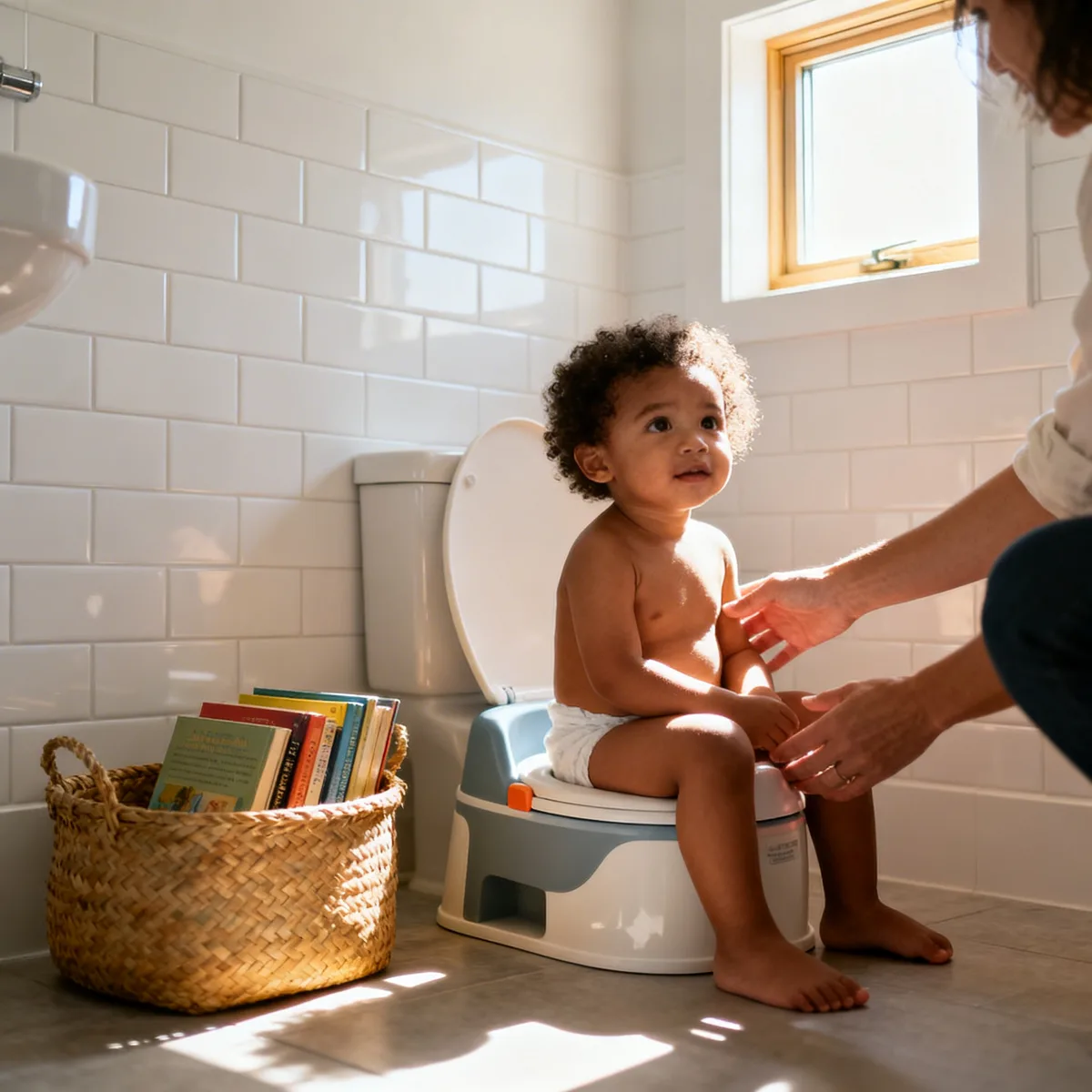
Start by introducing the potty as furniture, not a demand. Put it in the bathroom.
Let them sit on it clothed. Talk about what it’s for without any expectation attached.
Toddlers resist when they feel controlled. So the more you push, the more they dig in — it’s not defiance, it’s developmental. Autonomy is everything at this age.
Give them real choices within the process. Not “do you want to use the potty?” — that’s a trap with a built-in “no.” Try “do you want to walk to the potty or hop there?” Small decisions make them feel like the one running the show, which means less resistance for you.
Keep early sessions short and unpressured. If they sit for thirty seconds and nothing happens, that’s fine. You’re building a habit, not chasing a result.
Timing matters more than reminders. Frequent, casual prompts after meals, after naps, before leaving the house — work better than asking every ten minutes. Over-asking creates a dynamic you don’t want.
Accidents are part of the process, not proof it’s not working. How you respond to them sets the tone. Matter-of-fact beats disappointed every time. “Oops, let’s clean it up” is a full sentence.
If you’re also navigating diaper rash treatment during the transition period, keep up with barrier cream during any regression stretches — the back-and-forth between diapers and underwear can irritate sensitive skin.
The goal right now isn’t success every time. It’s building enough familiarity that the potty stops feeling like a big deal.

The gear industry wants you to believe you need a lot. You don’t.
Three things actually matter: a potty or seat reducer, a step stool, and a consistent location. Everything else — the novelty flush sounds, the built-in reward dispensers, the color-changing seats — is marketing dressed up as parenting support.
Seat reducer or standalone potty? Personal call.
A seat reducer on the regular toilet skips the “transfer” step later, but a standalone potty at floor level feels less intimidating for younger kids. Either works.
Pick one and commit.
The step stool isn’t optional if you go the seat reducer route. Kids need to climb up themselves and brace their feet when they’re pushing. Dangling legs make the whole thing harder physiologically, not just emotionally.
book stand Novelty holds attention longer than you’d think.
Placement matters more than most guides admit. The potty should be in the bathroom, not the playroom. You’re building a location association, and if you’re figuring out how to start potty training in a way that actually sticks, that context cue does real work over time.
Keep it accessible without being a centerpiece. Kids notice things that are just there differently than things being constantly pointed out.
One more thing: if you’re dealing with skin sensitivity from the diaper-to-underwear transition, the antifungal cream for yeast diaper rash piece is worth a read — back-and-forth between diapers and underwear can trigger more than just regular irritation.
Stock wipes, keep a spare outfit in the bathroom, and lower your own bar for what “ready” looks like. The setup should make the process easier, not perform readiness you don’t feel yet.
Daytime control and nighttime dryness are not the same skill. They run on completely different physiological tracks, and conflating them is one of the fastest ways to make this process harder than it needs to be.
During the day, bladder control is voluntary — your toddler learns to recognize the urge and act on it. At night, it’s about hormones. Specifically, the brain needs to produce enough antidiuretic hormone (ADH) to slow urine output during sleep, and that neurological development just takes time.
The AAP notes that most children achieve daytime bladder control between ages 2 and 3, but nighttime dryness can lag significantly behind — sometimes by a year or more — and this is entirely normal, not a sign that you’re doing anything wrong.
So when you’re figuring out how to start potty training, the practical takeaway is this: start with days. Get daytime routines solid before you even think about nights.
Nighttime training typically makes sense once your child is waking up dry — or nearly dry — most mornings. That’s the clearest signal that the hormonal and neurological pieces are falling into place. You can’t rush it by pulling the pull-up earlier.
If sleep is already a complicated topic in your house, it’s worth reading about sleep training methods — understanding how sleep architecture works in toddlers gives useful context for why nighttime dryness follows its own timeline.
Realistic expectations: daytime-trained by 3 is common. Consistently dry nights by 4 or 5 is also common.
Bedwetting past 5 is still within normal range. The range is wide, and the research reflects that.
Regression is not failure. It’s information.
A child who was doing well and suddenly isn’t — that’s almost always a response to something. A new sibling, starting daycare, a move, an illness, a disruption in routine. The body goes back to what felt automatic when the brain is busy processing something big.
New sibling is the classic one. The older child regresses, you’re sleep-deprived, and it feels like all progress evaporated.
It didn’t. The skill is still there — it’s just on pause while your kid recalibrates.

Illness is its own category. Stomach bugs and UTIs can cause genuine physical setbacks that look like behavioral regression. If accidents spike suddenly after your child was solid for weeks, rule out a medical cause before assuming it’s emotional.
How you respond in the regression window matters more than the regression itself. Shame makes it worse — every time, without exception.
Punishment makes it worse. Frustration you can’t hide makes it worse.
What actually helps: go back to basics without making a thing of it. More bathroom prompts.
Less pressure. Neutral language when accidents happen — “let’s get you cleaned up” and nothing more.
Some parents pull back entirely during a major disruption and return to diapers or pull-ups temporarily. That’s a legitimate call. Going back to square one isn’t a setback if it buys everyone some breathing room.
The regression almost always ends. Kids don’t regress forever. If you’re tracking a pattern — accidents tied to specific situations, ongoing stress responses in your child — that’s worth bringing to your pediatrician.
If you’re thinking about how to start potty training again after a regression, treat it like a soft reintroduction. Low stakes.
Familiar language. No countdown to success.
Fear of the toilet is more common than people talk about. The flush is loud.
The seat is cold. It’s a big hole.
From a toddler’s perspective, that’s a lot to ask.
If your kid is scared, don’t push through it. Let them flush a piece of toilet paper first.
Let them sit on the potty with the lid down. Work up to it in steps — not because it’s cute, but because it actually works.
Refusing to poop on the potty is its own category. A lot of toddlers will pee just fine and hold their bowels for a diaper.
This isn’t defiance — it’s control. The bowel reflex is harder to override than the bladder.
Give it more time and less pressure.
Constipation can make that refusal worse. The AAP recommends increasing fiber and fluid intake before turning to any other interventions — think fruit, vegetables, water, and less dairy if it’s a heavy part of their diet.
If your toddler is withholding stool out of fear of pain, that cycle needs to break before the potty issue can resolve. If constipation is persistent, bring in your pediatrician — don’t wait it out hoping it passes. (If you’ve dealt with this issue in infancy too, constipated newborn poop follows some of the same patterns worth knowing.)
Accidents in public are going to happen. Pack a full change of clothes — underwear, pants, socks. Keep expectations realistic when you’re out of routine.
Familiar environments make it easier. New toilets with auto-flush sensors are genuinely terrifying to small children.
A portable seat insert can help. So can covering the sensor with a sticky note while they go — low-tech, but effective.
The through line in all of this: calm response, consistent environment, no shame. That’s the reset button for almost every stall.
Look for three categories: physical signs (staying dry for 2+ hours, waking dry from naps), behavioral cues (noticing when they need to go, showing discomfort in wet diapers, curiosity about the bathroom), and cognitive skills (following two-step instructions, understanding potty-related words, pulling pants up and down). Your toddler telling you before they go — not just after — is one of the most underestimated readiness signs.
Eighteen months is within the typical window of 18-36 months, but it’s not too early or too late — readiness is what matters, not age. Some toddlers show all the readiness signs at 20 months; others aren’t ready until closer to three. Starting before your child is truly ready almost always takes longer than waiting for the right developmental moment.
There’s no universal timeline because readiness varies widely. Starting when your toddler shows genuine signs of readiness typically means faster, smoother progress with fewer power struggles. On average, daytime training takes several weeks to a few months once you begin, but this depends heavily on your approach and your child’s individual development.
Regression is normal and usually signals stress, a major life change (new sibling, moving, illness), or simply developmental unevenness. Respond calmly without shame or punishment — go back to basics, reduce pressure, and give your toddler space. Most regressions resolve once the stressor passes or your child catches up developmentally.
Fear of the potty is common and developmentally normal. Start by letting them sit on the potty clothed, read books in the bathroom together, and talk about what’s happening in age-appropriate language.
Never force them to sit; instead, build familiarity slowly and let them control the pace. A step stool for independence and a seat reducer for security can also help reduce anxiety.