

Feeding Guides
Baby-Led Weaning: Your Complete Beginner’s Guide to Self-Feeding
Laeeka Edries·14 min read
BLW vs purees — the debate nobody wins. Here's what the research actually says, what each approach does to development, and how to stop stressing about it.
Here’s what nobody tells you about the BLW vs purees debate: it was never actually a debate. It’s a false binary that turned a feeding transition into a parenting identity – and somewhere along the way, the baby got lost in it. Most of the discourse you’ll find online is either a TikTok making purees look like child abuse or a pediatrician’s pamphlet that hasn’t been updated since 2009. The truth is messier, more practical, and way more useful than either camp admits. This guide covers what the research actually says, what each approach does to your baby’s development, and why the answer for most families is probably somewhere in the middle – which is also, for the record, completely valid.
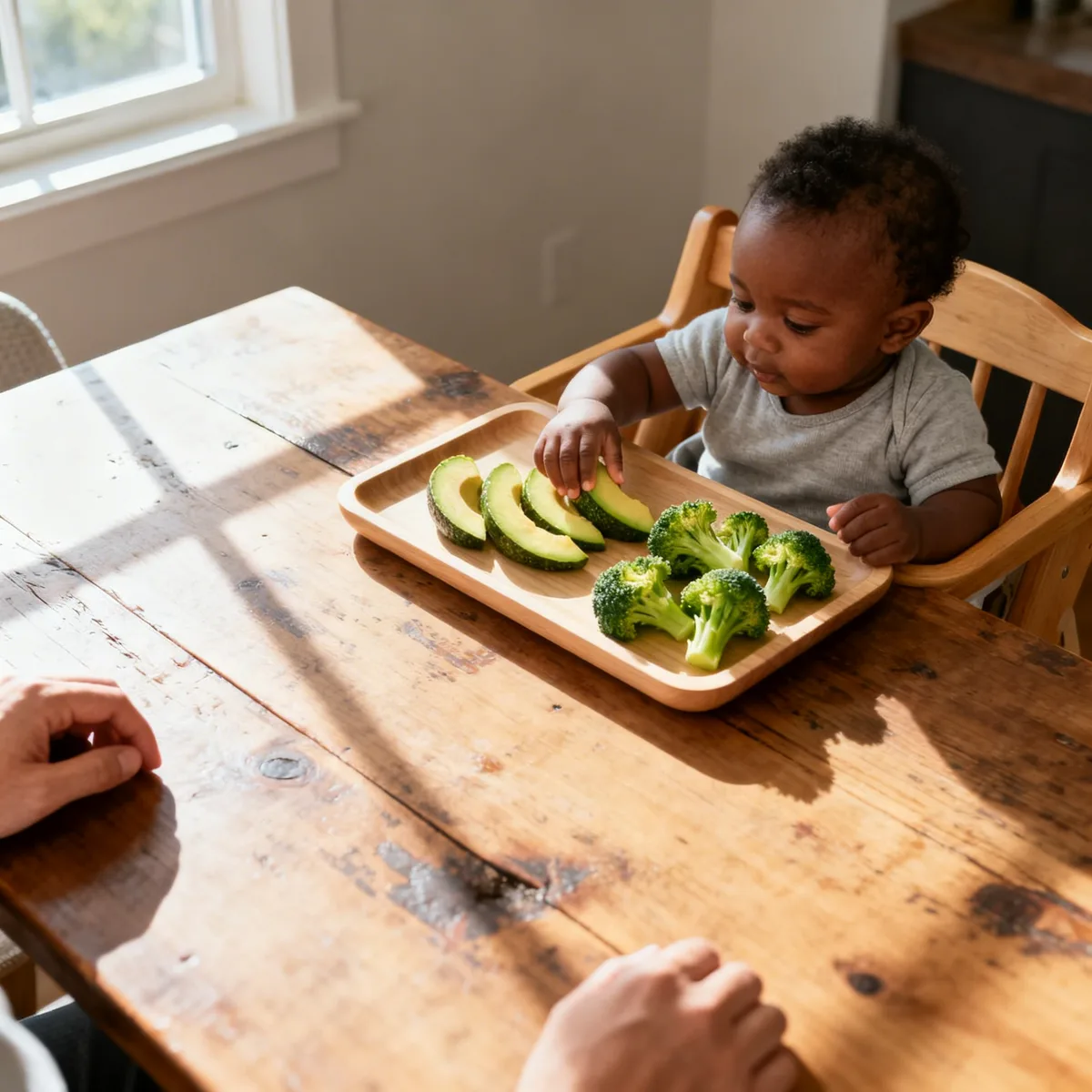
Baby-led weaning (BLW) means skipping spoon-feeding entirely and going straight to soft, appropriately-sized finger foods from around 6 months. The baby feeds themselves from the start. No purees, no spoon, no airplane noises. The idea is that the baby controls what goes in their mouth, how much, and at what pace.
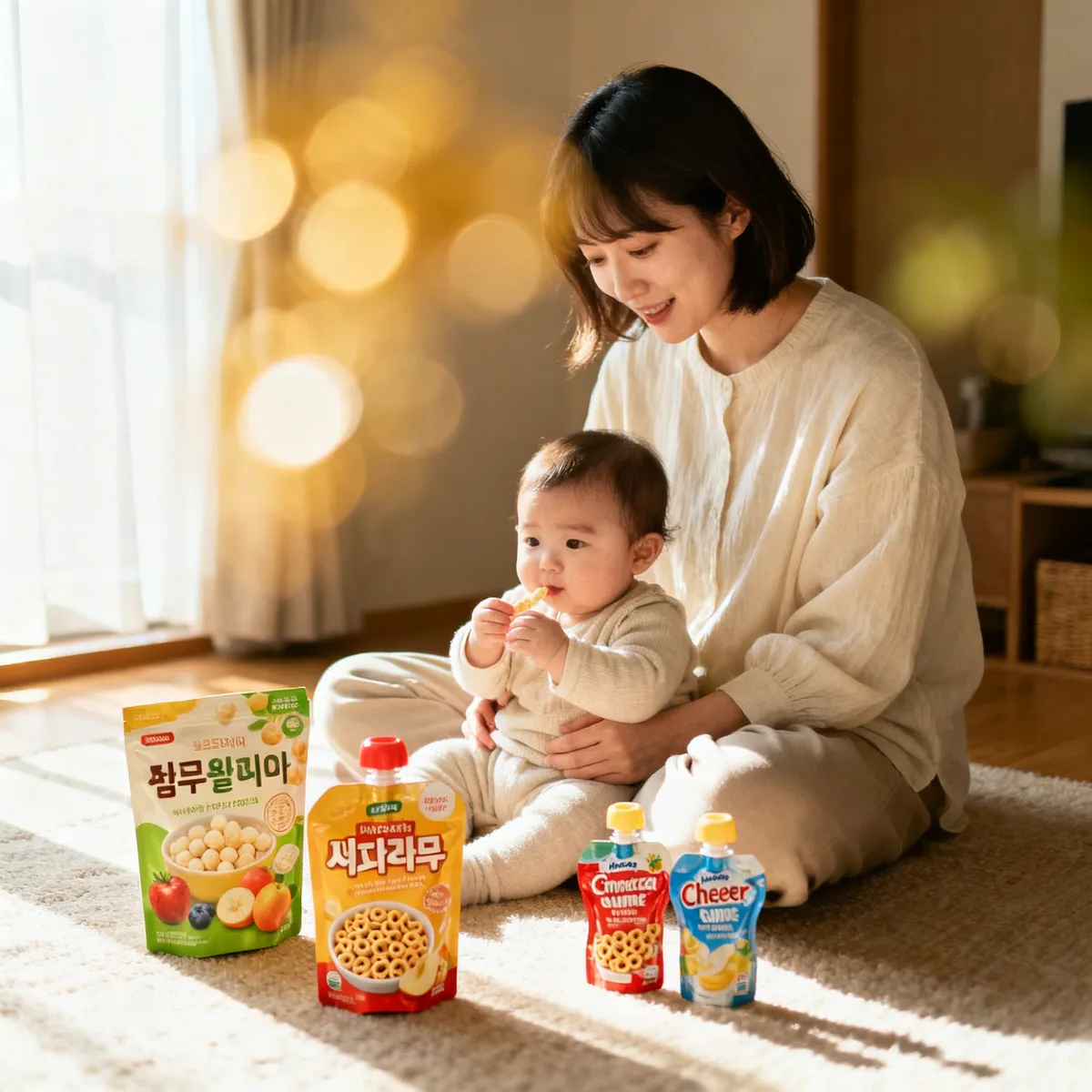
Puree feeding is the more traditional approach – you blend or mash food into a smooth texture and spoon-feed it to your baby, gradually thickening the texture over time as their oral skills develop.
Then there’s a third option that most guides bury at the bottom: a combination approach, where you offer both. Soft finger foods alongside spoon-fed purees. Baby controls some, you assist with the rest. Spoiler: this is where a lot of families actually land, and the research supports it just as much as either extreme.
BLW advocates will tell you that self-feeding builds motor skills, encourages food autonomy, and reduces picky eating later. Puree advocates will tell you that spoon-feeding lets you monitor intake more precisely and reduces choking risk. Both are partially right. Neither is the whole picture.
Here’s what the research actually shows: a 2019 study published in Pediatrics found no significant difference in choking risk between BLW and traditional spoon-feeding when parents were properly educated on safe food preparation. The key phrase there is properly educated. BLW done without knowing what a safe finger food looks like at 6 months versus 9 months is where the risk actually lives – not in the method itself.
On the motor development side, both approaches build oral motor skills – just in different sequences. Purees develop the swallow reflex and tongue movement first. Finger foods develop the munching reflex and hand-to-mouth coordination. Neither path skips anything permanently. Babies are adaptive. What matters more than the method is that they’re getting varied textures introduced within a reasonable developmental window.
One of the biggest claims in the BLW corner is that it reduces picky eating long-term. This one gets repeated a lot, and there is some evidence behind it – but the nuance gets stripped out almost every time it’s shared.
The research on BLW and food acceptance shows that babies who self-feed from the start may develop broader food preferences earlier, likely because they’re engaging with whole foods in their original textures from the beginning. But here’s what that same research also shows: the biggest predictor of picky eating isn’t which method you used at 6 months. It’s whether varied textures and flavors were introduced consistently before 12 months, regardless of how they were delivered.
So if you’re doing purees but you’re making them from actual vegetables, rotating flavors, and moving toward chunkier textures by 8-9 months? You’re hitting the same developmental markers. If you’re doing BLW but defaulting to the same three safe foods every day because they’re easy? You’re not getting the diversity benefit anyway.
There’s a real cultural bias against purees right now and it’s worth pushing back on. Purees aren’t a shortcut or a developmental cop-out. There are situations where they’re genuinely the better option – and knowing them matters.
Premature babies or babies with low muscle tone often need the controlled texture of purees to develop swallowing safely before moving to solids. Babies with sensory sensitivities can sometimes be overwhelmed by the unpredictability of finger foods before they’re ready. And honestly? Some families just have a 6-month-old who isn’t showing strong enough sitting or hand-to-mouth coordination yet to self-feed safely – and that’s not a failure, that’s just where their baby is.
The AAP recommends watching for readiness signs before starting solids – including the ability to sit with minimal support, demonstrated interest in food, and loss of the tongue-thrust reflex – and notes that these typically align around 6 months, but not always exactly. If your baby isn’t there yet, purees let you start the flavor and texture journey without waiting on the motor skills to fully catch up.
BLW shines when your baby is developmentally ready and you have the bandwidth to actually do it safely. A 6-month-old who’s sitting unsupported, grabbing everything in reach, and watching your fork like it owes them money? That baby is ready. And there’s something genuinely great about watching a baby figure out how to pick up a piece of steamed broccoli and decide for themselves that they like it.
The other underrated advantage of BLW is that it plugs your baby into family mealtimes from the start. They’re eating (a version of) what you’re eating. They’re at the table. They’re participating. Research on responsive feeding – which the WHO has been advocating for strongly – supports the idea that eating as a shared, social experience builds a healthier relationship with food than isolated spoon-feeding sessions.
The logistics are real though. BLW is messier. It requires you to know your food prep – what counts as a safe size, what textures are appropriate at what stage, what the difference between gagging (normal) and choking (not normal) looks like. If you go this route, that education is non-negotiable. The American Academy of Pediatrics has guidance on choking prevention and safe food textures that’s worth reading before you hand your baby their first broccoli floret.
More in Starting Solids & Weaning
Regardless of method, one thing that gets wildly underestimated in the BLW vs purees conversation is positioning. Your baby needs to be properly supported – hips at 90 degrees, feet supported, upright posture – to swallow safely. This applies to purees and finger foods equally. Slouching in an ill-fitting seat affects the mechanics of swallowing and increases the risk of gagging turning into something more serious.
A lot of parents are using bouncers or reclined seats for feeding because it’s convenient, and it’s genuinely one of the more common setup mistakes. An infant feeding seat that supports upright positioning isn’t a luxury item – it’s part of safe feeding practice. If you’re evaluating options, Alpremio’s infant feeding seats are designed with this positioning principle as the core function, not an afterthought. They’re available at Onzenna Alpremio infant feeding seats collection and worth looking at before you land on whichever feeding approach you choose – because good positioning supports both.
The honest answer is: do both, do one, adjust as you go. Your baby is not going to be developmentally disadvantaged because you chose spoon-feeding. They’re also not going to be a fearless adventurous eater just because you went full BLW. The method matters a lot less than the consistency, the variety, and the environment you create around food.
What the research consistently supports is this: introduce solids around 6 months (with readiness signs present), offer a wide variety of flavors and textures before 12 months, eat together when you can, and follow your baby’s cues. Everything else is logistics. Choose the logistics that work for your family and your baby right now – not the ones that look best in a TikTok comment section.
You can change your approach. You can do purees at 6 months and finger foods at 8 months. You can do both at once. Babies are more adaptable than the discourse gives them credit for. And so are you.
American Academy of Pediatrics – Guidance on starting solids, readiness signs, and choking prevention in infants (aap.org)
World Health Organization – Recommendations on responsive feeding and complementary feeding practices (who.int)
Neither method is inherently safer than the other when done correctly. A 2019 study in Pediatrics found no significant difference in choking incidents between BLW and traditional spoon-feeding when parents had proper education on safe food preparation. The risk in BLW comes from not knowing what safe finger food looks like at each stage – not from the approach itself.
Yes – and a lot of families do. A combination approach where you offer both soft finger foods and spoon-fed purees is supported by current research and gives your baby exposure to multiple textures and feeding experiences simultaneously. There’s no rule that says you have to pick one.
The AAP and WHO both recommend around 6 months as the target, with the caveat that readiness signs matter more than the calendar date. Those signs include sitting with minimal support, showing interest in food, and losing the tongue-thrust reflex. Some babies hit those markers a little earlier or later than 6 months exactly.
There’s some evidence that self-feeding from the start can support broader food acceptance – but the bigger predictor of picky eating is whether varied textures and flavors were consistently introduced before 12 months, regardless of method. A puree-fed baby who gets lots of flavor variety can hit the same developmental markers as a BLW baby.
Underestimating positioning. Whether you’re doing BLW or purees, your baby needs to be sitting upright with proper hip and foot support to swallow safely. Feeding in a reclined bouncer or poorly fitted seat increases the risk of gagging and aspiration. Getting the setup right before you focus on the method is worth doing first.