

Feeding Guides
Baby-Led Weaning: Your Complete Beginner’s Guide to Self-Feeding
Laeeka Edries·14 min read

Find the best bowls for baby-led weaning. Compare suction vs. regular, materials, safety, and which designs actually support your baby's self-feeding skills.
Choosing the best bowls for BLW is genuinely harder than it looks. Two bowls can appear almost identical, cost almost the same, and perform completely differently once a baby gets hold of them. The difference usually comes down to three things: whether the bowl stays put, whether the shape actually helps a baby scoop, and whether the material holds up to the reality of daily use. This guide covers all of it — suction vs. regular, materials, food-type matching, and honest strategies for managing the mess.
The right bowl design isn’t about creating a mess-free miracle — it’s about giving your baby the physical stability they need to practice scooping, gripping, and feeding themselves. A bowl that slides across the tray teaches nothing. A bowl with the right shape and anchor point? That’s a tool for actual skill-building.
Here’s something nobody warns you about: the bowl matters more than you’d think. Not because there’s a magic product that makes baby-led weaning neat and easy — there isn’t — but because the wrong bowl actively works against your baby.
A bowl that slides across the tray the second your baby touches it? That’s not a feeding session. That’s a physics lesson with yogurt on the ceiling.
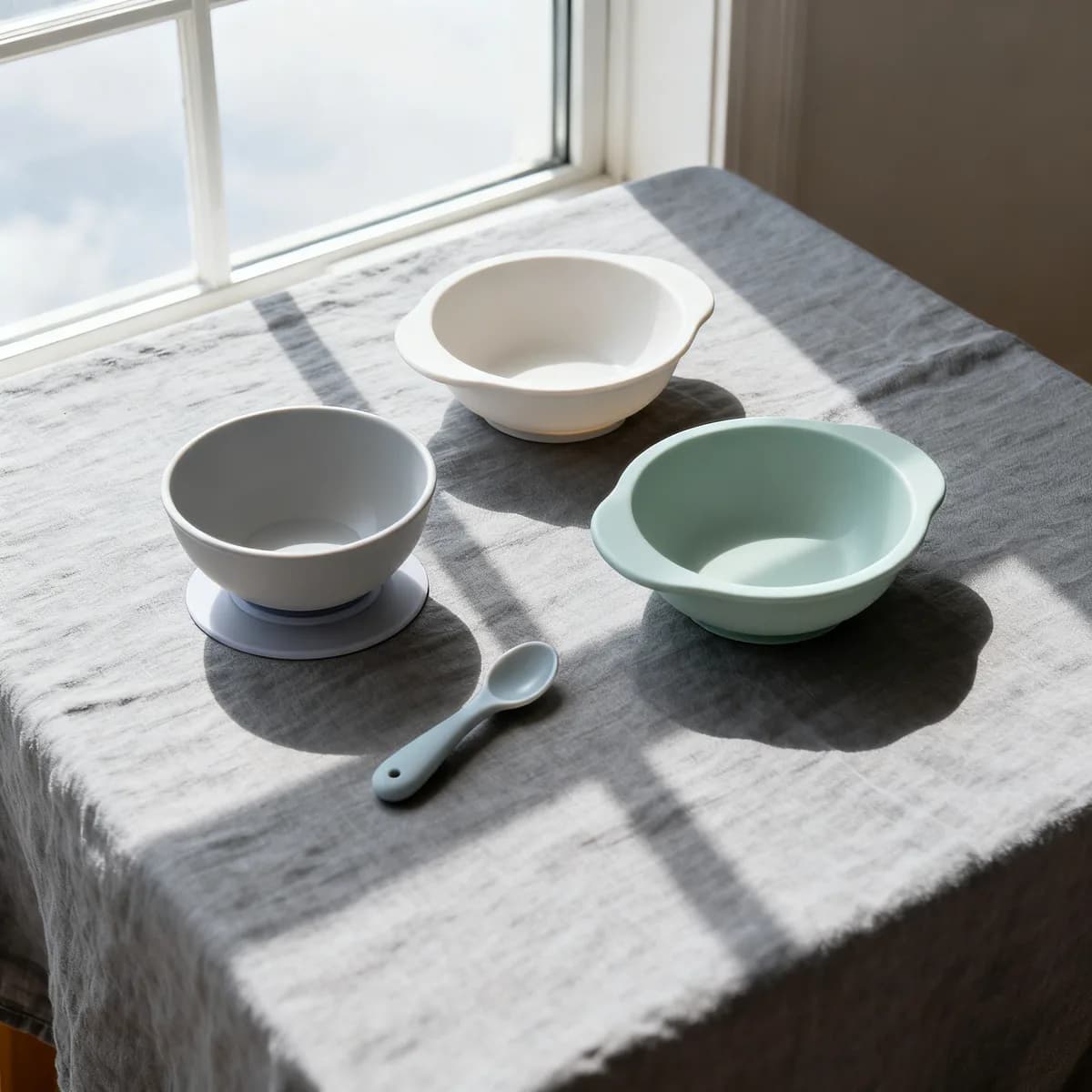
Suction bases are the single biggest game-changer in bowl design for BLW. They anchor the bowl so your baby can actually scoop against resistance, which is the whole skill they’re trying to build. Without that anchor, they’re just chasing food around a surface.
Steep, curved sides matter too. They give little hands something to push food against. Flat plates look adorable in photos, but they’re genuinely hard for babies to self-feed from. The food just goes everywhere with nowhere to go back to.
Now. Let’s talk about mess, because I want to be honest with you. Even the best bowls for BLW are not going to save your floor. Mess is part of how babies learn. It’s sensory. It’s exploration. A silicone suction bowl reduces the chaos — it doesn’t eliminate it.
What good bowl design does is make the mess more manageable and the learning more possible. Your baby can actually get food to their mouth. That’s the win. That’s what builds confidence and skill over time.
If you’re thinking through what foods to actually put in those bowls, our guide on best finger foods for 9 month old babies is a great place to start. Real food, real textures, realistic expectations.
Okay, real talk — both have a place. Neither one is the magic answer, and you’ll probably end up using both depending on the day.
Suction bowls are genuinely helpful in the early weeks of BLW. They stick to the highchair tray and stay put while your baby is still figuring out how to scoop food without launching the whole bowl across the room.
The downside? The suction can be so strong that babies struggle to grip the bowl itself. And part of learning to eat is learning to handle objects — picking up, tilting, holding. A bowl that never moves doesn’t teach that.
Regular bowls let babies interact with the bowl the way they will for the rest of their lives. Natural grip, natural tilting, natural consequences — including yes, the bowl ending up on the floor. That’s frustrating, but it’s also real learning.
Here’s how I’d think about it: suction bowl for saucy or soupy things where the mess would be truly unmanageable. Regular bowl when you want to build those independent eating skills and you’re okay with some floor food.
If you want a set that covers both, Beemymagic has options worth looking at — the silicone is soft enough for baby to grip but sturdy enough to actually hold food without collapsing.
One more thing — new BLW parents often worry about gagging and aren’t sure when it’s serious. If that’s on your mind, our guide on baby choking vs gagging is worth a read before your first session.
Finding the best bowls for BLW isn’t really about finding the perfect product. It’s about matching the tool to where your baby is right now, and being willing to switch it up as they grow.
Here’s the thing nobody tells you: the bowl matters more than you’d think, and not for the reasons you’d expect.
Shallow bowls are your friend in the early months. A deep bowl means your baby is fighting the sides just to reach the food — and that’s a battle they will lose, every time.
Wide openings make a real difference too. A narrow opening forces a precision scoop that little hands just aren’t ready for yet. Wide and shallow gives them room to actually get the food out.
Silicone is the go-to for a reason. It’s grippy, lightweight, and when your baby inevitably sends it across the table, it bounces instead of shatters. The soft rim also means less frustration when they’re raking food toward themselves.
Bamboo looks beautiful, but it can be slippery on smooth surfaces and harder to clean if it’s not fully sealed. It’s more of a “they’re older and I want something pretty” choice than a first-BLW-week choice.

Ceramic is heavy enough to stay put — which sounds great until your baby figures out how to shove it off the tray on purpose. Save ceramic for when they’re past the launch-everything phase.
Suction bowls are worth a look too. Not every baby respects the suction (some will pry it up immediately), but for a lot of families it buys real time.
If you’re still in the planning stage and building out your gear list, a baby registry checklist first time parents can help you figure out what’s actually worth adding before baby arrives.
The short version: silicone, shallow, wide opening, suction base if your baby will tolerate it. Start simple. You can always add more later.
Not all BLW meals are the same, and honestly, the bowl that works beautifully for scrambled eggs is going to fail you completely when you’re serving yogurt.
For wet foods — think soft purees, oatmeal, yogurt — you want a bowl with higher sides. Baby needs something to push against to get food onto a spoon or their fingers. A flat plate just sends everything onto the tray.
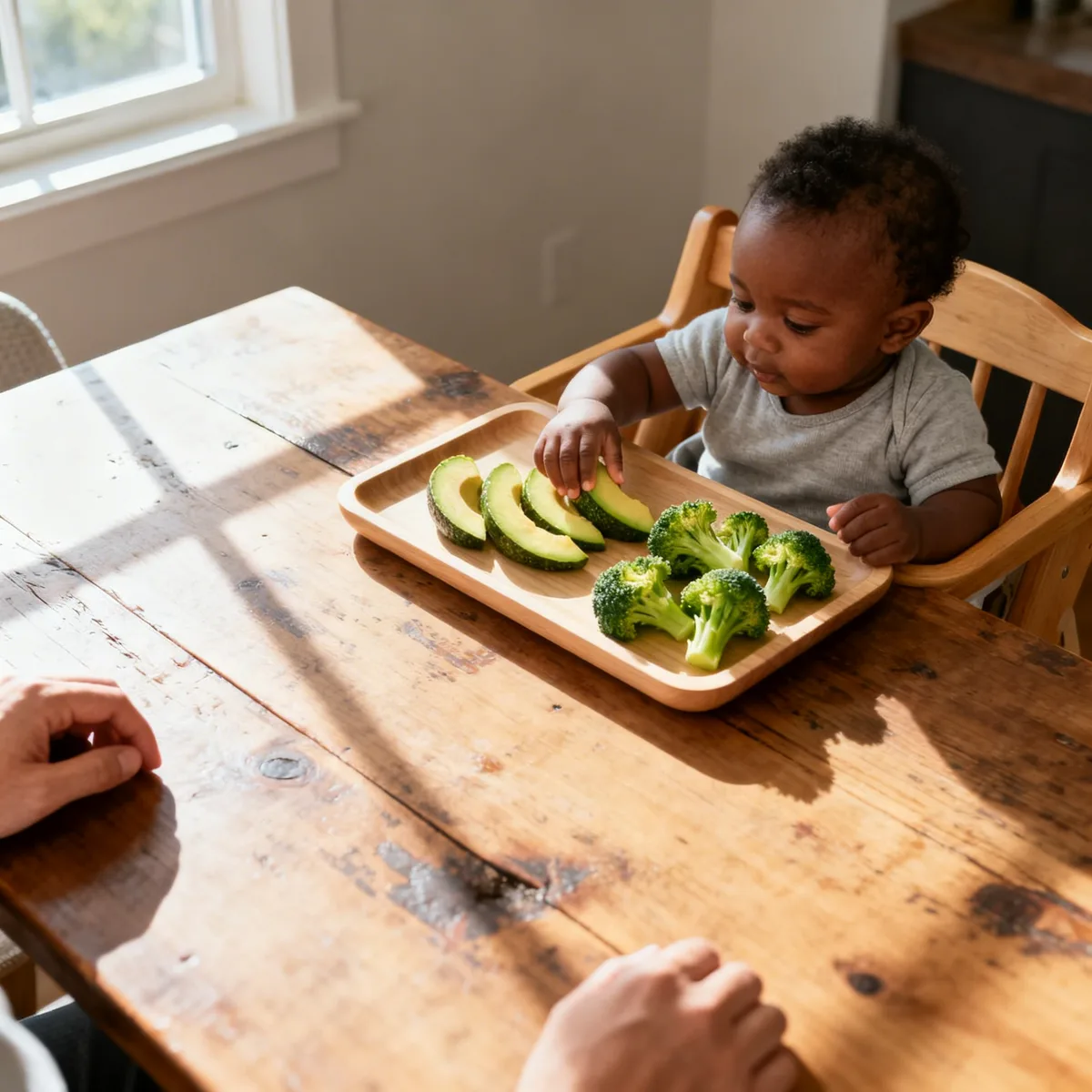
For finger foods like soft-cooked vegetables, fruit pieces, or toast strips, lower sides actually work better. Baby can reach in easily, grab what they want, and practice that pincer grip without wrestling with the bowl.
Mixed meals — think pasta in sauce, rice with vegetables — are the trickiest. Go with a medium-depth bowl that has a wide, flat base. It gives baby room to explore without tipping the whole thing over.
Shape matters more than most people expect. Bowls with a slight inner curve help corral food toward the center, which means less frustration when baby’s coordination is still developing. Straight-sided bowls look sleek but food just escapes over the edge constantly.
The best bowls for BLW tend to share a few things: a weighted or suction base, a rounded interior with no sharp angles, and a lip or ridge baby can scoop against. Those three things together make a real difference at mealtimes.
One practical option worth knowing about: Onzenna carries a divided suction bowl with a low-profile scoop edge on one side — useful for keeping wet and dry foods separate as you start introducing more variety.
And if you’re just getting started with solids, thinking through traveling with a baby tips alongside your feeding setup is smart — because eventually you’ll be doing all of this away from home too.
Here’s the thing nobody tells you when you’re standing in the baby aisle staring at a wall of colorful bowls: the material matters way more than the color.
Food-grade silicone is genuinely the gold standard right now. It’s non-toxic, doesn’t leach anything into food, handles temperature changes without degrading, and can go from freezer to microwave without a problem.
BPA-free plastics are fine, but “BPA-free” doesn’t automatically mean worry-free. Some plastics still contain BPS or BPF — similar compounds that haven’t been studied as thoroughly. If you’re using plastic bowls, avoid heating food directly in them.
Bamboo bowls look beautiful and feel natural, but some bamboo products use melamine-based resins as a binding agent. Those resins can break down over time, especially with heat or acidic foods. Worth reading the label carefully before you buy.
Temperature tolerance is a real practical concern, not just a safety one. A bowl that warps in the dishwasher or cracks after a few months isn’t saving you money — it’s costing you more. High-quality silicone typically tolerates up to 400°F, which means it holds up through actual use.
When you’re looking for the best bowls for blw specifically, durability is part of the safety conversation. A bowl that chips, cracks, or degrades creates edges and particles you don’t want anywhere near your baby’s food.
My honest take: food-grade silicone with no fillers, no added colorants in the food-contact surface, and a dishwasher-safe rating is the combination worth looking for. It’s the one material that genuinely checks every box — safety, longevity, and ease of cleaning.
If a bowl feels flimsy or smells chemical-y right out of the package, trust that instinct. Your nose is often right.
Here’s the thing nobody says out loud: you do not need to spend $30 on a single bowl to feed your baby well.
The features that actually matter — non-slip base, shallow depth, easy-to-grip edges — show up in mid-range options all the time. You just have to know what you’re looking for instead of shopping by price tag.

When you’re looking at affordable bowls, check three things first. Does it suction flat to the tray? Are the sides low enough that your baby can scoop without hitting a wall? And can you grab it one-handed when things get messy fast?
If the answer is yes to all three, the price is almost irrelevant.
Some of the best bowls for blw I’ve seen used successfully cost under $15. Silicone sets sold in two- or three-packs often give you better value than a single “premium” bowl with a brand name attached to it.
What to skip in the budget aisle: anything with a thin plastic base pretending to be a suction bowl. It won’t hold. You’ll spend the whole meal chasing it across the high chair.
Also skip anything with a deep well shape — budget or not. Depth is a texture exploration nightmare for babies just starting out. Shallow always wins at this stage.
Onzenna’s silicone feeding bowl is worth a look if you want something that hits all three checkboxes — shallow sides, a firm suction base, and smooth edges — without the premium price tag attached to a brand name.
But whatever you choose, you’re not cutting corners by being budget-conscious. You’re being practical. And practical is exactly the energy you need when you’re also managing how much should a 4 month old eat and every other feeding question that shows up in this season.
Let’s be honest. BLW is messy in a way that no one fully prepares you for.
We’re talking food in the hair, food on the wall, food somehow on the ceiling. If you’re standing at the highchair wondering what you’ve gotten yourself into — that’s not failure. That’s Tuesday.
The first thing that actually helped me was a splat mat. You lay it under the highchair, and suddenly the floor cleanup goes from a full scrub-down to a quick shake outside. Simple. Worth every penny.
Bowl placement matters more than you’d think. Pushing the bowl slightly to the side — not directly in front — gives your baby room to grab food without immediately launching the bowl off the tray. It sounds minor. It’s not.
Suction bases are your friend here too. The best bowls for BLW aren’t just about the right shape — they’re about staying PUT when a small determined person decides to test gravity. A bowl that moves is a bowl that flies.
Here’s the mindset shift that changed things for me: stop trying to contain the mess entirely. You won’t win. Instead, contain the zone. Splat mat on the floor, bib with sleeves on the baby, and everything else within that boundary is fair game.
Open-ended play with food is actually part of the learning. Your baby smooshing banana into the bowl isn’t chaos — it’s them figuring out texture, temperature, pressure. Let it happen.
Realistic expectation: the mess peaks around weeks two through four, then starts to settle as their coordination improves. You won’t be cleaning the walls forever. It just feels that way right now.
Set yourself up with the right gear, lower the bar on “clean,” and give yourself credit. You’re doing the actual work.
Both have a place. Suction bowls anchor food so your baby can practice scooping without chasing a sliding dish, making them ideal for saucy foods in early BLW. Regular bowls let babies learn natural grip and tilting, building real-world eating skills—just expect more floor food.
Around 6 months when you start BLW, babies can begin exploring bowls with your support. True independent scooping develops gradually between 8-12 months as fine motor skills strengthen.
Food-grade silicone is soft and grippy, making it ideal for self-feeding. Plastic works if it’s BPA-free and sturdy. Ceramic is safe but heavier and breaks easily when dropped. All are safe when labeled food-grade and free from harmful chemicals.
Shallow, wide bowls with curved sides make it harder for babies to easily flip or launch food. Suction bases reduce the temptation to pick up the whole bowl. Realistically, some dumping is developmental—splat mats and patience are your best tools.
Suction bowls genuinely do stay in place, reducing sliding and chasing. The trade-off is that strong suction can make it harder for babies to grip the bowl itself, limiting their ability to practice handling objects. They work best for specific foods, not as your only bowl.