

Health Guides
Tongue Tie in Babies: Signs, Diagnosis, Treatment & Breastfeeding Recovery
Jeehoo Jeon·10 min read

Winter baby dry skin happens because your infant's skin barrier is still developing. Here's why it gets worse and the exact remedies that actually work.
Here’s what nobody tells you about baby dry skin in winter: it’s not just about the cold air outside. Your baby’s skin barrier is still developing, and the combination of frigid outdoor humidity, forced-air heating indoors, and your infant’s naturally thinner skin creates a perfect storm for moisture loss that adult skincare can’t fix.
Most parents assume baby dry skin winter remedies mean slathering on more lotion — but that misses the real culprit. The environment is actively stripping moisture from your baby’s skin faster than it can be replenished, which is why bandaid solutions don’t work.
This guide walks you through the why, the when, and the exact steps to protect your baby’s skin all season long — from adjusting bath time to choosing the right moisturizer to knowing when dryness signals something that needs a pediatrician’s attention.
Baby skin is structurally different from adult skin. The outermost layer — the stratum corneum — is thinner and still developing, which means it loses moisture faster and absorbs irritants more easily.
Cold outdoor air holds less water vapor than warm air. When that cold, dry air hits your baby’s skin, it draws moisture out of the surface layers.
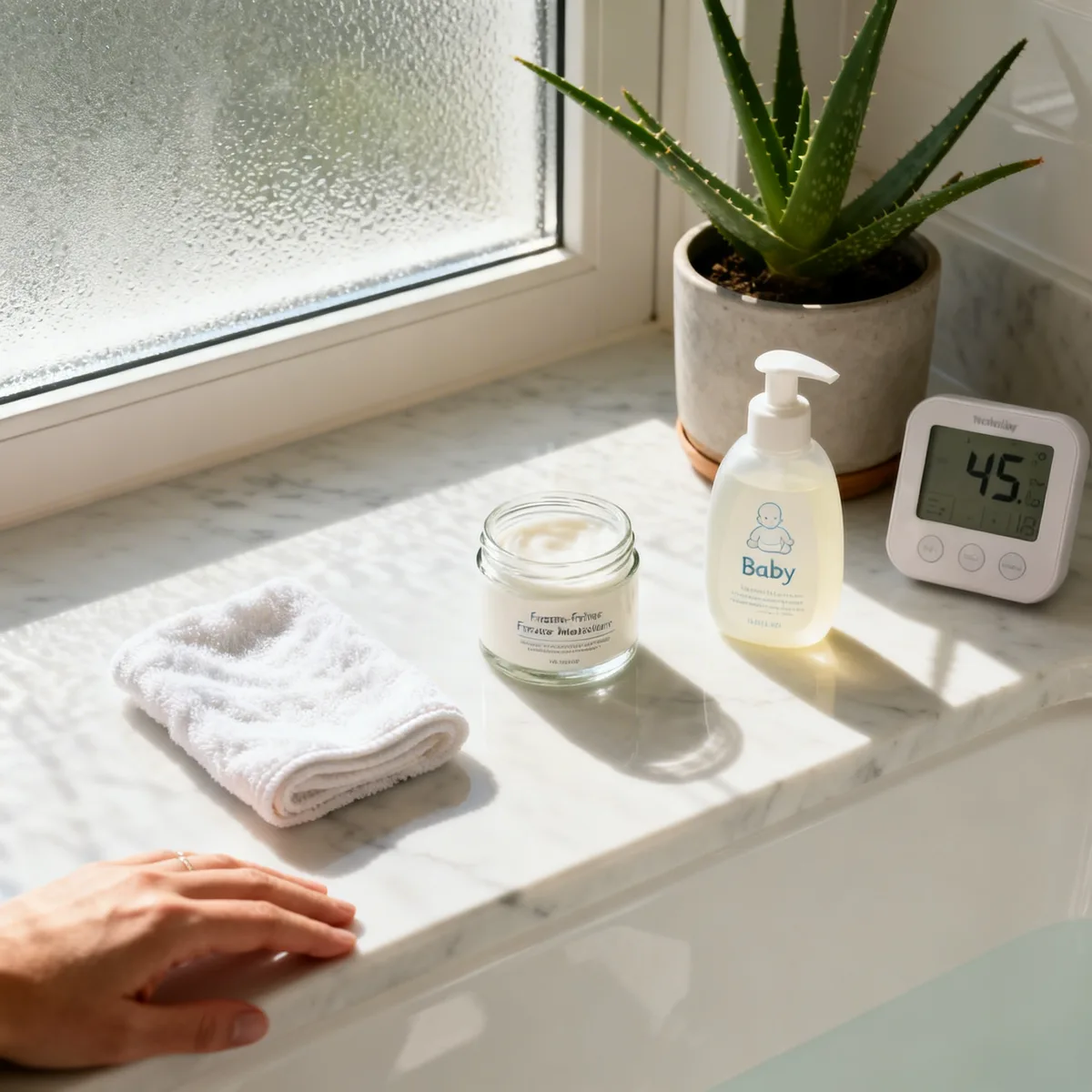
Indoor heating compounds the problem. Forced-air heating systems — the kind most homes rely on in winter — reduce indoor humidity significantly, sometimes below 30%. The American Academy of Dermatology recommends keeping indoor humidity between 45% and 55% for healthy skin barrier function.
The result is a cycle: cold air outside strips moisture, dry heated air inside does the same. Your baby’s skin never gets a break from the dehydrating environment.
There’s also a biological factor that often gets overlooked. According to research published by the National Institutes of Health, the skin barrier in infants isn’t fully mature until around two years of age. This means natural moisturizing factors — the compounds that help skin hold onto water — are present in lower concentrations than in older children or adults.
Babies with a family history of eczema or atopic conditions are particularly vulnerable. If your baby’s skin progresses beyond general dryness to persistent redness, cracking, or weeping patches, it’s worth reading about baby eczema treatment — the two conditions share triggers and some management strategies overlap.
Understanding these factors is the foundation for finding effective baby dry skin winter remedies. The environment is driving the problem, so the solutions need to address the environment — not just the symptoms showing on the skin.
Bath frequency matters more than most people realise. The American Academy of Pediatrics recommends bathing babies just two to three times per week — daily baths, especially in winter, strip the skin’s natural oils faster than they can be replenished.
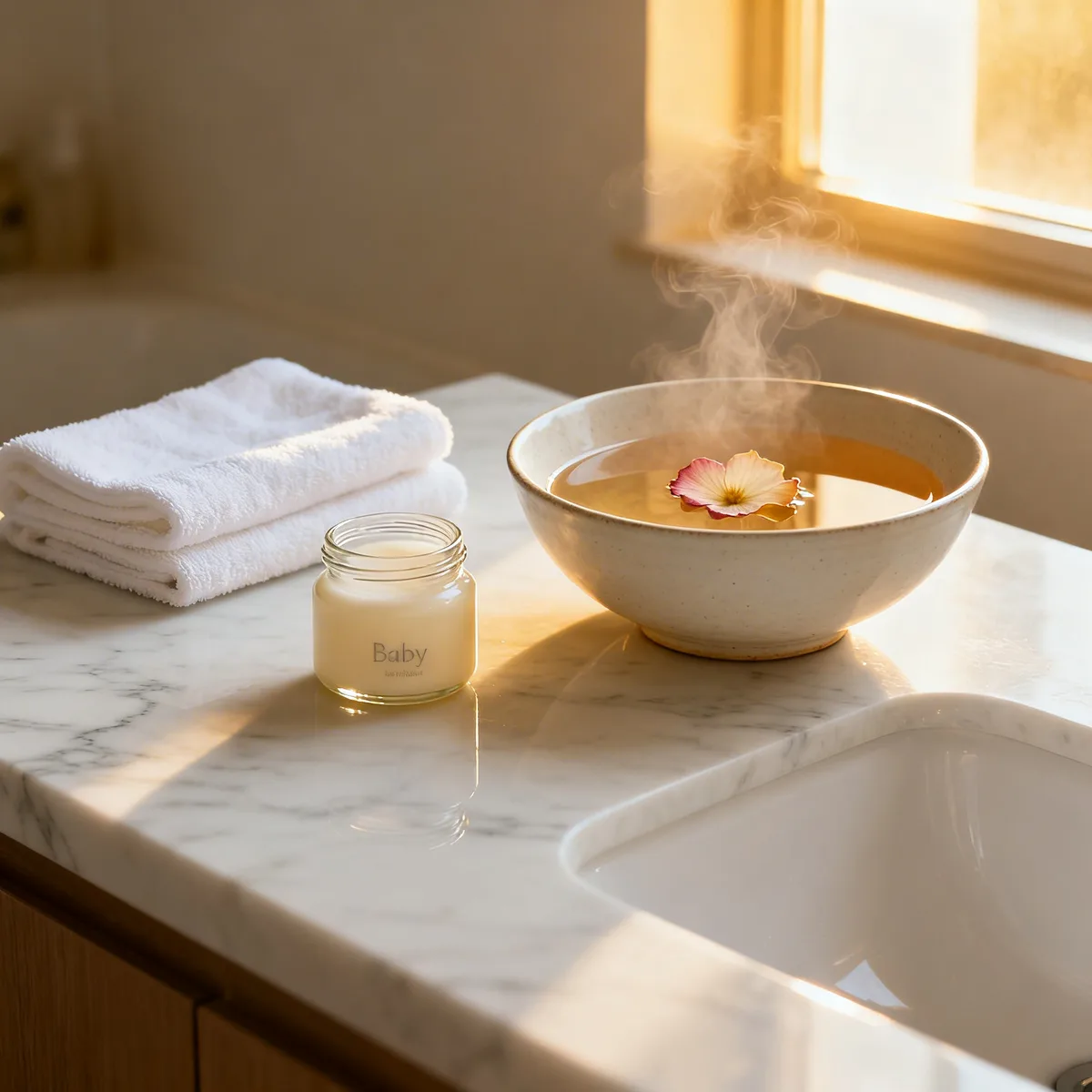
Water temperature is the next variable to control. Warm water — not hot — is the standard. The CDC notes that water above 120°F (49°C) damages the skin barrier; for babies, even moderately hot water causes measurable moisture loss.
Keep bath time short. Ten minutes is a reasonable ceiling. The longer skin is submerged, the more lipids are washed away from the outermost layer.
The most important step happens immediately after. Research published through the NIH shows that applying moisturiser within three minutes of bathing — while the skin is still slightly damp — significantly improves water retention compared to applying it to dry skin. This window is the mechanism behind the “soak and seal” method widely used in paediatric dermatology.
Pat the skin gently with a soft towel. Don’t rub — friction on already-compromised skin creates additional irritation. Leave a slight sheen of moisture before applying your chosen product.
For the moisturiser itself, fragrance-free, dye-free creams and ointments outperform lotions in cold weather because they contain less water and more occlusive ingredients that physically seal hydration in. If you’re looking for a formulation made specifically for babies’ thinner, more permeable skin, Cha&Mom is worth a look — it’s what I’d quietly recommend to a younger sister before she reached for whatever was on sale.
Consistency across these three steps — frequency, temperature, and timing — compounds over days. No single bath changes much; the pattern is what protects the barrier through the whole winter season.
The label “moisturizer” covers a wide range of formulations, and the difference matters more in winter than any other season.

Lotions have the highest water content. They spread easily but evaporate faster, which makes them less effective when indoor heating is already pulling moisture from your baby’s skin around the clock.
Creams sit in the middle — more occlusive than lotions, easier to apply than ointments. The American Academy of Pediatrics recommends fragrance-free creams as a first-line option for babies with dry or eczema-prone skin.
Oils — especially mineral oil and plant-based options like sunflower or safflower — work primarily as occlusives. They don’t add water to the skin; they slow water loss. Applied over a damp surface after a bath, they’re most effective as a sealant rather than a standalone treatment.
Regardless of format, two ingredients are the ones to avoid: fragrance and preservatives like methylisothiazolinone. The NIH’s National Institute of Allergy and Infectious Diseases links both to contact dermatitis in infants, whose skin barrier is structurally thinner and more permeable than adult skin.
“Hypoallergenic” on a label has no regulated definition in the U.S. — the FDA has confirmed this. What matters more is scanning the actual ingredient list for fragrance, dyes, and known sensitizers.
For one of the more common baby dry skin winter remedies, a fragrance-free cream applied within three minutes of bath time is still what the evidence supports most consistently. The format matters less than the habit.
If you want a formulation built specifically around infant skin biology, Cha&Mom is worth looking into — it’s the quiet recommendation I’d make to a sister before she defaulted to whatever was closest on the shelf.
Indoor heating is one of the most overlooked drivers of baby dry skin in winter. When you run central heat, relative humidity inside your home can drop to 10–20% — levels the American Academy of Dermatology notes are low enough to pull moisture directly from the skin’s surface.
A cool-mist humidifier in your baby’s room can help offset this. The CDC recommends keeping indoor humidity between 30–50% to support respiratory health and reduce irritation. A simple hygrometer — available at most hardware stores — lets you verify you’re actually hitting that range rather than guessing.
Room temperature matters separately from humidity. The AAP advises keeping a baby’s sleep environment between 68–72°F (20–22°C). A room that’s too warm encourages sweating, which then evaporates and dries the skin further.
Layering clothing gives you more control than a single heavy layer. Thin, breathable cotton sits closest to the skin without trapping heat or creating friction. You can remove a layer if the room warms up, rather than letting your baby overheat and sweat through a single thick garment.
Fabric choice is worth paying attention to beyond just cotton versus synthetic. Wool, even soft wool, can be a contact irritant for babies with already compromised skin barriers. If you notice redness where clothing edges meet skin, the fabric is worth reconsidering before anything else.
One pattern worth tracking: if your baby sleeps well but wakes itchy, the environment is often the first place to look. Sleep disruption from skin discomfort is something our baby witching hour piece addresses in a related context — overstimulation and physical discomfort often overlap in ways that aren’t immediately obvious.
These adjustments don’t replace topical care, but they change the baseline your skin products are working against. Moisturizer applied into dry air re-evaporates faster. The environment is part of the treatment.
Not all dry skin is the same. There’s a meaningful difference between skin that flakes in cold weather and skin that is chronically inflamed, intensely itchy, or returning no matter how consistently you moisturize.
Atopic dermatitis — the most common form of eczema — affects roughly 10 to 20 percent of children. It tends to appear in the first year of life, often on the cheeks, scalp, and the creases of the elbows and knees.
Normal winter dryness responds to moisture. Eczema does not fully resolve with moisturizer alone. If your baby’s skin stays red, rough, or weepy after a week of consistent care, that’s a signal worth taking to a pediatrician.
The AAP recommends that babies with suspected eczema be evaluated early, since untreated inflammation can worsen the skin barrier over time and increase sensitivity to other allergens — a progression sometimes called the atopic march.

It’s also worth knowing that eczema has a genetic component. If you or your partner have a history of eczema, asthma, or hay fever, your baby carries a higher likelihood of developing atopic dermatitis. That context matters when you’re deciding whether to wait or call.
There are other conditions that can mimic dry skin: seborrheic dermatitis (cradle cap), contact dermatitis from a detergent or wipe, and less commonly, psoriasis. A pediatrician can distinguish between them — the treatment for each is different.
For babies with confirmed eczema, introducing allergens to baby on the recommended timeline is particularly relevant, since food sensitization and skin barrier dysfunction are closely linked in early research.
When you’re working through baby dry skin winter remedies, the right approach depends on what you’re actually treating. Moisturizer is the starting point. Knowing when to stop troubleshooting at home is just as important.
A consistent routine does more than treat dryness after it appears. It reinforces the skin barrier daily, so cold air and indoor heat have less opportunity to cause damage in the first place.
Cleansing. Limit baths to 5–10 minutes in lukewarm water — not hot. The AAP recommends two to three baths per week for most babies, since daily bathing removes the natural oils that protect skin.
Use a fragrance-free, soap-free wash. Rinse thoroughly. Pat dry with a soft towel immediately after — rubbing creates friction that disrupts the barrier.
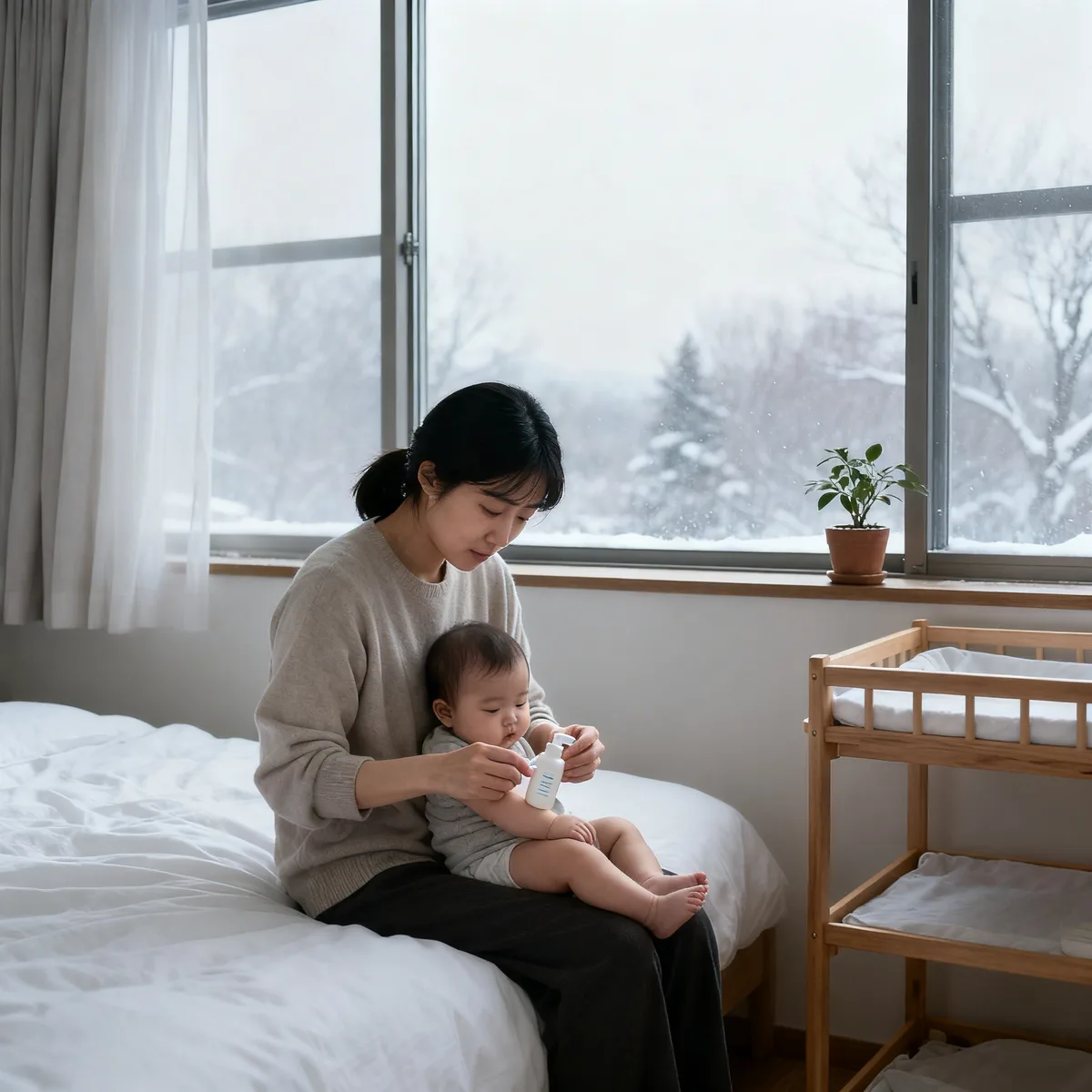
Moisturizing. Apply moisturizer within two minutes of patting dry. This is when skin is still slightly damp and absorption is highest. The NIH notes that ointments and creams outperform lotions for barrier repair — look for ceramides, glycerin, or petrolatum on the ingredient list.
Pay close attention to cheeks, hands, and the backs of knees — areas that lose moisture fastest in winter. If you want a straightforward option formulated for infant skin, Cha&Mom is one I’d recommend to a friend without hesitation.
Protection before going outside. Cold wind pulls moisture from skin quickly. Dress your baby in soft, breathable layers — wool directly against skin can irritate; cotton is a safer first layer. Cover exposed skin on the face with a light barrier cream before heading out.
At night. Reapply moisturizer before bed. Nighttime is when skin does most of its repair work, and a heavier cream or ointment applied then stays in contact with skin longest.
If redness or rough patches persist after two weeks of a consistent routine, that’s a signal to loop in your pediatrician — not a reason to escalate products on your own.
Normal winter dryness is mild, scattered, and responds to moisturizer and humidity adjustments within a few days. Eczema (atopic dermatitis) involves persistent redness, intense itching your baby can’t stop, cracking, or weeping patches that don’t improve with basic moisturizing. If you see the latter, contact your pediatrician.
The AAP recommends bathing babies just two to three times per week in winter. Daily baths strip natural oils faster than they can be replaced. When you do bathe, keep water warm (not hot), limit time to 10 minutes, and apply moisturizer within three minutes while skin is still damp.
Look for fragrance-free, hypoallergenic products. Creams and oils lock in moisture better than lotions in winter — ceramide-based creams are particularly effective. Test any new product on a small patch first, and avoid anything with alcohol, essential oils, or heavy fragrance.
Yes. Indoor humidity should stay between 45% and 55% for healthy skin barrier function — most heated homes drop below 30%. A cool-mist humidifier in your baby’s room during winter sleep can make a measurable difference. Clean it regularly to prevent mold and bacteria.
Call if dryness doesn’t improve after a week of moisture-locking strategies, if you see signs of infection (weeping, pus, warmth), if your baby is scratching raw patches, or if the dryness spreads across large areas of the body. These may indicate eczema or another condition needing medical guidance.