Quick Summary
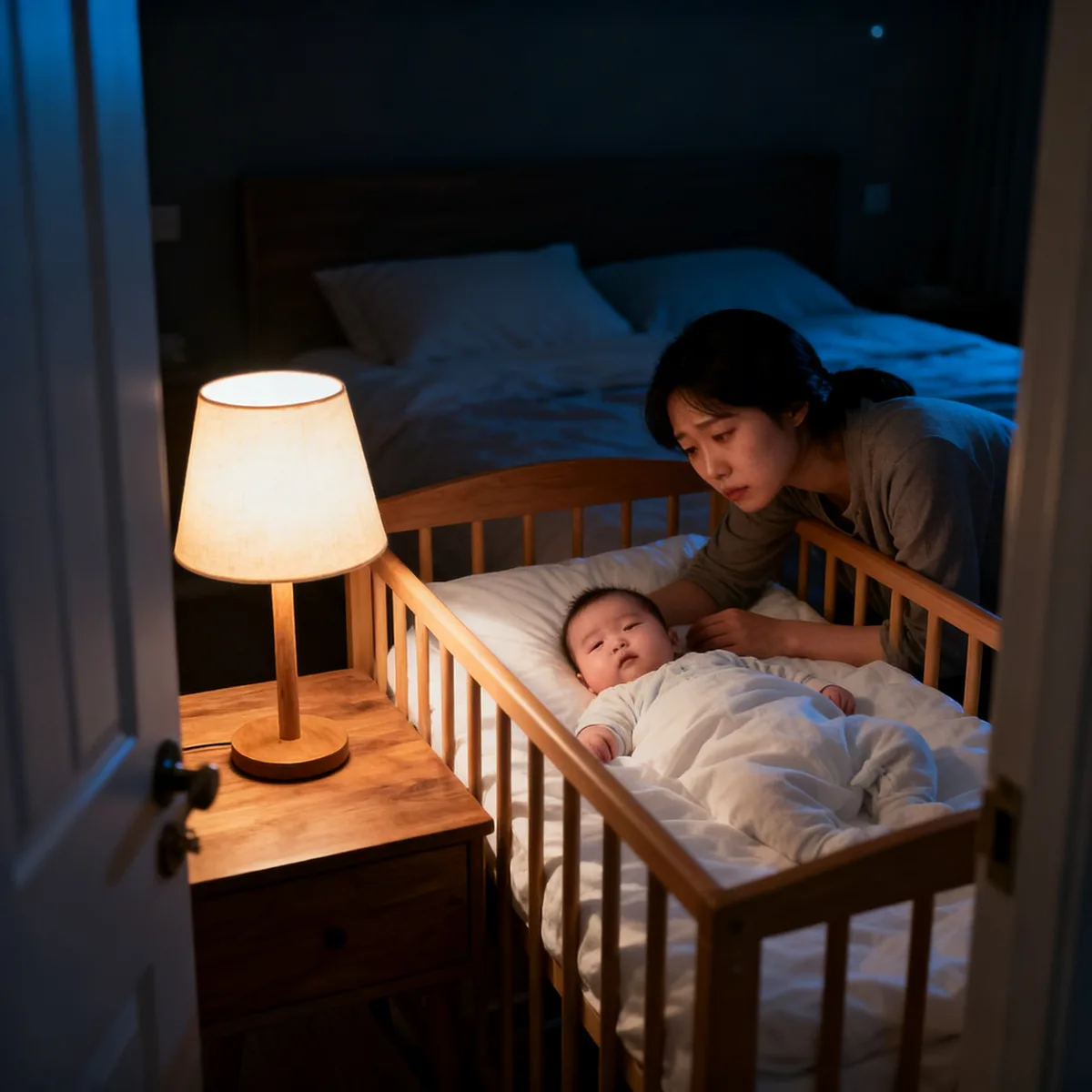
Here’s what nobody tells you about a baby not sleeping through the night at 6 months: it’s rarely a problem to fix—it’s usually a sign of normal development happening exactly on schedule.
Most parents assume that if their baby isn’t sleeping through by six months, something’s wrong. In reality, the opposite is often true. Your baby’s brain is undergoing massive change—motor skills, memory, language processing—and that neurological activity doesn’t pause at bedtime. Add in a developmental leap, emerging separation awareness, and the fact that many babies simply haven’t yet learned to resettle between sleep cycles, and you have a pretty clear picture of what’s happening.
This guide walks you through the actual developmental reasons 6-month-olds wake at night, how to assess whether your baby is truly ready for uninterrupted sleep, and the evidence-based approaches that work at this age.
Why Your Baby Isn’t Sleeping Through the Night at 6 Months
If your baby not sleeping through the night feels like a problem to fix, it may help to know it’s more often a sign of normal development than anything going wrong.
At six months, the brain is undergoing significant change. Motor skills, memory, and language processing are all accelerating simultaneously — and that neurological activity doesn’t pause at bedtime.
Sleep architecture is also different at this age. Babies cycle through light and deep sleep more frequently than adults, and they surface to partial wakefulness between cycles. If they haven’t yet learned to resettle independently, that surfacing becomes a full wake-up.
The AAP notes that around six months, many babies are developmentally ready to sleep for longer stretches — but “ready” doesn’t mean automatic. The ability to self-settle is a skill, and it develops on its own timeline.
Nutrition plays a role too. A six-month-old is typically starting solid foods, but breast milk or formula remains the primary calorie source. If caloric intake during the day is uneven, nighttime hunger is a straightforward result — not a sleep problem.
Then there’s the six-month regression itself. This is a well-documented disruption tied to the developmental leaps happening around this time: increased awareness of the environment, separation anxiety beginning to emerge, and physical milestones like rolling and sitting that your baby may practice — restlessly — during sleep.
It’s also worth noting that if you’ve recently introduced new foods, digestive discomfort can contribute to waking. Understanding the difference between a food sensitivity and typical adjustment matters here — milk allergy vs lactose intolerance baby is a useful place to start if you suspect food is a factor.
None of this means the wakings will last forever. But understanding what’s driving them changes the response.
Is Your Baby Actually Ready to Sleep Through the Night?
Before troubleshooting why your baby isn’t sleeping through the night, it’s worth asking a more fundamental question: is your baby developmentally ready to do so at all?
Sleep consolidation isn’t just a habit. It’s a biological milestone. A baby’s ability to go 8+ hours without feeding depends on two things arriving together: neurological maturity and sufficient caloric independence.
On the neurological side, the circadian rhythm — the internal clock that distinguishes day from night — doesn’t fully establish until around 3 to 4 months of age. Before that point, extended uninterrupted sleep isn’t something most babies are wired to sustain.
Caloric independence is the other half of the equation. Newborns have small stomach capacity and rapid digestion. They genuinely need to feed frequently. Most babies don’t accumulate the fat stores and feeding efficiency to sustain a full night without calories until somewhere between 4 and 6 months — and even then, there’s meaningful variation.
The AAP recommends that newborns feed every 2 to 3 hours and that caregivers should never let a newborn sleep so long that feedings are missed in the early weeks. This guidance exists because early weight gain and milk supply both depend on frequent feeding — not because waking is a problem to be solved.
Weight is one useful marker here. Many pediatricians use roughly 12 to 13 pounds as a rough threshold at which some babies begin consolidating sleep — but this is a guideline, not a rule. Growth rate, feeding method, and individual temperament all factor in.
If you’re also navigating what your baby eats alongside when they sleep, introducing allergens to baby at the right developmental window can be part of the same broader picture of readiness.
Readiness isn’t a fixed point. It’s a window — and knowing where your baby sits within it shapes everything that comes next.
Feeding and Nutrition: The Foundation for Better Sleep
At 6 months, what happens during the day directly shapes what happens at night. Feeding patterns, total calorie intake, and the timing of feeds are all variables that influence how long your baby sleeps between wake-ups.
The AAP recommends exclusive breastfeeding for around 6 months, at which point solid foods are introduced alongside continued breast milk or formula. This transition matters for sleep because solids add caloric density — giving your baby more sustained energy reserves through the night.

feeding tools designed for this stage. This doesn’t mean rigid scheduling, but it does mean being intentional: offering fuller feeds during waking hours rather than letting snacking become the norm.
Frequent small feeds throughout the day can lead to more frequent night waking — not from habit alone, but because your baby genuinely needs those extra calories somewhere. Shifting more of that intake to daytime can gradually reduce the need for nighttime feeds.
For bottle-feeding families, paced feeding plays a role here too. How your baby feeds affects how much they take in per session. Bottle feeding positions influence comfort, latch quality, and how efficiently your baby transfers milk — all of which affect total intake per feed.
If your baby is not sleeping through the night and feeding feels like a possible factor, tracking feed frequency and volume for a few days can reveal patterns that are hard to spot in real time.
No single feeding approach guarantees longer sleep. But calorie distribution — spread consistently across the day — gives your baby’s physiology the best conditions to consolidate sleep as their nervous system matures.
Sleep Environment and Routine Tweaks That Make a Difference
The sleep environment is one of the most controllable variables you have. Small, evidence-backed adjustments to room conditions and routine structure can meaningfully support your baby’s ability to settle and stay asleep.
Room temperature is a good place to start. The AAP recommends keeping your baby’s sleep space between 68–72°F (20–22°C). Overheating is associated with disrupted sleep and, more critically, increased SIDS risk — so err on the cooler side rather than the warmer.
Darkness matters more than most people expect. Melatonin production — the hormone that cues sleep — is suppressed by light exposure. The NIH notes that even low-level light can interfere with melatonin onset in infants. Blackout curtains are one of the highest-return investments for a sleep space.
White noise can help buffer environmental sound that triggers partial wake-ups. Keep the volume at or below 50 decibels — roughly the level of a quiet shower — and place the source away from the crib. The AAP advises using white noise machines at a safe distance rather than directly next to your baby’s head.
Routine consistency is where many families find the most traction. A predictable sequence — bath, feed, brief wind-down, sleep — signals to your baby’s nervous system that sleep is coming. It doesn’t need to be long. Even a 20-minute routine, done consistently at the same time, reinforces the circadian cues your baby is still learning to read.
Timing matters too. Watching for sleepy cues — eye rubbing, reduced activity, a glazed look — and acting on them before overtiredness sets in makes settling easier. An overtired baby produces more cortisol, which actively works against sleep onset.
If your baby is not sleeping through the night despite a solid environment and routine, these foundations are worth auditing before assuming the issue is behavioral or developmental.
Gentle Sleep Methods: What Works at 6 Months
At 6 months, most babies have the neurological capacity to learn independent sleep skills. The American Academy of Pediatrics acknowledges that behavioral sleep interventions are safe and effective at this age — but no single method works for every family.
Full extinction (“cry it out”) involves placing your baby down drowsy and not returning until morning. Research published in Pediatrics shows it produces faster results than graduated approaches, with no evidence of harm to attachment or cortisol levels long-term.
Graduated extinction — popularized by Dr. Richard Ferber — uses timed check-ins that gradually extend. You return at set intervals to briefly reassure without picking up. This tends to take longer than full extinction but feels more manageable for many caregivers.
The fading method removes parental presence incrementally. If you currently sit beside the crib until your baby sleeps, you move the chair slightly farther each night until you’re outside the room. Progress is slower, but the approach avoids sustained crying almost entirely.
Pick-up-put-down, often associated with Tracy Hogg’s work, involves responding to crying by lifting your baby briefly, then returning them to the crib once calm. For some 6-month-olds, the repeated stimulation of being picked up actually prolongs settling — so watch your baby’s response and adjust accordingly.
Realistic expectations matter here. A baby not sleeping through the night after one or two weeks of consistent effort isn’t failing — most methods take 1–3 weeks to show meaningful change, and regression during illness or developmental leaps is normal.
What the research consistently shows is that consistency matters more than which method you choose. One practical note: if your baby is transitioning out of a swaddle, a sleep sack can help maintain a familiar tactile cue while removing the wrap they’ve outgrown for safety reasons — the transition itself doesn’t need to disrupt the sleep work you’re already doing.
When to Worry: Red Flags and When to Call Your Pediatrician
Most sleep struggles are developmental, not medical. But certain signs during sleep warrant a call to your pediatrician — not tomorrow, now.
Unusual lethargy is one of the clearest signals. If your baby is difficult to rouse, shows little interest in feeding, or seems limp and unresponsive when awake, those are not sleep patterns to wait out.
Breathing irregularities during sleep deserve close attention. Pauses in breathing lasting more than 10 seconds, gasping, choking sounds, or consistent labored breathing through the night can indicate obstructive sleep apnea or other respiratory concerns that require evaluation.
The AAP recommends that any infant who shows signs of breathing difficulties during sleep — including snoring paired with restless sleep and frequent waking — be assessed by a healthcare provider, as these can affect oxygen levels and long-term development.
Pain cues are worth distinguishing from ordinary fussiness. Arching the back consistently, pulling legs toward the abdomen, or crying that escalates rather than settles may point to reflux, gas pain, or another underlying condition disrupting sleep.
A baby not sleeping through the night is almost always normal. But if waking is paired with high-pitched crying unlike your baby’s usual cry, fever, visible discomfort, or any regression that follows a illness and doesn’t resolve, those combinations deserve professional input.
Other signals that warrant a conversation with your pediatrician: snoring every night (not occasionally), mouth breathing during sleep, or a baby who seems chronically overtired despite what appear to be adequate sleep hours.
You know your baby’s baseline better than anyone. If something feels off — not just hard, but genuinely different — trust that instinct and make the call. Your pediatrician’s job is to help you sort out which concerns need intervention and which ones just need time.
The Realistic Timeline: Expect Progress, Not Perfection
If your baby is not sleeping through the night, you’re likely not behind schedule — you may simply be on a normal one.
The AAP defines “sleeping through the night” as a stretch of five to six consecutive hours, not the eight-plus hours most adults imagine. That distinction matters enormously when you’re measuring progress.
Most babies begin consolidating sleep somewhere between three and six months. But “most” covers a wide range. Some do it closer to four months; others closer to nine. Both are within normal developmental variation.
What drives the shift isn’t discipline or routine alone. It’s neurology. A baby’s circadian rhythm — the internal clock that separates day from night — doesn’t fully regulate until around three to four months of age. You can support it; you can’t rush it.
Sleep also doesn’t improve in a straight line. A baby who strings together a four-hour stretch one week may revert to two-hour windows the next. Teething, growth spurts, illness, and developmental leaps all temporarily disrupt sleep patterns that seemed settled.
Progress tends to look like longer stretches becoming more frequent — not a single night where everything clicks and stays that way.
By six months, many babies are physiologically capable of longer uninterrupted sleep, though feeding needs, temperament, and environment all play a role in whether that potential translates into practice.
The more useful measure isn’t whether your baby sleeps through the night on any given night. It’s whether, over weeks, the overall pattern is slowly, imperfectly trending toward more consolidated stretches.
That’s what progress actually looks like at this stage — and it’s worth knowing before you spend another night convinced you’re doing something wrong.
Sources
- American Academy of Pediatrics — infant sleep development, circadian rhythm maturation, and safe sleep guidance.
- American Academy of Pediatrics — comprehensive parent guide to safe sleep practices and realistic sleep expectations by age.
Frequently Asked Questions
Can a 6-month-old baby really sleep through the night without feeding?
Yes, many 6-month-olds are developmentally capable of sleeping 8+ hours without a feeding—but not all. It depends on whether your baby has achieved both neurological maturity (a fully established circadian rhythm) and sufficient caloric intake during the day. Some babies reach this point closer to 5 months; others need until 7 or 8 months. If your baby is gaining weight well and taking adequate calories during daytime feedings, they likely have the physical capacity to skip one night feed.
Is sleep training safe for a 6-month-old baby?
Yes, gentle sleep training methods are considered safe at 6 months according to the AAP, provided your baby is healthy, gaining weight appropriately, and has no underlying medical concerns. Methods like pick-up-put-down, fading, and even extinction (cry-it-out) have research support for this age. However, safety means starting from a foundation of met needs—adequate daytime nutrition, a safe sleep environment, and ruling out pain or illness first.
How many night wakings are normal for a 6-month-old?
One to two night wakings is considered typical for a healthy 6-month-old, though some babies wake more frequently and it’s still developmentally normal. Waking three or more times per night can sometimes signal hunger, discomfort, or an emerging sleep regression, but it doesn’t automatically mean something is wrong. Track your baby’s pattern over a week to establish their baseline before assuming change is needed.
Should I feed my baby every time they wake at night, or let them cry?
The answer depends on whether hunger is the actual cause of waking. If your baby is gaining weight well and taking sufficient calories during the day, some night wakings can be addressed with resettling rather than feeding. However, if daytime intake is low or your baby is in a growth spurt, feeding is the right response. Start by ruling out hunger, pain, and discomfort before choosing a sleep training approach.
How long does the 6-month sleep regression last?
The 6-month regression typically lasts 2 to 4 weeks, though some babies experience it more mildly or briefly. It’s tied to significant developmental changes—increased environmental awareness, emerging stranger awareness, and motor skill practice like rolling and sitting. Once your baby adjusts to these new abilities and awareness, sleep usually settles again. If disruption continues beyond 4 weeks, check in with your pediatrician about other contributing factors.
Keep Reading

Best Baby Swings and Bouncers 2026: Expert Reviews & Buying Guide

Best Infant Car Seat 2026: Top Safety Picks for Newborns & New Parents

Why is My Baby’s Skin So Sensitive? : Understanding the Probiotic Shower

K-Baby Is Having a Moment — Here's What's Real and What's Just Marketing

First Trimester Survival Guide: What Nobody Actually Tells You