
Sleep Guides
4 Month Sleep Regression: Why It Happens and How to Get Through It
Jeehoo Jeon·9 min read

Learn what toddler night terrors actually are, why they happen, and proven strategies to help your child. Science-backed guide to calm nights.
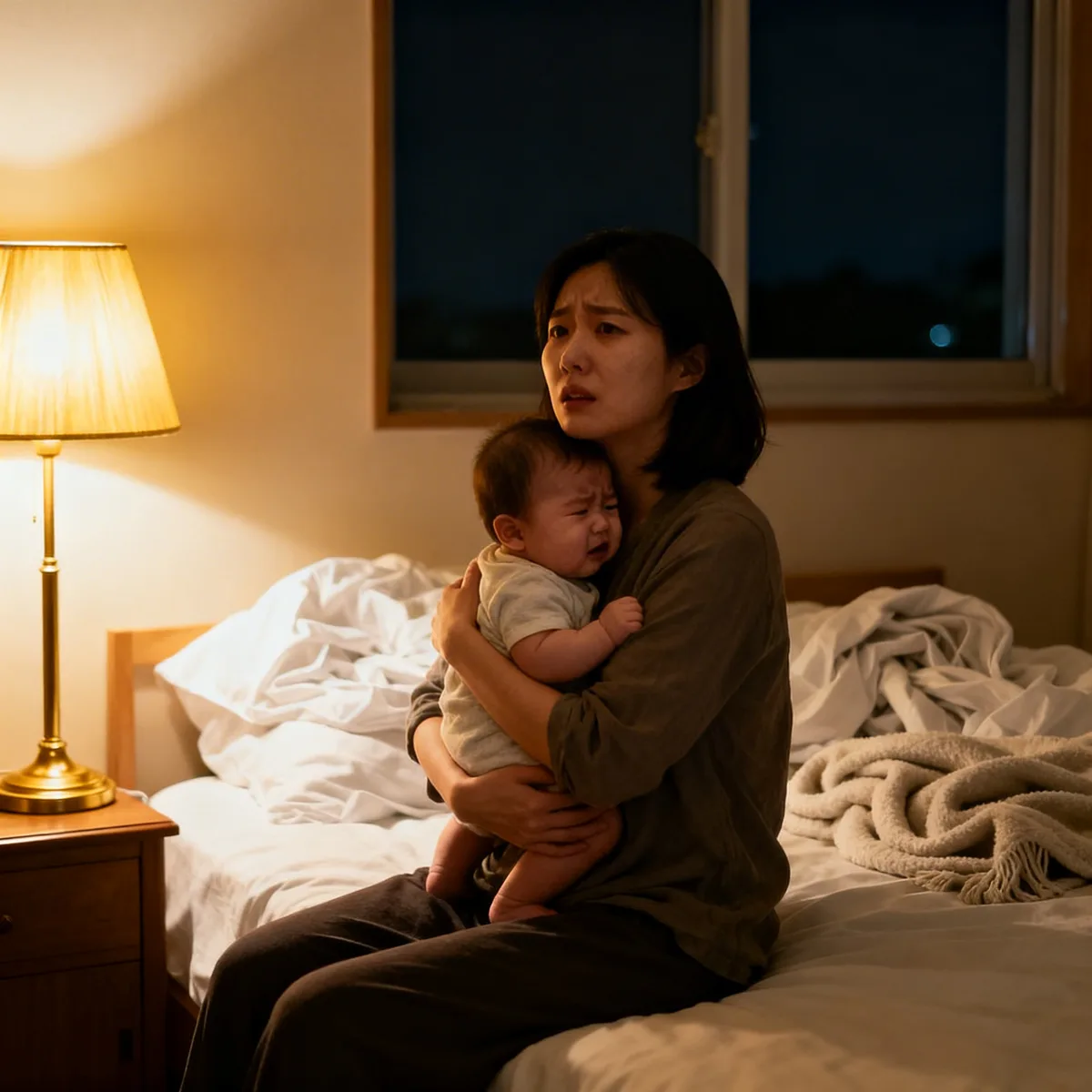
It’s 2 AM and your toddler is screaming — eyes wide open, thrashing, completely inconsolable. You reach for them, call their name, try everything you know. Nothing works. And then, just as suddenly as it started, they’re calm again. Asleep. By morning, they remember nothing.
If this sounds familiar, you’re not alone — and what you’re witnessing isn’t a nightmare. Toddler night terrors are a distinct sleep phenomenon rooted in neurology, not emotion, and they’re far more common than most parents realize. Once you understand what’s actually happening in your child’s brain during these episodes, you can stop blaming yourself and start responding in ways that actually help.
A night terror is not a nightmare. The distinction matters — and understanding it changes how you respond.
Nightmares happen during REM sleep, the lighter stage where dreaming occurs. Your child can be woken, comforted, and will usually remember what frightened them.
Toddler night terrors happen during non-REM sleep — specifically during the slow-wave, deep sleep stage in the first few hours of the night. Your child is not dreaming. They are stuck in an incomplete transition between sleep cycles.
During that stuck transition, the brain’s arousal systems partially activate while the cortex — the part responsible for conscious awareness — stays asleep. The result is a surge of motor and emotional activity: screaming, thrashing, eyes wide open, heart racing. But no one is home.
This is why your child won’t recognise you, can’t be consoled, and remembers nothing in the morning.
The neurological reason this happens more often in toddlers is straightforward. Young children spend a significantly higher proportion of their sleep in slow-wave sleep than adults do. The AAP notes that sleep disorders involving partial arousal, including night terrors, are most common between ages 3 and 7, precisely when slow-wave sleep is at its developmental peak.
The same intense brain development driving the terrible twos — rapid neural pruning, new emotional circuitry forming — also makes the sleeping brain more prone to these incomplete arousals.
Night terrors typically last between 5 and 30 minutes. They tend to cluster at the same time each night, because they’re tied to predictable sleep-cycle transitions rather than external triggers.
There is nothing wrong with your child’s brain. This is developmental biology doing exactly what it’s supposed to do.
The episode usually starts the same way: a sudden, piercing scream — often 60 to 90 minutes after your toddler fell asleep.
When you go in, your child may be sitting upright, eyes wide open, heart racing, and drenched in sweat. They’re thrashing, calling out, or inconsolable. And yet they don’t seem to see you at all.
That last detail matters. Unlike a child waking from a nightmare, a toddler in the middle of a night terror is not fully conscious. They’re stuck in a partial arousal between deep sleep and waking — aware enough to generate fear responses, but not aware enough to register your presence or be comforted by it.
Trying to hold them, talk them down, or wake them up often makes the thrashing worse. That’s not defiance. That’s neurology.
The AAP notes that during a night terror, children typically have no memory of the episode the next morning — and that’s exactly what you’d expect given where in the sleep cycle these events occur. The memory-forming parts of the brain aren’t fully online.
The physical signs are distinct and consistent: rapid breathing, flushed skin, a pounding heart, dilated pupils. Your child may mumble, shout words, or appear terrified of something in the room. Some children get out of bed and move around — which is why toddler night terrors and sleepwalking sometimes overlap.
By contrast, a bad dream happens in REM sleep, later in the night. A child waking from a nightmare is alert, recognises you immediately, and can often describe what scared them. The two look nothing alike once you know what to watch for.
This kind of intense, confusing behaviour during the toddler years isn’t limited to sleep. If you’re also navigating sudden aggression during the day, the toddler hitting phase follows a similar developmental logic — big neurological change, limited self-regulation.
Night terrors are most common between ages two and four. This is when the brain is rapidly developing its sleep architecture — the cycles of light and deep sleep are maturing, and transitions between them are still unstable.
Toddler night terrors occur during the shift out of slow-wave (deep) sleep, typically in the first third of the night. The brain partially wakes but doesn’t complete the transition, leaving your child stuck in a state between sleep and consciousness.
The AAP notes that children this age need 11 to 14 hours of sleep in a 24-hour period. When they consistently get less, sleep pressure builds — and that pressure makes deep sleep more intense, which raises the likelihood of a disrupted arousal.
Overtiredness is one of the most reliable triggers. A missed nap, a late bedtime, or a run of short nights can all increase the depth of slow-wave sleep, making it harder for the brain to surface cleanly.
Stress and disruption matter too. Starting daycare, a new sibling, travel, or changes to the daily routine can all elevate arousal levels that carry into sleep. If you’ve been watching for preschool readiness signs, it’s worth knowing that the transition itself — even a positive one — can temporarily spike night terror frequency.

Fever and illness are also known triggers, likely because they drive deeper slow-wave sleep as the body recovers.
Genetics play a role as well. If you or your partner had night terrors as a child, your toddler is more likely to experience them. This doesn’t change the management approach, but it does explain why some children are more prone regardless of routine.
The instinct to intervene is strong. Your child looks distressed, and your instinct is to comfort them. But most instinctive responses during toddler night terrors can actually prolong the episode.
Don’t try to wake your child. The American Academy of Pediatrics notes that during a night terror, the child is in a state of partial arousal from deep slow-wave sleep — waking them abruptly disrupts that cycle and can leave them confused, disoriented, and harder to settle.
Don’t hold them tightly or restrain them. Physical restraint often escalates the episode. The thrashing and pushing you see isn’t directed at you — it’s a neurological event, not a conscious response. Firm holding adds physical resistance that can intensify the distress.
Don’t try to reason with them or ask what’s wrong. During an episode, the brain’s cortex — responsible for language, reasoning, and recognition — is not fully active. Your child cannot process questions or reassurance. Talking at them doesn’t help; it can add stimulation that makes the episode harder to exit.
Don’t turn on bright lights or make loud sounds for the same reason. Sensory input during partial arousal adds load to a system that’s already dysregulated.
What actually helps is staying nearby without engaging. Position yourself close enough to prevent physical injury — move furniture, guide them gently away from stairs — but otherwise let the episode run its course. Most resolve within 1 to 15 minutes on their own, according to the NIH.
It’s also worth knowing that your child will have no memory of the episode the next morning. The distress you witness is real in the moment, but it isn’t being stored or processed the way a nightmare would be. This is meaningfully different from other sleep disruptions, like the separation anxiety in babies that can also surface around bedtime.
When an episode starts, your first move is to stay calm. Your child is not conscious or aware of your presence, but your own stress response can still shape how you act — and acting too quickly can prolong the episode.
Keep the room dim. Bright lights can add stimulation without helping your child return to settled sleep any faster.
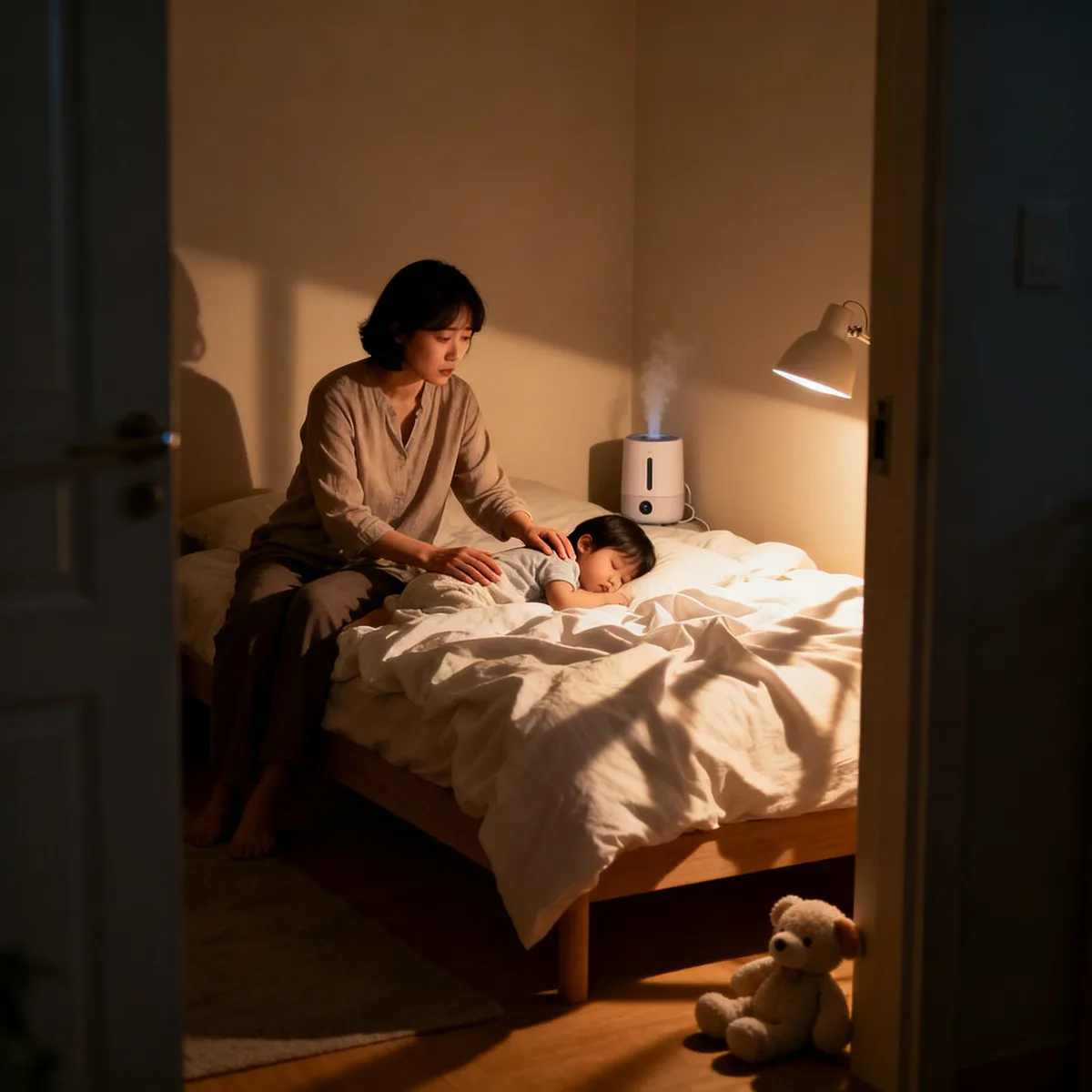
Focus on safety, not comfort. Move any nearby objects that could cause injury, and position yourself close to stairs or furniture edges. Physical restraint tends to intensify the episode, so observe rather than hold.
Let it pass on its own. The NIH notes that most episodes resolve within 1 to 15 minutes without intervention. Trying to wake your child forcefully during this window usually makes things harder, not easier.
Once it’s over, your child will likely settle back into sleep without any awareness of what happened. There’s no need to discuss it in the morning — they genuinely won’t remember it.
Keeping a simple log is one of the most useful things you can do over time. Note the time the episode started, how long it lasted, and what happened earlier that day — including sleep schedule changes, illness, or stress. Patterns often emerge. Many families find episodes cluster around the same time each night, typically 1 to 3 hours after falling asleep, which is when the transition out of deep slow-wave sleep occurs.
If toddler night terrors are appearing alongside other sleep disruptions, it helps to look at the full picture of your child’s sleep. Our guide to baby not sleeping through night covers how sleep architecture develops and what consistent sleep challenges can signal.
If episodes are increasing in frequency, lasting longer than 15 minutes, or involving self-injury, bring that log to your pediatrician. Data makes that conversation more productive.
The most consistent factor linked to toddler night terrors is overtiredness. When a child misses sleep or goes to bed too late, they accumulate sleep pressure — and that increases the intensity of slow-wave sleep, which is precisely when episodes occur.
The AAP recommends that toddlers aged 1–2 years get 11–14 hours of sleep per day, including naps. Falling short of that window regularly raises the likelihood of disrupted sleep cycles.
A predictable bedtime routine does more than signal sleep. It gradually lowers cortisol levels in the hour before bed, making the transition into deep sleep smoother and less abrupt.
Keep the routine simple and sequenced: bath, dim lights, a short book, bed. The consistency of the order matters as much as the activities themselves.
Watch for overtiredness signs earlier in the evening — eye rubbing, clinginess, loss of coordination. Acting on those cues and moving bedtime earlier by 20–30 minutes can meaningfully reduce episode frequency.
Stress and overstimulation during the day also play a role. Screen exposure close to bedtime, high-energy play in the final hour, or emotionally charged events can all elevate arousal levels that carry into sleep.

If evenings in your home tend to be chaotic and unsettled, it’s worth reading about the baby witching hour — the patterns behind difficult evening behaviour often overlap with what makes bedtime harder for toddlers too.
Keeping sleep and wake times consistent — even on weekends — protects the circadian rhythm that regulates sleep stage timing. Irregular schedules can shift when slow-wave sleep occurs, making episodes more likely.
None of these changes eliminate episodes immediately. But over one to two weeks of consistency, most families see a measurable reduction in frequency.
Most episodes are a normal part of early childhood development, not a sign that something is wrong.
The AAP notes that sleep terrors are most common between ages 3 and 8, and that the majority of children outgrow them without any intervention or treatment.
That said, certain patterns are worth discussing with your pediatrician.
Contact your child’s doctor if episodes are happening every night, increasing in frequency over several weeks, or lasting longer than 30 minutes consistently.
Also flag any episode that involves your child leaving the bed or sleepwalking. Movement during an episode raises the risk of injury and changes how a doctor might approach evaluation.
Daytime symptoms matter too. If your toddler seems unusually tired, is struggling with attention or behaviour during the day, or is showing signs of disrupted breathing during sleep — snoring, pausing, gasping — mention it at your next visit.
Obstructive sleep apnea can disrupt slow-wave sleep in a way that triggers more frequent episodes. It’s one of the more common underlying factors a pediatrician will want to rule out.
You should also reach out if you’re unsure whether what you’re seeing is a night terror or a seizure. Both can involve sudden movement and unresponsiveness. A doctor can help you distinguish between the two and, if needed, refer you to a pediatric neurologist.
In most cases, toddler night terrors don’t require medical intervention. But tracking the pattern — duration, frequency, time of night, and any associated symptoms — gives your pediatrician the clearest picture if you do need to seek guidance.
A simple notes app on your phone works well for this. A week of observations is usually enough to identify whether a pattern warrants a closer look.
Night terrors are not dangerous and are not a sign of a sleep disorder or underlying pathology. They’re a normal developmental phenomenon caused by the brain’s incomplete transition between sleep cycles during slow-wave sleep — the deep sleep stage that peaks in toddlerhood.
Night terrors resolve on their own as children’s sleep architecture matures, typically by age 8 or 9. The biggest risk during an episode is accidental injury from thrashing, which is why safety precautions matter more than medical intervention.
During a night terror, your toddler’s brain is caught between two states: the emotional and motor areas are partially activated (causing screaming and thrashing), but the cortex — the part responsible for consciousness and memory — remains asleep. They’re experiencing an intense arousal response without the awareness to understand it or respond to your voice.
This is also why they won’t remember the episode in the morning and why trying to wake them or reason with them typically makes the episode worse rather than better.
Most night terror episodes last between 5 and 30 minutes, though they can feel much longer when you’re in the middle of one. They typically cluster around the same time each night because they’re tied to predictable sleep-cycle transitions.
Yes, children outgrow night terrors as their sleep architecture develops. They’re most common between ages 2 and 7, with the peak around ages 3 to 4, and most children stop having them by age 8 or 9 without any intervention.
While you can’t eliminate night terrors entirely — they’re a developmental process — you can significantly reduce their frequency and intensity through prevention strategies. Consistent bedtime routines, ensuring your toddler gets adequate sleep for their age, managing stress, and avoiding overtiredness are the most effective approaches.
Scheduled awakenings — waking your child 15 to 30 minutes before their typical night terror time for a few nights — can also interrupt the sleep cycle enough to break the pattern temporarily.
You should not try to wake your toddler during a night terror. Attempting to wake them, holding them tightly, or trying to reason with them typically intensifies the episode because their brain isn’t capable of processing those interventions while in a partial arousal state.
Instead, stay calm, ensure they’re safe (clear the crib or bed of objects, keep the room dimly lit), and let the episode run its course. Your presence and quiet vigilance are what matter — not intervention or consolation that they can’t register anyway.