


Mom Wellness
Pregnancy & Postpartum Hair Loss: Why It Happens, When It Stops, and What Helps
Laeeka Edries·10 min read

Diastasis recti belly bands reduce pain and support your core, but won't heal the gap alone. Here's what research shows + how to choose the right one.
A diastasis recti belly band won’t close the gap in your abdominal muscles. That’s the part most product descriptions quietly skip over. What a band actually does is reduce pain, stabilize your core while you move, and give your body a chance to heal without constant strain — and that’s genuinely useful, as long as you understand what you’re working with.
The catch is that the band is support, not the solution. The actual healing requires targeted exercise and, ideally, a pelvic floor physical therapist who can see what’s actually happening in your body.
This guide breaks down what research actually shows about belly band effectiveness, how to pick one that fits your body, and why physical therapy matters more than the band itself.
Here’s something nobody warned you about before birth: your abdominal muscles can actually separate. That’s diastasis recti — a gap that forms between the two sides of your rectus abdominis, the long muscle that runs down the centre of your belly.
It happens because your growing uterus puts enormous pressure on that muscle wall for months. The connective tissue stretches.
Sometimes it snaps back. Sometimes it doesn’t.
And it’s more common than people talk about. Studies suggest it affects more than half of all postpartum women to some degree.
You might notice a soft ridge or bulge running down your middle when you sit up. You might feel weak in your core in a way that doesn’t go away, no matter how many walks you take.
The AAP recommends that postpartum women receive a thorough physical assessment before returning to exercise — because jumping back in too fast, especially with crunches or heavy lifting, can actually make diastasis recti worse.
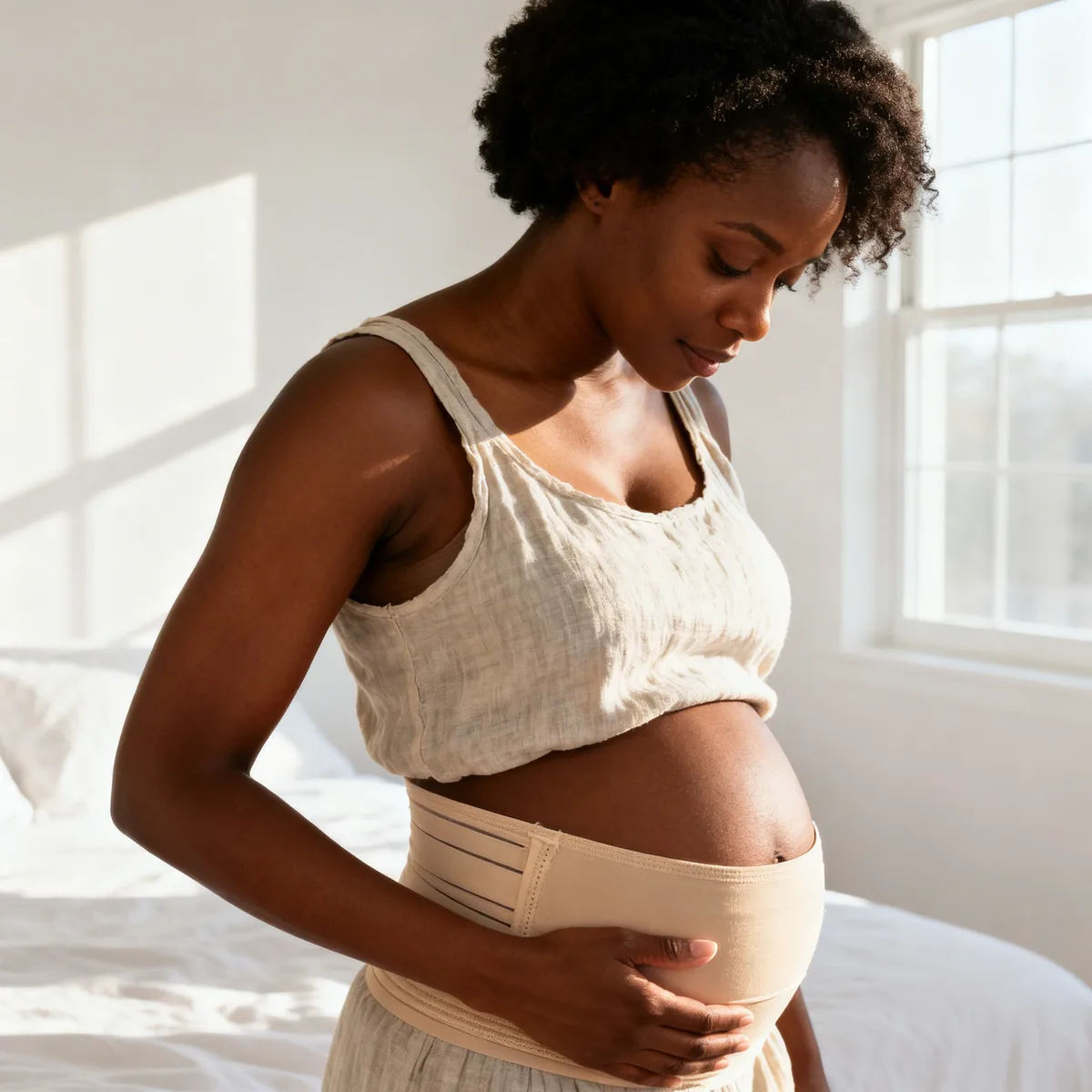
That’s where a diastasis recti belly band enters the conversation. Not as a fix — nothing external closes that gap on its own — but as support while your body heals. It helps hold things gently in place, takes some pressure off your lower back, and makes those first weeks of moving around with a newborn a little more manageable.
A lot of women search for belly band options in those early postpartum weeks because they’re dealing with real, physical discomfort and looking for something practical. That’s not vanity. That’s you trying to function.
If you’re still in the thick of pregnancy and thinking ahead, you might also be sorting through your baby registry checklist first time parents need — postpartum recovery support is worth adding to that list early.
Here’s the honest answer: they help, but not in the way most people expect.
A diastasis recti belly band won’t close the gap in your abdominal muscles on its own. That part matters, because a lot of women are sold on the idea that wearing one will somehow stitch things back together. It won’t.
What the research does support is more practical. Abdominal support garments have been shown to reduce pain and improve functional movement in the early postpartum period. That means less discomfort when you’re getting up, lifting your baby, or just walking around the house.
They work by offloading pressure from weakened core muscles — giving your body a chance to move without those muscles having to carry everything. Think of it as a temporary scaffold, not a cure.
What they cannot do is replace targeted rehabilitation. The actual healing of diastasis recti requires consistent, specific exercise — particularly deep core and pelvic floor work. A band worn without that rehab component won’t close the separation over time.
The AAP recommends that postpartum women receive ongoing care that addresses both physical and emotional recovery — recognising that the body needs structured support, not just time, to heal after birth.
There’s also a timing piece here. In the very early weeks, when your core is at its most vulnerable, a supportive band can make movement safer and less painful. Later on, if you’re still relying on it heavily, it’s worth asking whether your core rehab is doing enough of the work.
Compression garments are a tool. A useful one. But the honest answer is that they support your recovery — they don’t do the recovering for you.
Here’s the truth: not every belly band is built the same, and the wrong one can actually make things harder.

Start with compression level. You want firm support — enough that you feel held together when you stand up or sneeze — but not so tight that you’re holding your breath or feeling pressure pushing downward. That downward pressure matters especially if you’re dealing with pelvic floor tenderness.
Material is the next thing. Postpartum bodies run warm, sweat more than usual, and your midsection is still sensitive.
Look for breathable, stretchy fabric that moves with you. Stiff boning or rigid panels might sound supportive, but they can dig in and restrict the gentle movement your healing tissue actually needs.
Fit is where most people go wrong. A band that rolls down every time you bend over isn’t doing its job — it’s just frustrating you. You want something that stays put through real life: picking up a baby, getting in and out of the car, lying down and getting back up again.
If you’re specifically working with diastasis recti, a diastasis recti belly band is designed with that gap in mind — it gently draws the abdominal muscles inward rather than just compressing the whole midsection. That distinction matters for how you heal.
On timing: most people do well wearing support during active parts of the day — walks, errands, any stretch where you’re upright and moving. Take it off when you’re resting. Your body needs to breathe and your core muscles need some unassisted time too.
And one practical note — if you’re also figuring out postpartum bra fitting at the same time, the same principle applies: fit it to the body you have right now, not the one you’re hoping to return to. Our guide on finding a nursing bra walks through that same logic.
Here’s the honest truth: there’s no single best diastasis recti belly band. There’s only the best one for your body, your day, and how far postpartum you are.
That said, some real differences are worth knowing before you spend money.
Wide, rigid-panel bands — think brands like Belly Bandit or Tummy Wrap styles — give the most compression across the whole abdomen. Good if you’re earlier postpartum and need that full wraparound support just to feel stable walking around.
Adjustable hook-and-eye styles are worth it if your size is still fluctuating. You can tighten as swelling goes down without buying a new one every few weeks. That flexibility matters more than people realize in those first couple of months.
Shorter, lower-profile bands sit just at the gap and work better for women further along in recovery who don’t need full-torso support anymore — just a gentle reminder for the core while they move.
Breathable fabric is non-negotiable. Postpartum bodies run warm. A band that makes you sweat through everything by 10am isn’t one you’ll actually wear consistently — and consistent wear is the whole point.
Fit at the ribcage matters as much as fit at the belly. If it’s rolling down or digging in at the top, it’s not doing its job. Sizing up and adjusting the compression is almost always better than sizing down and fighting it all day.
One thing that surprises a lot of women: the band is a support tool, not the recovery itself. It works alongside breathing exercises and intentional movement — not instead of them.
If you’re also navigating newborn sleep while trying to rest and recover, you’re not alone in feeling like there are too many things to manage at once. Our guide on sleep training methods can help take one thing off your plate when you’re ready.
Here’s the truth nobody puts on the packaging: a diastasis recti belly band can hold you together, but it cannot close the gap for you.
The band is doing its job when it reminds you to breathe correctly, reduces that pulling feeling, and lets you move through your day without wincing. That’s real. That matters.
But the actual healing? That comes from what you do with your body — not what you wrap around it.
Pelvic floor physical therapy is the thing I wish someone had handed me a referral for on the way out of the hospital. A pelvic floor PT can assess how wide your separation actually is, show you which movements are making it worse (yes, some exercises do that), and build a plan that’s specific to your body — not a generic YouTube routine.

Posture matters more than most people realize too. When you’re carrying a baby on one hip and hunching over a feeding pillow all day, your core muscles are working against themselves. Small shifts — how you stand, how you lift, how you get out of bed — add up fast.
Breathing is the other piece. Diaphragmatic breathing, the kind where your belly expands on the inhale, is foundational to core recovery. Most of us are holding our breath or bracing wrong without even knowing it.
The AAP recommends tummy time starting from birth, which is worth mentioning here because watching your baby do tummy time is actually a good reminder to check your own posture and engage your core while you’re on the floor with them.
And if your baby’s development is on your mind while you’re focused on your own recovery, our guide on when infant start teething can help you know what’s coming next.
You don’t have to choose between taking care of yourself and taking care of them. The two can live in the same season.
Here’s the thing nobody tells you at the hospital: the first few weeks postpartum aren’t about bouncing back. They’re about letting your body begin to understand what just happened.
For most people, wearing a diastasis recti belly band can begin around 2–4 weeks after a vaginal birth. After a C-section, you’re usually looking at 6–8 weeks minimum — and only with your provider’s sign-off, because your incision site needs time before anything sits across it.
The early window matters most. Gentle, consistent support during those first couple of months is when a belly band tends to do its best work — helping your connective tissue knit back together while your body is still in active healing mode.
But support isn’t the same as healing. A band holds things in place.
It doesn’t close the gap on its own. You still need to pair it with breathing work and gentle core rehab — ideally guided by a pelvic floor physio.
As for when to stop? Most women start transitioning out of daily wear somewhere between 3–6 months postpartum. The AAP recommends that postpartum recovery plans account for the full physical and emotional demands of new parenthood, which is a gentle reminder that your timeline doesn’t have to match anyone else’s.
Some signs you’re ready to wean off it: your core feels more stable without it, you’re not noticing that “falling forward” feeling when you stand or walk, and your pelvic floor physio is giving you the green light.
Go slowly. Wear it less.
See how your body responds. That’s the honest answer — not a countdown, but a conversation you keep having with your own body as it heals.
Belly bands don’t heal diastasis recti—they don’t close the gap in your abdominal muscles. What they do is reduce pain, improve functional movement, and take pressure off your core while it recovers. The actual healing requires targeted exercises and physical therapy, not the band alone.
Most healthcare providers recommend waiting until the first few days postpartum once heavy bleeding has slowed and you’ve had a physical assessment. Always check with your doctor or pelvic floor physical therapist before starting, especially if you had a C-section or complications.
There’s no one-size-fits-all timeline, but most women find benefit wearing it for 4–8 hours daily during early recovery, particularly during activity or when managing newborn care. As your core strengthens, you’ll gradually need it less. Your physical therapist can give you a personalized schedule.
Belly bands are typically lighter, more flexible compression garments designed to support your core gently. Postpartum corsets are more rigid and restrictive, designed for higher compression. Belly bands are generally easier to wear daily and adjust as needed; corsets are more intensive but less breathable for extended wear.
There’s limited evidence that wearing a band during pregnancy prevents diastasis recti, though some women find them helpful for back pain or pelvic support. If you’re pregnant and concerned about core separation, talk to your healthcare provider about safe options and prenatal exercises instead.