Buying Guides
Best Baby Swings and Bouncers 2026: Expert Reviews & Buying Guide
Soyeon Park·12 min read

Find the best infant car seat 2026 with NHTSA ratings & crash tests. Top picks, budget options, and a buying checklist for newborn safety.
Two infant car seats can look almost identical, cost wildly different amounts, and still earn completely different crash test ratings. So how do you tell them apart? Here’s what actually matters when choosing the best infant car seat 2026 picks for your newborn.
Not all infant car seats are built the same – and the difference isn’t just about features or brand names. The NHTSA sets federal safety standards every seat must meet, but meeting the minimum isn’t the same as performing well in real-world crash conditions. Independent crash testing, installation accuracy, and how a seat actually protects your baby’s fragile head and neck are what separate genuinely protective seats from ones that just clear the bar.
This guide walks you through top-rated models, safety ratings, real-world usability, and a buying checklist to help you choose with confidence – not confusion.
The hospital will not let you leave with your baby without one. An infant car seat isn’t a nice-to-have – it’s the baseline requirement for getting your newborn home safely, and every ride after that.
Not all car seats are built the same. The National Highway Traffic Safety Administration (NHTSA) sets the federal safety standards every seat must meet, but meeting the minimum isn’t the same as performing well in real-world crash conditions.
NHTSA’s ratings evaluate ease of use, installation accuracy, and structural performance. A seat that’s difficult to install correctly is a safety risk – because most car seat errors happen during setup, not on the road.
Crash test ratings go further. Independent testing from organizations like Consumer Reports subjects seats to front, side, and rollover impact scenarios. That data is what separates genuinely protective seats from ones that just clear the bar.
Newborns have almost no muscle control to protect themselves. Their heads are disproportionately heavy, their necks are fragile, and they rely entirely on the seat’s design to distribute crash forces away from their spine and skull.
Rear-facing is non-negotiable for infants. It’s not a preference – it’s physics. A rear-facing seat cradles the head, neck, and back together, spreading impact force across the entire body instead of concentrating it on a single point.
If you’re deep in the gear research phase, you’re probably also weighing how your car seat works with a travel system. The best stroller for newborn use is one that’s actually compatible with your seat’s brand and click-in system – worth checking before you commit to either.
When you’re looking at best infant car seat 2026 picks, the ratings and standards aren’t marketing language. They’re the framework for knowing what you’re actually comparing.
These aren’t ranked by price or brand recognition. They earned their spots through 2026 FMVSS 213 compliance, independent crash testing, and real-world usability.
Chicco KeyFit 35 ClearTex Plus – fits infants from 4-35 lbs and up to 32 inches. The load leg and anti-rebound bar are standard, not upgrades. Side-impact ratings have consistently come back strong in independent testing.
Graco SnugRide SnugFit 35 LX – weight range 4-35 lbs, height up to 32 inches. It’s consistently one of the easiest bases to install correctly on the first try, which matters more than most people realize. Meets current federal dynamic crash standards with no noted concerns.
Nuna PIPA aire RX – the lightest seat in this tier at 5.3 lbs, with a 4-32 lb range and rebound guard built in. The 2026 certification includes updated side-impact criteria. If you’re frequently moving the seat between vehicles, this one’s weight is legitimately useful, not just a selling point.
Britax B-Safe Gen2 FlexFit+ – 4-35 lbs, 32-inch height limit, with a base that adjusts to vehicle seat angle without an insert. Anti-rebound protection is integrated. Crash test performance in the 2025-2026 NHTSA review cycle landed in the top tier.
Clek Liing – 4-35 lbs, fits up to 32 inches, and one of the few infant seats with a steel-reinforced anti-rebound bar and energy-absorbing foam meeting both Canadian CMVSS 213 and US FMVSS 213 standards. Worth noting if you travel across borders or want dual-country coverage.
Pairing your seat with the right travel system is a separate decision – the stroller buying guide breaks down compatibility by brand so you’re not guessing at click-in fit after the fact.
A compact car doesn’t have to mean a compromised install. It means you need to be more deliberate about which seat you pick.
The number one problem in small vehicles isn’t the seat itself – it’s recline angle. Infant seats require a specific recline range to keep a newborn’s airway open, and in a short rear seat, getting that angle without the front passenger seat being shoved into the dashboard is genuinely tricky.
Look for seats with an adjustable base that offers multiple recline positions without adding depth. The Nuna PIPA RX and the Cybex Aton G both have bases engineered for shallow trunk-to-seatback distance – they sit flatter without sacrificing the recline you actually need.

Seat width matters more than most people check. The Maxi-Cosi Mico Luxe+ is notably narrow – useful if you’re fitting two car seats side by side or just working with less lateral room than a standard sedan offers.
If you’re looking at 2026 picks specifically, the updated Graco SnugRide 35 Lite LX is worth a look for small-car families. Lightweight, affordable, and the base footprint is shorter than most – it installs at the correct angle in vehicles where bulkier bases simply don’t cooperate.
One practical move: bring your car to the store or a certified Child Passenger Safety Technician before you commit. What fits in a display floor doesn’t always translate to a 2019 Honda Fit or a Mini Cooper back seat.
The install itself is only half the equation. Once you’ve got the seat sorted, think about what goes around it – baby carrier types are worth understanding early, because on the days you’re navigating tight parking lots and quick errands, the carrier does what the car seat can’t.
Price does not equal protection. A $90 seat that meets current federal safety standards keeps your baby just as safe as a $350 one – the difference is usually in fabric quality, extra padding, and how many cup holders the canopy has.
NHTSA doesn’t have a tiered approval system. A seat either passes the federal crash test requirements or it doesn’t get sold. That’s your baseline, and it applies across every price point.
Where budget seats cut corners is real, but it’s mostly about longevity and convenience – not crash performance. You might get fewer recline positions, a shorter harness height range, or a base that’s less intuitive to install.
The Graco SnugRide 35 Lite LX consistently lands among the most recommended affordable options, and it shows up in a lot of the best infant car seat 2026 conversations for good reason. It’s lightweight, passes all federal requirements, and the install is straightforward enough that you’re not reading the manual three times in a parking lot.
The Chicco KeyFit 35 sits slightly higher in price but regularly goes on sale, and it’s known for one of the easiest bases to use correctly – which matters more than most people expect.
Correct installation is where budget seats earn or lose their value. A properly installed $100 seat beats a $300 one that’s been installed at the wrong angle or with a loose base every single time.
One thing worth skipping: used car seats with unknown histories. You can’t see internal damage from a previous crash, and most manufacturers stop certifying seats after six years. Secondhand works for a lot of baby gear – this isn’t one of them.
As your baby grows, you’ll face similar decisions about other safety gear. The same logic applies when you’re thinking through how to baby proof kitchen spaces – the most expensive option isn’t always what keeps them safest.
Here’s where car seat shopping gets more complicated: the seat you pick determines which strollers you can use it with.
Most infant car seats click directly onto a compatible stroller frame without an adapter – that’s the travel system setup. You lift the seat out of the car, click it onto the stroller, and keep moving. No unbuckling a sleeping baby. No drama.
The catch is that compatibility isn’t universal. Graco seats generally work with Graco strollers. Chicco seats pair with Chicco frames. Brands do cross-compatibility sometimes, but you need an adapter – and adapters add bulk and one more thing to lose.
If stroller flexibility matters to you, check compatibility lists before you buy the car seat, not after. The seat should fit your life, not the other way around.
For 2026, the models getting the most attention for click-and-go ease are the Chicco KeyFit 35 ClearTex, the Graco SnugRide 35 Lite Elite, and the Nuna PIPA RX. All three offer smooth one-hand installation and wide stroller compatibility – which is exactly what you want at 6 a.m. in a parking garage.
Travel systems sold as bundles can simplify this entirely. You get a matched seat and stroller that are tested to work together. The tradeoff is less flexibility – you’re committing to both pieces at once.
Worth knowing: some umbrella strollers and lightweight frames don’t accept infant car seats at all. If you’re planning to use a compact stroller as your primary, confirm compatibility before assuming it’ll work.
Among the best infant car seat 2026 picks, the ones with the broadest stroller compatibility tend to hold their value longer – you’re not boxed into one frame as your needs shift.

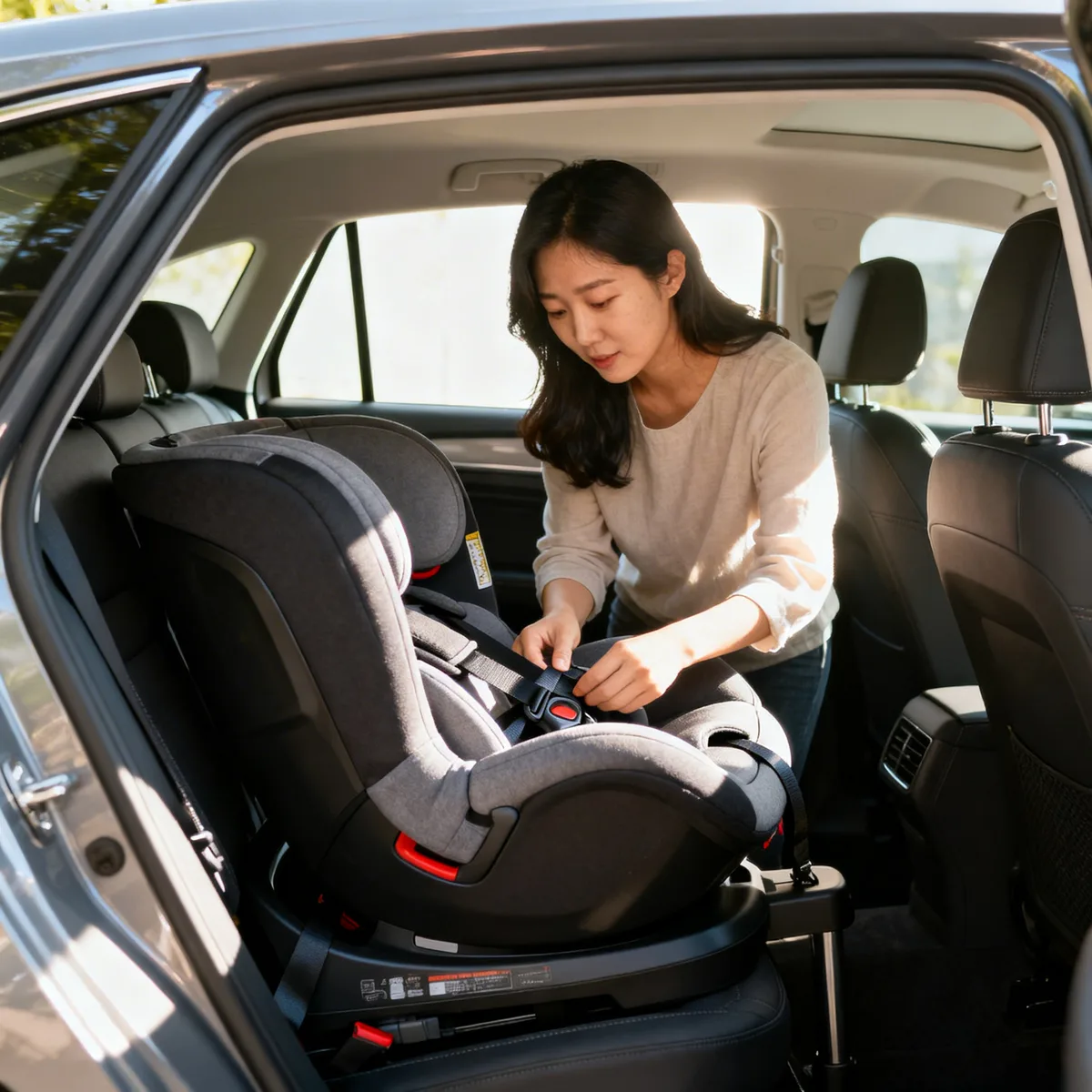
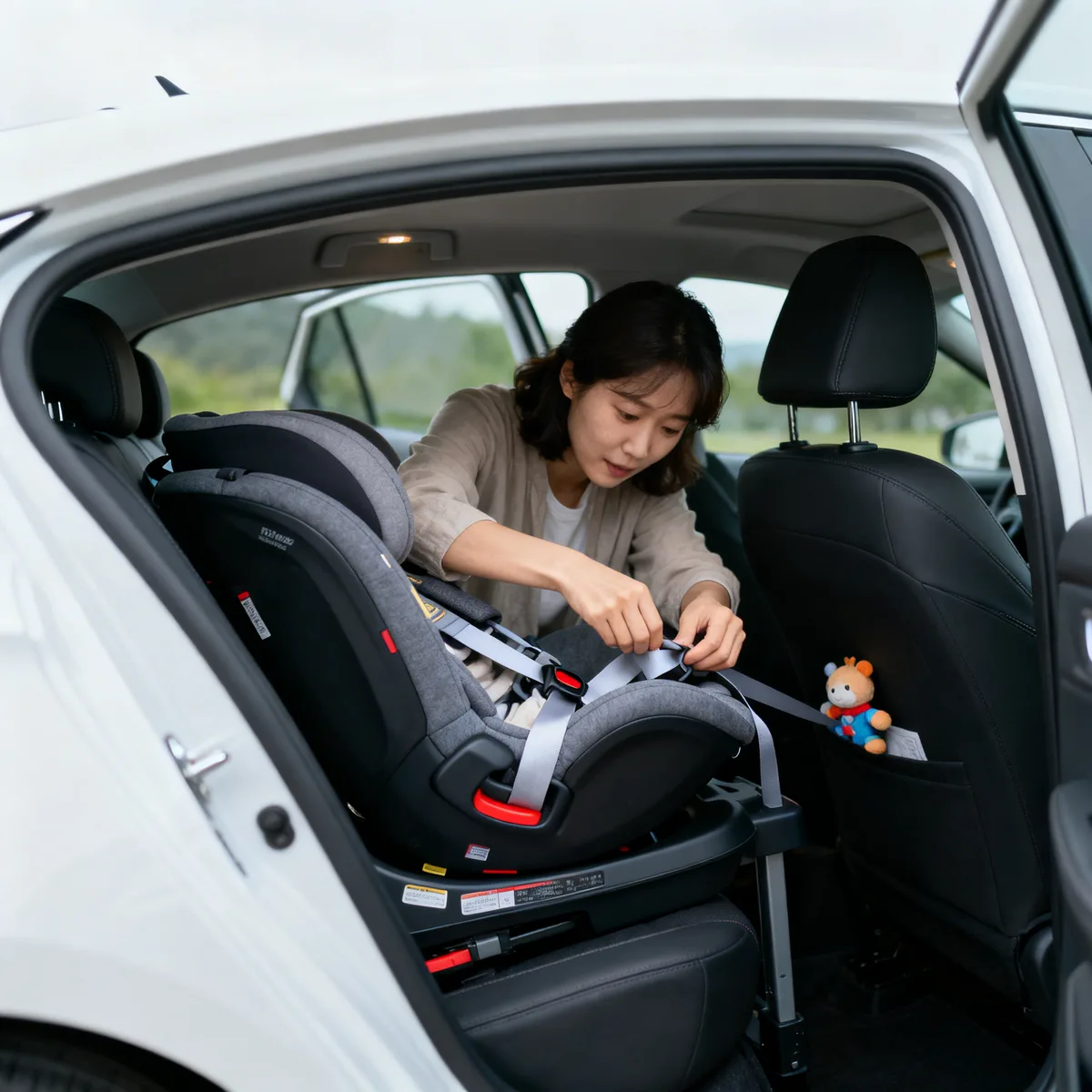
Base installation is the move if you’re using the same car regularly. You click the base in once, get it certified by a technician if you can, and from that point on you’re snapping the seat in and out in seconds.
Seat-belt installation is for the second car, the grandparents’ SUV, the rental. Most seats support it, but not all make it intuitive. Practice before you need to do it sleep-deprived in a parking lot.
Either way, look for a level indicator that’s actually visible and an anti-rebound bar or leg. Small features. Big difference in how stable the seat sits at the correct angle.
Newborn inserts matter more than most people expect. A seven-pound baby in a seat built for thirty-five pounds is swimming in there. A good insert positions the head, supports the spine, and keeps the harness slots aligned with small shoulders – not riding up toward the ears.
Check whether the insert is included or sold separately. Some brands bundle it; others treat it as an accessory. Also check how long it’s designed to be used – some are out by month two, which is fine, but you want to know that going in.
Harness adjustability is where daily usability lives. You want to rethread or re-slot the harness without tools and without dismantling the seat. If it’s a pain at the store demo, it will be a genuine problem at 6 a.m.
The chest clip should hold firmly at armpit height without digging in. The crotch buckle position matters too – newborns need it close to the body to prevent slouching forward.
None of this is glamorous. But if you’re also deep in decisions about baby monitor types and first-week logistics, the car seat is the one piece of gear where ease of use and safety are genuinely the same thing.
Start with your vehicle. Measure the back seat depth and check whether the base fits at the required recline angle – some rear-facing bases need a foam wedge in smaller cars, and not every seat accommodates that cleanly.
Next, check the weight and height limits against your baby’s birth stats. Most infant seats start at 4-5 lbs, which matters if you’re expecting early. The upper limit – usually 30-35 lbs – tells you roughly how long the seat will last before you need to transition to a convertible.
Safety ratings are non-negotiable research, not optional homework. Look for seats that have passed NHTSA ease-of-use ratings and any independent crash testing beyond the federal minimum. A high price tag doesn’t automatically mean better crash performance.
Budget tiers are real, but the math is simpler than it looks. Mid-range seats ($150-$250) consistently perform as well as premium ones in safety testing. You’re often paying more for canopy coverage, fabric quality, or a more streamlined base – not meaningfully better protection.
Run through this before you buy:
If you’re cross-referencing this with other gear decisions – like the high chair buying guide – the same logic applies: prioritize fit and function over brand prestige.
The best infant car seat for your situation in 2026 picks down to one thing: the seat you can install correctly, every single time.
Safety differences come down to crash test performance, not just meeting federal minimums. NHTSA ratings evaluate ease of use and installation accuracy – because most car seat errors happen during setup. Independent crash testing from sources like IIHS and Consumer Reports subjects seats to front, side, and rollover impacts, revealing which designs distribute crash forces most effectively across a baby’s head, neck, and spine.
You don’t need a travel system, but compatibility matters. A travel system offers click-and-go convenience if you choose matching brands and frames – saving you from carrying a separate car seat base. However, you can absolutely buy them separately and use any stroller with an adapter, giving you more flexibility to choose the best car seat and best stroller for your needs independently.
Most infant car seats accommodate babies from 4-35 lbs and up to 32 inches in height. Once your baby exceeds either limit, you’ll transition to a convertible or all-in-one seat that can rear-face at higher weights and eventually forward-face. Check your specific seat’s manual for exact transition points – they vary by model.
Start by checking your vehicle’s manual for car seat installation instructions and compatible anchor points (LATCH or seat belt). Most manufacturers provide dimension specs and fit guides on their websites. If you drive a compact vehicle, look for seats with a narrow footprint and adjustable installation angles – designed specifically for tight spaces.
Budget-friendly seats can absolutely meet current NHTSA safety standards and provide solid protection. The price difference often reflects features like lighter weight, premium materials, or integrated travel systems – not necessarily better crash protection. Prioritize NHTSA certification and crash test ratings over price, then choose the model that fits your lifestyle and vehicle best.