
Mom Wellness
Pregnancy & Postpartum Hair Loss: Why It Happens, When It Stops, and What Helps
Laeeka Edries·10 min read

When is it safe to start postpartum exercise? Learn safe timelines by delivery type, gentle movements for each recovery stage, and warning signs to stop.
Here’s what nobody tells you about postpartum exercise: there’s no single magic date to restart. Your body wrote its own story during labor and delivery, and your comeback timeline follows that personal narrative — not a generic calendar.
Most moms assume the six-week checkup is a green light to resume their old fitness routine. It’s not. It’s a starting point — and the rules are wildly different depending on whether you had a vaginal delivery, a C-section, or complications along the way. This guide breaks down exactly when it’s safe to start postpartum exercise by delivery type, what movements actually support healing in each stage, and the warning signs that mean you need to slow down.
Here’s the thing nobody really tells you: there’s no single magic date. Your body wrote its own story during labor and delivery, and your comeback timeline follows that — not a generic calendar.
If you had a vaginal delivery without complications, gentle movement like short walks can often begin within the first few days, once you feel ready. Key word: feel ready. Soreness, stitches, and sheer exhaustion are all real factors.
For most vaginal deliveries, the traditional six-week clearance exists for a reason — your uterus is contracting, your perineum is healing, and your hormones are shifting hard. Six weeks is a starting point for more structured exercise, not a finish line.
Cesarean delivery is a different conversation entirely. A C-section is major abdominal surgery. Your core has been cut through in layers. Walking is encouraged early to prevent blood clots, but anything that loads your abdominal wall — crunches, running, lifting beyond your baby — typically needs more like eight to twelve weeks minimum, and your surgeon’s specific sign-off.
Beyond delivery type, other factors shape your personal timeline: diastasis recti (abdominal separation), pelvic floor dysfunction, blood pressure issues, or a difficult recovery. These aren’t excuses. They’re real, and they matter.
The AAP recommends that postpartum care include ongoing support for physical recovery, recognizing that healing timelines vary widely between individuals — not just between delivery types.
And if exercise is on your mind because you’re thinking about postpartum weight loss, that’s worth a separate, honest look. The pressure to “bounce back” is real. Your healing isn’t something to rush past it.
Bottom line: your six-week checkup is the floor, not the green light. Ask your provider specifically about your delivery, your body, your healing — not the general rule.
Here’s the thing nobody warns you about: the first six weeks feel long, and also like they disappear completely. You’re surviving. That is enough.
But your body is doing real work during this time — healing, recalibrating, figuring out a new normal. Movement can support that. It just looks nothing like what you’re used to.
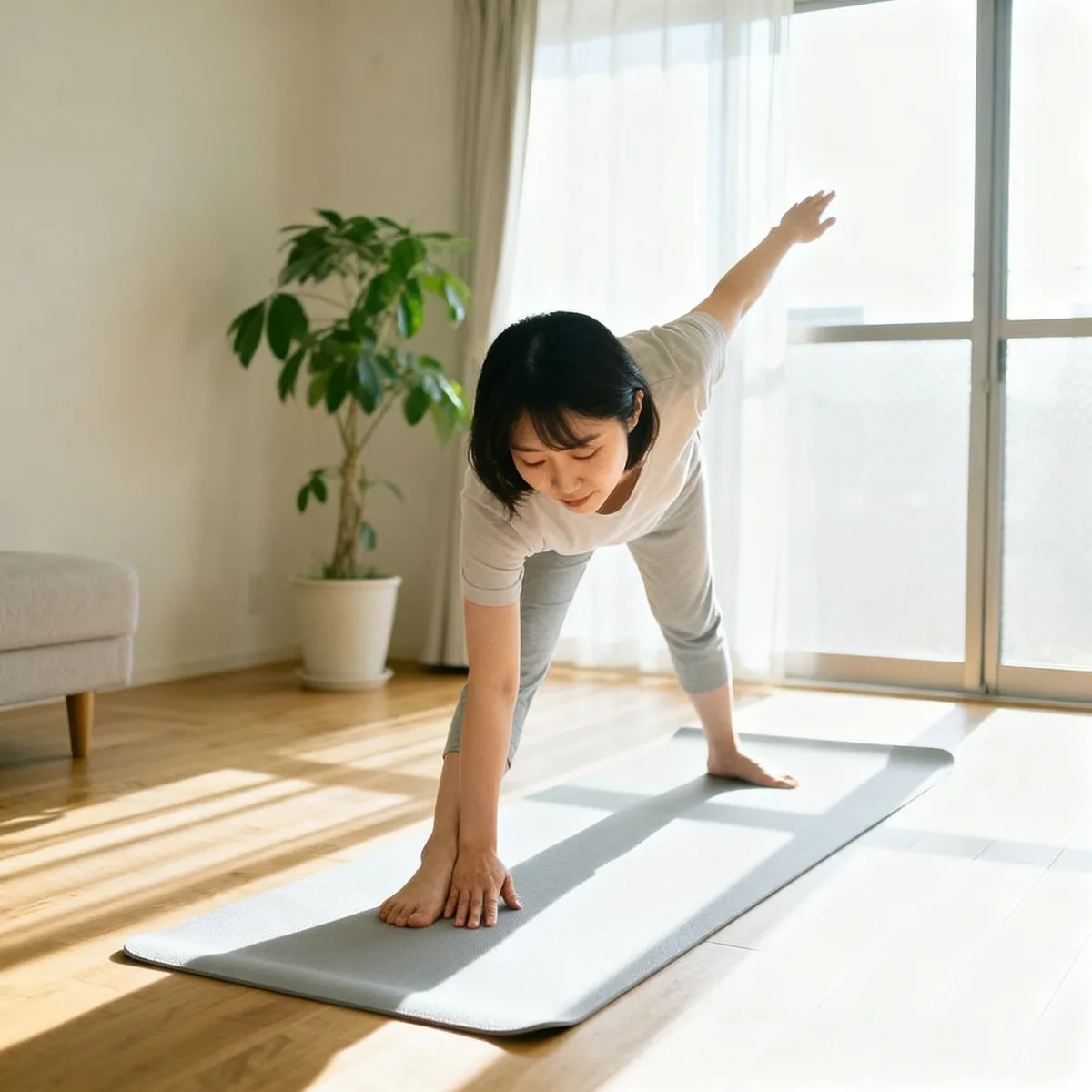
Short walks. Gentle breathing. Slow, intentional movement around the house. That’s not “doing nothing” — that’s actually postpartum exercise at the stage your body needs it.
The piece most people skip? The pelvic floor. Those muscles just did something enormous, whether you pushed for three hours or had a C-section. Either way, they need attention.
Pelvic floor awareness isn’t about crunches or “getting tight again.” It’s about reconnecting. Can you feel those muscles? Can you gently engage and release them without holding your breath?
Start there. Lying down. No pressure. Just noticing.
The AAP recommends that new mothers prioritize rest and gradual recovery in the early postpartum weeks, recognizing that physical healing directly affects overall wellbeing — including your ability to care for your baby.
If you’re breastfeeding, your body is also producing relaxin, a hormone that keeps your joints a little looser. That’s not the moment to push hard. It’s the moment to move carefully.
If you’re also navigating those chaotic early evenings with your newborn, you’re not alone — the baby witching hour is real, and knowing what’s behind it actually helps.
Be honest with yourself about what feels okay. Discomfort is information. Pain is a signal to stop.
Six weeks feels like a finish line. It’s not — it’s more like a first checkpoint.
Your six-week clearance is permission to start, not permission to go hard. Most providers give a general green light, but that doesn’t mean your body is back to where it was. It means you can begin the conversation with movement again.
Here’s what that rebuild actually looks like in practice. Weeks six and seven? Walking with intention. Longer distances, a little more pace. Nothing heroic.
By weeks eight and nine, if walking feels genuinely easy — not just manageable, easy — you can layer in bodyweight work. Glute bridges. Modified squats. Gentle resistance band work. Keep your breath steady. If you’re holding it, you’re working too hard.

Around weeks ten to twelve, low-impact cardio becomes an option for most people. Swimming, cycling, a beginner Pilates class. If you’re wondering about postpartum exercise when to start running or anything high-impact — honestly, most bodies need closer to twelve weeks minimum, and even then, slow re-entry is smart.
One thing worth knowing: The AAP recommends that mothers prioritise their own health and recovery as directly connected to infant wellbeing — your physical capacity affects your ability to respond to and care for your baby, especially in those demanding early months.
Core rehab deserves its own mention. Diastasis recti — abdominal separation — affects a significant number of postpartum bodies, and crunches or sit-ups can actually make it worse. If your belly still domes or cones when you sit up, see a pelvic floor physio before adding any forward-flexion exercises.
If you’re also figuring out feeding logistics alongside all of this, a solid pumping schedule working mom plan can help you structure your day so movement doesn’t feel like one more thing competing for your time.
Build slowly. Your body kept a whole human alive. Give it the same patience you’d give your baby.
Here’s the thing nobody tells you — months three through six can feel like waking up in your body again. Not the old body, a new one. And that’s actually okay.
If your core and pelvic floor have been healing well, this is when you can start layering in real structure. Not boot camp. Not punishment. Just intention.
A good starting point is three short sessions a week — think 20 to 30 minutes — built around strength, not cardio. Bodyweight squats, glute bridges, resistance band rows, and modified push-ups give you a solid foundation without overwhelming a system that’s still recalibrating.
Around month four, if those feel manageable, you add load. Light dumbbells, longer holds, an extra set. Progression should feel like a gentle staircase, not a ladder you’re sprinting up.
Walking matters more than people give it credit for. A 20-minute walk with the stroller counts. It builds cardiovascular endurance and it’s sustainable when sleep is still unreliable.
If you’re wondering about postpartum exercise when to start higher-intensity work — running, HIIT, jumping — most pelvic floor specialists suggest waiting until at least month five or six, and only after you can complete a single-leg squat without leaking or pressure. Your pelvic floor has to earn load, not just be handed it.
The AAP recommends that parents prioritize their own physical and emotional wellbeing as a foundation for responsive caregiving — which means taking care of yourself isn’t selfish. It’s connected to how you show up for your baby.
Around this age, your baby is starting to move and respond more too. If you’re curious about their physical development, when do babies start crawling is worth a read — it’s a good reminder that you’re both building strength on your own timeline.
Rest days are part of the programme. Not a failure of it.
Your body will tell you when something’s wrong. The hard part is learning to listen — especially when you’re finally feeling good again and don’t want to slow down.
Stop what you’re doing and rest if you notice any of these:
Bleeding that increases after exercise, or lochia that turns brighter red after it had already started fading. That’s your body telling you it’s not ready yet.
Pain — anywhere. Pelvic pressure, hip pain, low back pain that wasn’t there before. Discomfort during or after movement is not something to push through postpartum.
Leaking. Urine leaking when you jump, run, or cough isn’t just “normal after birth.” It’s a sign your pelvic floor needs support before you progress any further.
Heaviness or bulging in your pelvic floor. That sensation of something falling out — that can indicate prolapse. Call your provider before you do anything else.
Diastasis recti symptoms: a visible cone or ridge along your midline when you sit up. Crunches and planks can make this worse. A pelvic floor physio can assess you properly.
If any of this sounds familiar, that’s your cue to check in with your provider before asking yourself about postpartum exercise when to start again. Not because you’ve failed — because you deserve real information, not guesswork.
The AAP emphasises that maternal physical and emotional health directly affects infant wellbeing, which is exactly why your recovery matters beyond just you.
And honestly? If you’re ever unsure whether something your baby is doing is connected to your health, your stress levels, or something else entirely, when to call pediatrician baby is a genuinely useful read for those moments when your gut says something’s off.

Trust that gut. It’s usually right.
Here’s the thing nobody tells you: your body might be dealing with more than one thing at once. And each of those things changes the answer to when you can safely move again.
If you’re breastfeeding, your body is still producing relaxin — the hormone that loosens your joints during pregnancy. That means your stability isn’t back to normal yet, even if you feel fine. High-impact movement before your joints have restabilised can lead to injury that sets you back further than waiting would have.
The AAP recommends exclusive breastfeeding for the first six months of a baby’s life — which means if you’re committed to that, your body is doing serious work for a long time. Factor that into your expectations around energy and recovery.
Diastasis recti — that separation of the abdominal muscles that happens during pregnancy — affects more women than most people realise. If you have it and you jump into crunches or planks, you can make it worse. Not a little worse. Significantly worse.
The fix isn’t to avoid movement. It’s to start with the right movement. Breath work, gentle core connection, and pelvic floor exercises are where you begin — before anything that loads your midsection. A women’s health physiotherapist can check your separation and tell you exactly where you stand.
If your birth involved complications — a fourth-degree tear, significant blood loss, an unplanned caesarean, or a long labour with interventions — the question of postpartum exercise when to start genuinely needs your provider in the conversation. Not because you’re fragile. Because your specific healing timeline matters.
And if you’re deep in the newborn haze, dealing with newborn gas at night and running on no sleep, please know that rest is not laziness right now. It is recovery. That counts too.
Here’s what nobody tells you: the hardest part of postpartum fitness isn’t the physical effort. It’s the gap between what you think you should be doing and what your life actually allows right now.
A realistic plan doesn’t start with a schedule. It starts with an honest look at your day.
What do you actually have? Ten minutes while the baby naps? A walk that doubles as a mental health break? That is enough to build from. Seriously.
Start with movement that fits inside your existing life, not a parallel life you’d have to construct from scratch. A short walk with the pram counts. Gentle stretching on the floor next to a playing baby counts. It all counts.
Consistency over intensity — every time. Twenty minutes three times a week that you actually do will always beat an ambitious hour-long plan you abandon by week two.
Give yourself one non-negotiable. One thing you protect. Not because you have to earn your body back — you don’t owe anyone that — but because movement, even small movement, often helps with mood, sleep, and energy in ways that matter deeply in this season.
When you’re ready to add more structure, build it around your baby’s most predictable window. Early morning before the chaos, or nap time if yours actually sleeps. Don’t plan around ideal conditions. Plan around real ones.
And if separation anxiety in babies means your little one won’t let you out of their sight right now, that’s okay too. There are whole workout styles built around keeping your baby close.
The goal isn’t a perfect plan. It’s a plan you can return to on the hard days, the tired days, the days when everything takes longer than it should.
That’s the one worth building.
Safe timing depends on your delivery type and healing. After an uncomplicated vaginal delivery, gentle walks can often begin within days once you feel ready. For C-section delivery, plan for 8–12 weeks minimum before structured exercise, since your abdominal wall has been surgically opened. Always get your provider’s specific clearance at your postpartum checkup — the timeline varies based on your individual healing, complications, and recovery factors.
Yes, but not traditional crunches or intense abdominal work. Diastasis recti (abdominal muscle separation) requires modified core exercises that engage deeper stabilizer muscles without putting pressure on the separated tissue. Work with a pelvic floor physical therapist who specializes in postpartum recovery — they can teach you safe progressions that actually help close the gap rather than widen it.
In the first six weeks, avoid high-impact activities, heavy lifting, intense core work (like crunches or planks), running, and anything that strains your abdominal wall or pelvic floor. Stick to gentle walking, breathing exercises, and pelvic floor awareness instead. Your body is healing from significant trauma — even if delivery felt smooth — and heavy loading too early can delay recovery or trigger complications like increased bleeding or pelvic floor dysfunction.
Stop immediately if you experience increased bleeding, sharp pain, heaviness in the pelvic floor, vaginal leaking, or pressure during or after activity. These are red flags that you’ve overdone it. Also watch for emotional overwhelm or worsening fatigue — sometimes your body is telling you it needs more rest, even if physically you feel okay. Your postpartum provider should always be your reference point if you’re unsure.
Yes, moderate exercise is safe while breastfeeding. However, intense or exhausting workouts can temporarily increase lactic acid in breast milk, which some babies find bothersome. Stay hydrated, time exercise after feeding when possible, and wear supportive bras to prevent breast discomfort. If you notice your baby reacting differently after you exercise, scale back intensity or talk to a lactation consultant.