

Labor & Delivery
Hospital Bag Checklist for Labor: What Actually Gets Used (And What to Skip)
Laeeka Edries·14 min read

Stop overpacking. What to pack in your hospital bag for baby—realistic checklist of newborn clothes, feeding supplies, and mom essentials for labor and delivery.
Here’s what nobody tells you about packing a hospital bag for baby: you’ll spend weeks researching the perfect checklist, buy half the baby aisle, and then use about 20% of it.
Most expectant parents overthink what to pack in a hospital bag for baby, treating it like a week-long vacation when you’re actually staying 2–3 days max. Hospitals provide way more than you’d expect, and honestly, you’ll want to leave as soon as possible anyway.
This guide cuts through the noise. We’ll show you exactly what actually matters, what to skip, and when to have it ready — so you can stop second-guessing yourself and focus on the fact that you’re about to meet your baby.
Related hospital bag guides
Pack for yourself and your partner too: mom’s labor bag and dad’s hospital bag.
Nobody tells you how fast things can move at the end. One minute you’re 36 weeks and feeling fine, the next you’re timing contractions and trying to remember where you put your insurance card.
That’s exactly why 36 weeks is the sweet spot for having your bag done. Not started. Done.
The bag isn’t about being prepared for everything. It’s about not having to think when thinking is the last thing you can do.
Here’s the honest truth about what to pack in a hospital bag for baby and for yourself: you’ll use about half of it. The other half will sit there looking optimistic.
What you’ll actually reach for — phone charger, lip balm, your own pillow, a going-home outfit for baby, a few snacks for your support person. The stuff that keeps you comfortable and human during one of the most intense experiences of your life.
What tends to stay in the bag — the full toiletry kit, the fancy nursing pillow, the extra outfit options. Hospitals provide more than you think. And you’ll probably want to go home as soon as you can anyway.
If you’re already thinking ahead to feeding, it’s worth reading up on a breastfeeding diet plan before you deliver — what you eat in those first days matters more than most people realize.
One more thing. If you’re still working through your birth plan, the natural birth vs epidural conversation is worth having now, not in triage.
Pack the bag. Put it by the door. Then stop second-guessing the list.
Here’s the honest truth: you do not need to pack a week’s worth of outfits for a baby who hasn’t been born yet.
Most new moms way overpack the baby side of the bag. Then the baby wears one onesie, maybe two, and goes home wrapped in a blanket anyway.
When you’re thinking about what to pack in hospital bag for baby, keep the clothing list tight. Two to three onesies in newborn size, one in 0-3 months as a backup. That’s it.
Why both sizes? Because you genuinely don’t know. Some babies arrive at 6 pounds, some arrive at 9. Newborn sizing can be gone in two weeks — or it can fit for two months.
Here’s what actually matters to have on hand: a going-home outfit (something with easy snap closures, not buttons — your hands will be shaking), a couple of swaddle blankets, a hat, and socks.
Mittens are optional. Most hospitals have them. And honestly, a lot of babies hate them.
For feeding gear, keep it minimal at the hospital. A few bibs if you want them, but the nurses have supplies. If you’re planning to breastfeed, you won’t need bottles right away — and if feeding gets complicated, the lactation team will help you figure out what you actually need before you leave.
One thing worth knowing: if you’re considering a straw cup or sippy for those early months, Grosmimi makes options that are genuinely easy on new babies — good to know before you’re standing in an aisle overwhelmed at 3am.
And keep in mind — babies grow fast. If you’re not sure what size to buy next, a baby growth chart percentiles breakdown can actually help you plan ahead without guessing.
Pack light. The baby doesn’t care about the outfit. You will, and that’s fine — but one cute one is enough.
Here’s the thing nobody tells you before you deliver: you don’t actually know how feeding is going to go until you’re in it.
You might plan to exclusively breastfeed and find yourself needing bottles by day two. You might plan to bottle-feed and want to try nursing. Pack for both. Not a lot — just enough.
Bring one or two bottles with a slow-flow nipple. Newborns need slow flow. A faster nipple can overwhelm them and make feeding harder, not easier. Slow flow is the starting point, always.

If you’re nursing, nipple cream is non-negotiable. The first few days are rough on your body in ways nobody fully prepares you for. Put it in your bag now, before you need it urgently at 2am.
Nursing pads too. Disposable ones are fine for the hospital — you can figure out reusables later when you’re home and actually have a routine. Keep it simple while you’re still in survival mode.
For bottles, if you want somewhere to start researching before you’re overwhelmed in a store, Grosmimi has bottles designed with newborn feeding in mind — worth a look before your bag is packed.
On the clothing side, if you’re nursing: a stretchy sleep bra or nursing tank is worth more than you’d think. The hospital gowns do the job, but having your own feels human again.
And if you’re thinking about what to pack in hospital bag for baby beyond feeding gear — nipple shields are small and worth tucking in just in case. They take up no room and can be a lifesaver if latching is difficult those first days.
You’re going to figure out feeding as you go. Everyone does. Pack what you might need, and let the rest sort itself out.
Nobody really warns you about the postpartum bathroom situation. They talk about baby, about feeding, about all of it — and then you get there and realize your body just went through something enormous, and you need things.
The hospital will give you some basics. But “some basics” is doing a lot of heavy lifting in that sentence.
Bring your own peri bottle if you can. The one they hand you works, but an angled one is a completely different experience — especially after a vaginal delivery. Small thing. Big difference.
Pack real pads, not just the ones the hospital provides. Overnight pads, the kind you’d buy for a heavy period. You’ll go through more than you expect those first days.
Witch hazel pads or a soothing spray for perineal discomfort — genuinely worth it. Cooling pads were the thing that made me feel human again in those first 48 hours.
Your own shampoo and body wash matter more than you think. The hospital soap is fine. But smelling like yourself again after your first shower? That’s actually a moment.
Lip balm. Hair ties. A good dry shampoo. These feel minor until you’re three days in and someone is trying to take your photo with your newborn.
Stool softeners — start them early, don’t wait until you need them. This is the advice every postpartum nurse will give you, and she’s right.
If your skin runs sensitive or reactive, think about what you’re bringing into contact with fresh, healing skin. The same care you’d give a baby with baby eczema treatment — gentle, fragrance-free, minimal — applies to your own recovery too.
Pack for the person who just did something hard. Because she did. And she deserves to feel taken care of too.
Nobody warns you about the paperwork. But there will be forms — a lot of them — and the last thing you want is to be hunting through your phone for an insurance card number at 2am while you’re running on no sleep and pure adrenaline.
Pack your insurance card and a photo ID somewhere you can actually find them. Not buried at the bottom of the bag. A small zipper pouch works perfectly.
Your birth plan goes in there too, if you have one. Print a few copies. Nurses change shifts, and handing someone a physical copy is easier than explaining everything from scratch.
Now — your phone charger. This sounds obvious until you forget it. Bring a long one. Hospital outlets are never where you need them to be.
A portable battery pack is even better. You will be taking more photos in those first hours than you’ve ever taken in your life, and your phone battery will not survive it unaided.
For entertainment: think light. A tablet loaded with a show you love. A playlist you’ve been saving. A book if you’re someone who can actually read under pressure — no judgment if you can’t, most people can’t.
Snacks are non-negotiable. Hospital food exists on a schedule that doesn’t match hunger. Granola bars, nuts, crackers, something with protein. Pack enough for your partner too, or they will eat yours.
Cash for the vending machine at 3am. Just trust me on that one.

A few other things that make a real difference: hair ties, a lip balm (the hospital air is incredibly dry), and your own pillow if you can manage it. One thing that comes with you everywhere after this — your road trip with baby packing instincts start here. You’re learning how to travel as a family of more. It starts in this bag.
Here’s the thing nobody tells you when you’re deep in the “what to pack in hospital bag for baby” rabbit hole at midnight: overpacking is real, and it makes everything harder.
The hospital provides more than you think. Diapers, wipes, swaddle blankets, a little hat, a bulb syringe — it’s all there. You do not need to bring your own stash of newborn diapers.
Leave the fancy newborn outfits at home. Your baby will wear a hospital onesie for most of your stay, and that’s genuinely fine. Bring one coming-home outfit. That’s it.
Skip the full toiletry bag. A few basics, yes. But a 10-piece skincare routine? It’s not happening. You will not have the time or the hands.
Don’t pack your nursing pillow. Those things are bulky and the nurses will help you find positions that work before you even need it. There’s time to figure out your setup at home.
Toys, books, and entertainment for baby — leave it all. A newborn does not need any of it. They need you, warmth, and milk. That’s the whole world to them right now.
A big wheeled suitcase is too much. A medium duffle does the job. You’re there for 1-3 days, not a week in the mountains.
The same instinct that makes you want to bring everything? It’s love. It’s preparation. It makes complete sense. But clutter in a small hospital room with a newborn and nurses coming in every two hours is genuinely stressful.
Pack less. Leave room for what comes home with you — which, honestly, is a lot more than you packed.
Here’s what nobody tells you: the packing is actually less stressful than the deciding. Once you have a system, it gets easier.
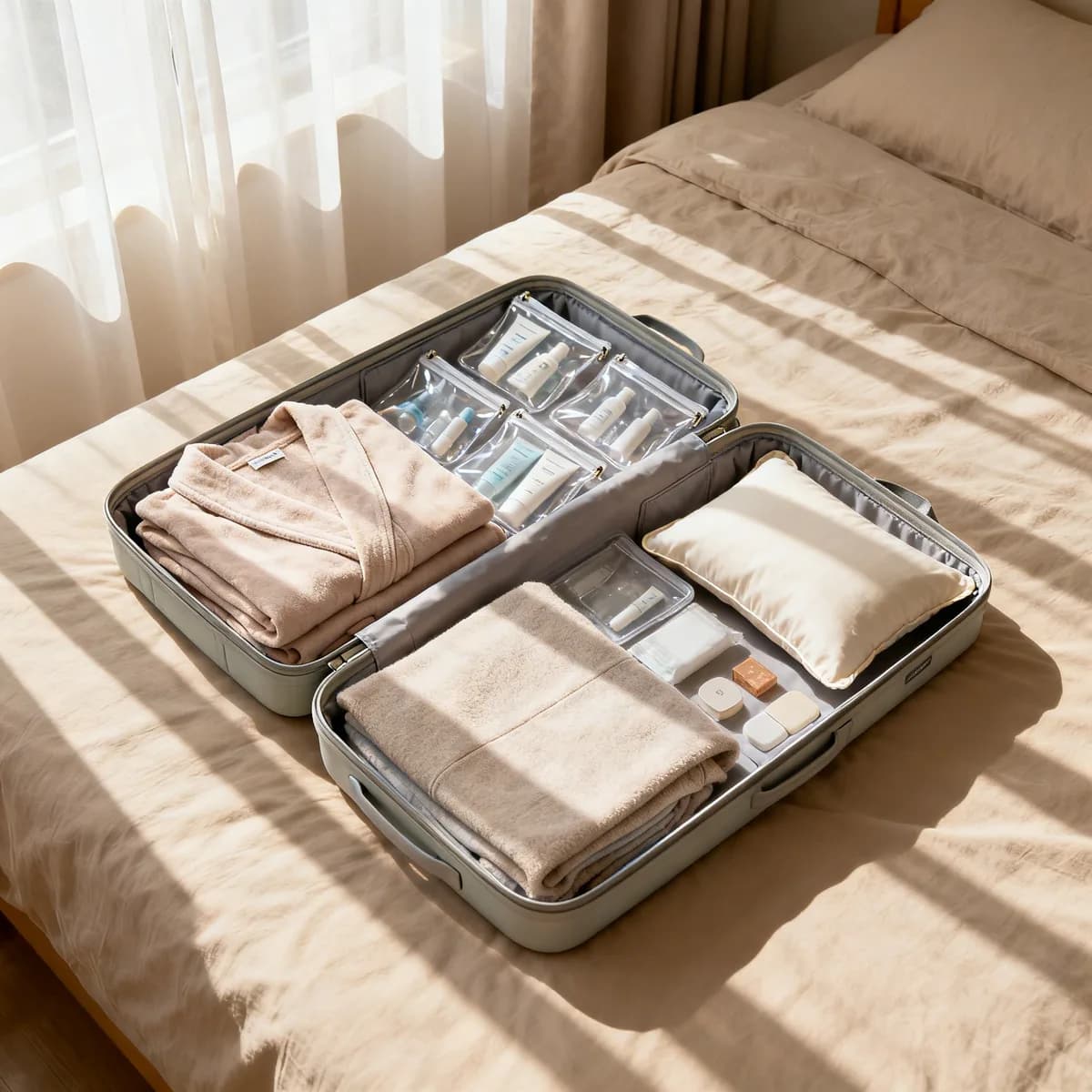
Use three clear zip pouches inside your bag. One for you, one for baby, one for the practical stuff — chargers, insurance cards, snacks for your partner.
The “for you” pouch goes on top. You’re going to need it first and most. Lip balm, hair tie, phone charger. Things you’ll grab with one hand while you’re not really thinking straight.
The baby pouch holds the coming-home outfit, one swaddle, and whatever you’ve decided about feeding support. Everything else — diapers, wipes, pads — the hospital provides. You don’t need to bring a supply.
Now, about timing. Start a list around 32 weeks. Pack the actual bag around 35-36 weeks. That window matters more than people realize.
Your body changes fast in the final stretch. The nursing bra size you buy at 30 weeks might not fit at 38. The socks you planned to bring might suddenly feel wrong. Leave those last few items — the ones touching your body — until close to your due date.
Thinking about what to pack in hospital bag for baby? The honest answer is: less than you think. One or two outfits max. The hospital handles more than most people expect.
Also — and this is real talk — leave a small empty corner in your bag. You’ll get things at the hospital you want to bring home. Mesh underwear. Extra pads. The little bulb syringe they use. They expect you to take them.
Pack with flexibility in mind, not perfection. The bag doesn’t have to be right. It just has to be ready.
Pack two to three onesies in newborn size and one backup outfit in 0-3 months — you genuinely don’t know how big your baby will be. Some babies arrive at 6 pounds and stay in newborn sizing for months; others hit 9 pounds and move out of it in two weeks.
Yes, you can bring your own bottles and supplies, but hold off until you know how feeding will go. If you’re planning to breastfeed, you won’t need bottles right away — and if feeding gets complicated, the lactation team will help you figure out what you actually need before discharge.
Realistically, your baby will wear one or two outfits during the stay and go home wrapped in a blanket. Focus on having a comfortable going-home outfit with snap closures (not buttons) rather than packing multiple options.
Pack your phone charger, lip balm, your own pillow with a colored pillowcase, a few snacks for your support person, comfortable clothes to labor in, and toiletries for postpartum comfort. The goal is feeling human during an intense experience, not looking perfect.
Pack your hospital bag completely by 36 weeks — not started, done. This way, if labor comes early or progresses faster than expected, you’re not scrambling to find your insurance card or figure out what to bring.