Health Guides
Tongue Tie in Babies: Signs, Diagnosis, Treatment & Breastfeeding Recovery
Jeehoo Jeon·10 min read

Baby sunburn treatment guide: recognize signs, cool safely, prevent, and know when to call the doctor. AAP-backed steps for newborns and infants.
Here’s what nobody tells you about baby sunburn treatment: the damage keeps building for 12 to 24 hours after sun exposure ends, which means that mildly pink skin at 3 PM can look significantly worse by tomorrow morning.
Most parents think they’re racing against the clock once they spot redness — but the real window is preventing the burn in the first place, especially for babies under 6 months whose skin has almost no natural UV protection.
This guide walks you through recognizing sunburn severity, immediate cooling and hydration steps, when to call your pediatrician, and the prevention strategies that actually work for your baby’s age and skin type.
Baby skin is thinner and produces less melanin than adult skin, which means it burns faster and with less UV exposure than you might expect.
Mild sunburn typically appears as pink or lightly reddened skin — often on the shoulders, nose, cheeks, or the back of the neck. The skin may feel warm to the touch and slightly firm.
Moderate sunburn deepens to a brighter red. Your baby may become fussier than usual, which is often the first behavioral signal that something is wrong — before you’ve even noticed the skin change.
Severe sunburn involves blistering, significant swelling, or skin that looks raw. At this stage, the damage extends beyond the surface layer of skin. Blisters should never be popped — they form a protective barrier as the skin heals.
One detail that catches many families off guard: the full extent of a burn often doesn’t appear for 12 to 24 hours after sun exposure. Skin that looks mildly pink in the afternoon may look significantly worse by the following morning.
The AAP advises that infants under six months should be kept out of direct sunlight entirely, noting that their skin has very limited ability to protect itself from UV radiation — making early recognition and baby sunburn treatment especially important for this age group.
Watch for signs beyond the skin: fever, chills, or unusual drowsiness alongside redness can indicate a more serious systemic response. If you’re unsure how to assess your baby’s symptoms or when they cross a threshold that needs medical attention, the guide on when to call pediatrician baby walks through exactly that.
The color and temperature of the skin together give you the clearest read on severity. Trust both signals, not just what you see.
The first step is to move your baby out of the sun and into a cool, shaded space immediately. Heat continues to build in the skin even after sun exposure ends, so getting them out of direct light matters more than anything else you do next.
Cool the skin gently. A lukewarm (not cold) wet cloth applied to affected areas for 10–15 minutes helps bring surface temperature down without shocking sensitive skin. Avoid ice packs — the AAP recommends against applying ice directly to a child’s sunburned skin, as extreme cold can cause additional tissue damage.
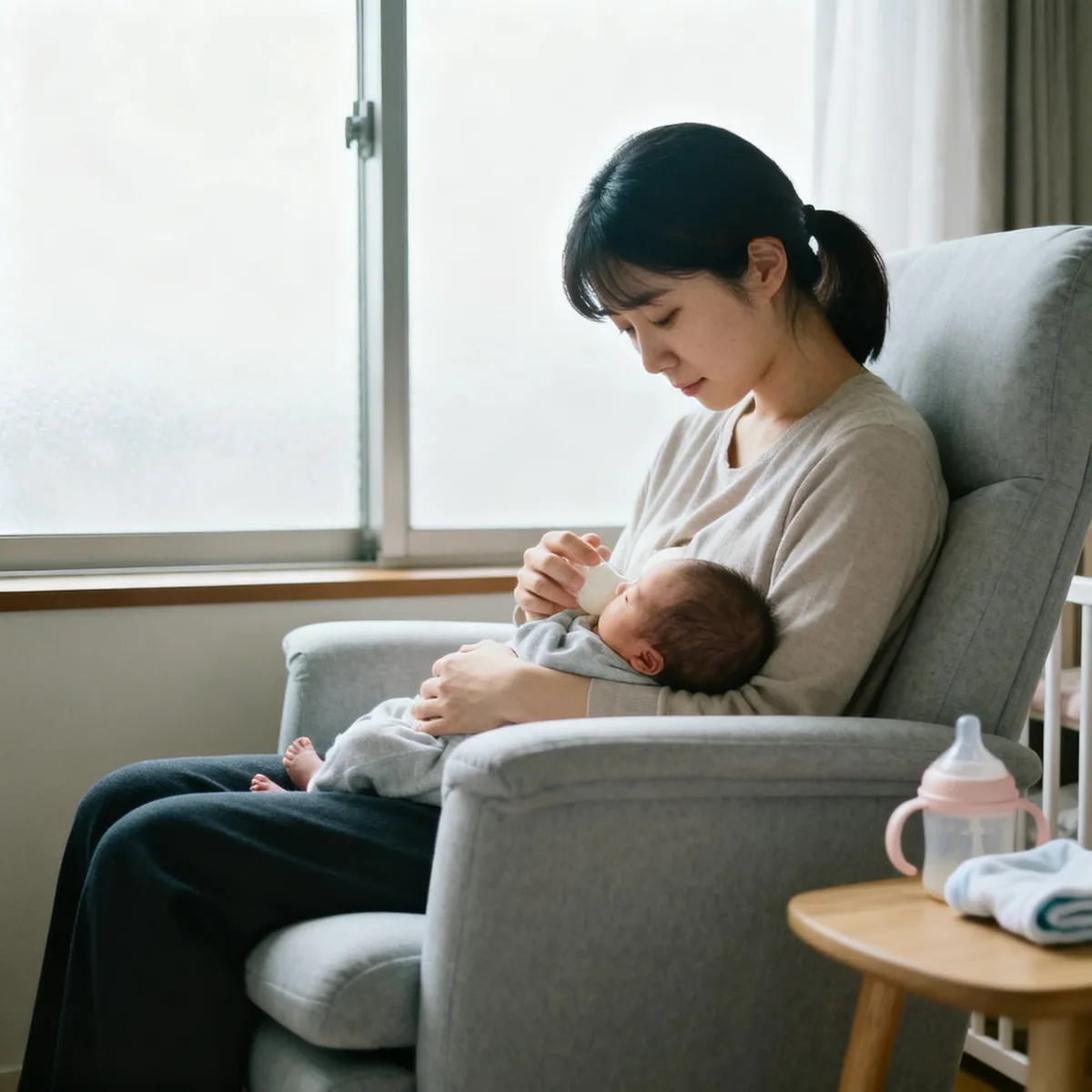
Hydration is critical. Sunburn draws fluid toward the skin’s surface and away from the rest of the body. Offer breast milk or formula more frequently than usual for infants; for older babies, water alongside regular feeds helps restore balance.
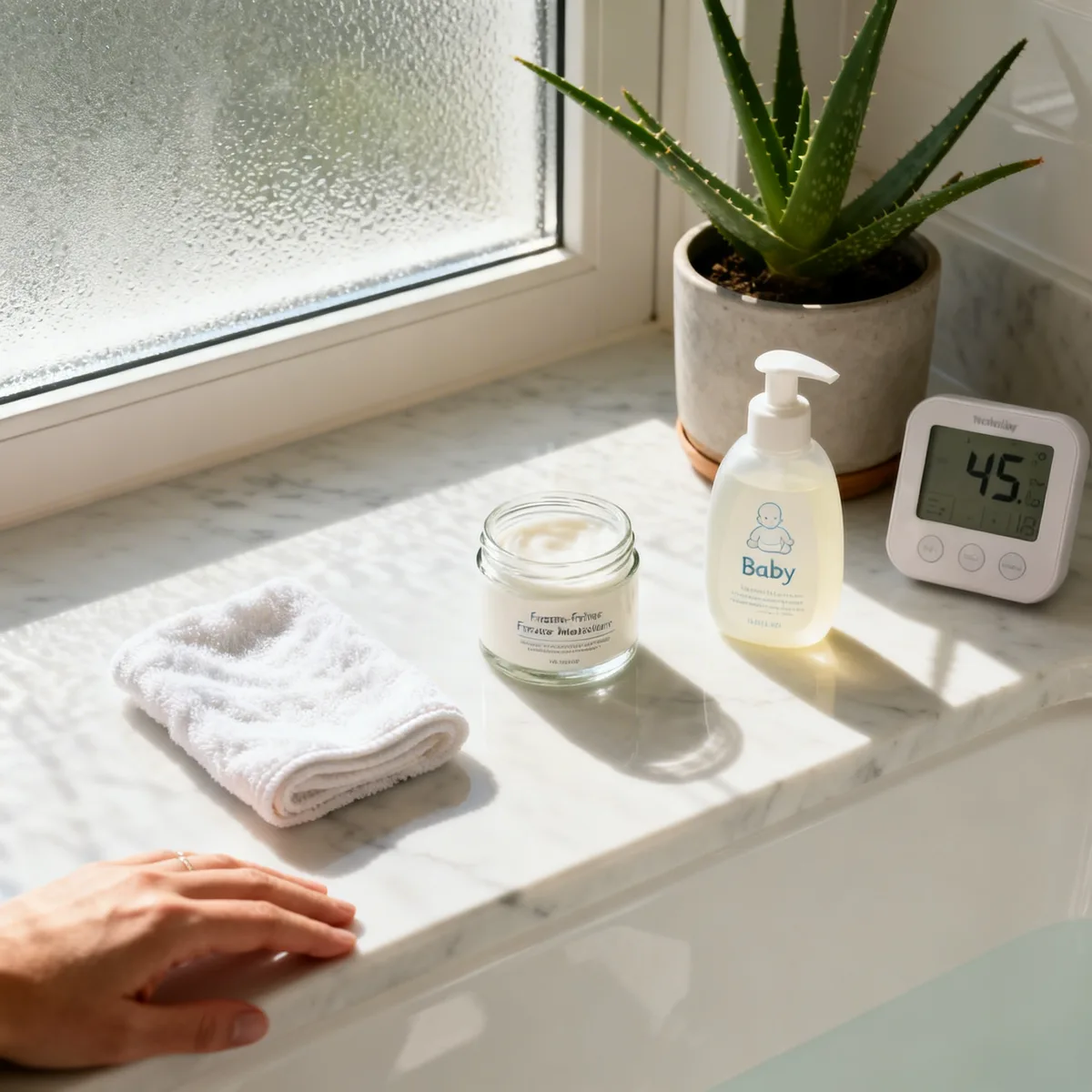
Once the skin has cooled, moisturizing matters. Fragrance-free, dye-free lotions help support the skin barrier while it repairs. What you reach for here is worth thinking about: inflamed skin reacts to irritants it would otherwise tolerate, which is why a formula without added fragrance, dyes, or harsh preservatives makes a real difference in recovery. Cha&Mom, available at Onzenna, is built around exactly that principle — nothing your baby’s skin doesn’t need, especially on days it’s already working hard to heal.
Do not apply butter, petroleum-heavy ointments, or any product containing benzocaine or lidocaine to sunburned baby skin. These can trap heat or cause adverse reactions in young children.
For mild sunburn, proper baby sunburn treatment at home is usually enough. Keep your baby’s clothing loose and breathable over affected areas to reduce friction while the skin recovers.
Watch how your baby is acting, not just how their skin looks. A baby who is feeding well, staying alert, and settling to sleep is generally coping fine. One who seems unusually lethargic or refuses feeds needs a call to your pediatrician the same day.
A newborn’s skin is structurally different from an older baby’s. The outermost layer — the stratum corneum — is thinner and absorbs substances more readily, which means chemical sunscreen ingredients like oxybenzone and avobenzone can enter the bloodstream at higher rates.
The AAP recommends keeping babies under 6 months out of direct sunlight entirely and avoiding sunscreen application on their skin whenever possible.

When sun exposure is unavoidable, physical barriers are the right first line of defense. Lightweight clothing that covers the arms and legs, a wide-brimmed hat, and a stroller canopy or sun shade all reduce UV exposure without anything touching the skin.
If a small area of skin — the backs of hands, for example — will be directly exposed, the AAP says a minimal amount of mineral sunscreen containing zinc oxide or titanium dioxide can be applied. These ingredients sit on top of the skin rather than being absorbed through it.
Shade is more protective than it might seem. A tree canopy, umbrella, or covered porch can block a significant portion of UV radiation, especially combined with protective clothing.
Knowing this matters not just for prevention, but for context around vaccine side effects baby skin reactions, where redness or sensitivity can sometimes be mistaken for sun-related irritation in the days after an outdoor outing.
The goal at this age is to avoid the need for baby sunburn treatment altogether. A newborn’s skin has no prior sun exposure and no built-up tolerance — even brief, unprotected time in direct midday sun can cause a burn faster than you might expect.
Timing matters too. UV index is typically highest between 10 a.m. and 4 p.m. Planning outdoor time outside those hours is one of the simplest protective steps you can take.
For babies 6 months and older, the American Academy of Pediatrics recommends a layered approach to sun protection — not just sunscreen, but timing, clothing, and shade working together.
UV exposure is highest between 10 a.m. and 4 p.m. Scheduling walks, outdoor play, and errands outside that window reduces exposure significantly without requiring you to stay indoors.
Clothing is your most reliable barrier. The CDC recommends tightly woven, full-coverage fabrics — long sleeves, pants, and a wide-brimmed hat that covers the ears and neck. Lightweight options made from UPF-rated materials provide measurable protection without overheating.
Shade adds another layer. A stroller canopy, umbrella, or tree cover reduces direct UV exposure, but reflected UV from sand, water, and concrete still reaches skin. Shade alone isn’t full protection.
For exposed skin on babies 6 months and older, the AAP recommends broad-spectrum sunscreen with SPF 30 or higher. Mineral formulas — zinc oxide or titanium dioxide — sit on the surface of the skin rather than absorbing into it, which is why many pediatricians consider them the preferred choice for young children.
Apply sunscreen 15 minutes before going outside and reapply every two hours, or immediately after water exposure. Don’t forget ears, the back of the hands, and the tops of feet.
If you’re also thinking about other outdoor feeding or activity routines as your baby grows, the high chair buying guide covers what to look for when your baby is ready to transition to structured mealtimes — including outdoor-friendly options.
The goal of every protective step is the same: reduce UV exposure enough that baby sunburn treatment never becomes necessary in the first place.
Most mild sunburn — pink skin, some warmth, mild fussiness — can be managed at home. But certain signs mean you need to call your pediatrician or seek urgent care without delay.
Blistering is one of the clearest red flags. Blisters signal a second-degree burn, and breaking them open increases the risk of infection.
Fever is another. The AAP recommends contacting a doctor any time a baby under three months develops a fever of 100.4°F (38°C) or higher — and in the context of sunburn, fever at any age warrants a call to your provider.
Watch for signs of dehydration, which can develop quickly in infants after significant sun exposure. Fewer wet diapers than usual, a dry mouth, no tears when crying, and unusual lethargy are all reasons to act fast.
Systemic symptoms — vomiting, chills, confusion, or a child who is extremely difficult to rouse — suggest heat-related illness alongside the burn. This is a medical emergency.

Sunburn that covers a large portion of the body, or skin that turns a deep red or purple rather than pink, also warrants professional evaluation before any baby sunburn treatment is attempted at home.
Eye exposure matters too. If your baby was in bright sunlight without shade and is showing redness, excessive tearing, or sensitivity to light, have their eyes checked. UV exposure can damage the cornea.
When in doubt, call. Pediatric advice lines exist precisely for moments when the right next step isn’t obvious. A quick phone call is always the lower-risk choice.
Mild sunburn on a baby typically follows a predictable path. Redness peaks within 12 to 24 hours, then gradually fades over the next two to three days.
Peeling usually begins on day three or four. This is normal — it’s the skin shedding damaged cells. The key is to let it happen on its own rather than pulling or rubbing the skin away, which can introduce bacteria and delay healing.
Keep the area moisturised with a fragrance-free, dye-free lotion. This won’t stop peeling, but it supports the skin barrier and reduces discomfort while new skin forms underneath.
Hydration matters as much as topical care. Sunburned skin loses moisture faster than healthy skin, so offering extra feeds — breast milk or formula — supports recovery from the inside out.
What happens during these early burns has longer-term implications. The AAP states that even one blistering sunburn in childhood significantly increases the risk of melanoma later in life. That’s not a reason for alarm — it’s a reason to take early prevention seriously.
Baby skin is structurally thinner and produces less melanin than adult skin, which means UV damage accumulates faster and with less visible warning. The burns that seem minor are still doing cellular work you can’t see.
Any baby sunburn treatment at home should be paired with a commitment to prevention going forward: shade, protective clothing, and mineral sunscreen once your baby reaches six months. These aren’t one-time interventions — they’re habits that compound over a lifetime of skin health.
If your baby’s skin hasn’t improved after five days, or if you notice new blistering, increased redness, or any signs of infection such as warmth, swelling, or discharge, contact your pediatrician. Some burns take longer to reveal their severity.
No — babies under 6 months should not use chemical sunscreen at all, and applying any sunscreen to actively sunburned skin can trap heat and irritate damaged tissue further.
For this age group, physical barriers like clothing, shade, and staying indoors during peak sun hours (10 AM–4 PM) are your only safe options.
Mild to moderate sunburn typically begins to fade within 3 to 5 days, though the skin may continue peeling for up to a week as the outermost damaged layer sheds.
Severe sunburn with blistering takes longer — often 1 to 2 weeks — and requires close monitoring to prevent infection.
Fever alongside sunburn signals a more serious systemic response and is a reason to call your pediatrician immediately, especially if your baby is under 3 months old or the fever is above 100.4°F.
Fever may indicate heat exhaustion or severe sun-related illness, not just local skin damage.
Not until the sunburn has fully healed — which takes at least 3 to 5 days for mild burns and much longer for severe ones.
Once healed, sunburned skin is more vulnerable to repeat injury, so strict sun protection (shade, clothing, timing) becomes even more critical going forward.