


Feeding Guides
Best Foods to Increase Toddler Weight: Nutrient-Dense Options That Actually Work
Laeeka Edries·11 min read

Is your 8-month-old refusing solids? Learn why babies push food away, when it's normal, and the feeding strategies that actually work without pressure.
It’s mealtime and your 8-month-old pushes the spoon away, turns their head, or gags before you’ve even gotten close. Not because you’re doing anything wrong — and not because your baby is broken. Here’s what actually happens when a baby is refusing solids at 8 months: their tongue thrust reflex might still be protecting them, their sensory preferences are sharpening, or they’re flexing their brand-new sense of autonomy.
This article walks you through the real reasons behind the refusal, how to tell normal pickiness from something worth flagging with your pediatrician, and the practical strategies that actually work with reluctant eaters — not against them.
First — take a breath. If your baby is pushing food out, turning away, or full-on gagging at the spoon, you are not failing at feeding your child.
There are real, developmental reasons this happens. And most of them have nothing to do with something you did wrong.
The tongue thrust reflex is one of the biggest ones people don’t talk about enough. Babies are born with a reflex that pushes foreign objects out of their mouths — it’s protective. For some babies, that reflex lingers longer than expected, and what looks like “refusing food” is actually their body doing exactly what it’s supposed to do.
Texture is another big one. An 8-month-old who happily ate purées at 6 months might suddenly reject them — not because they’ve gone backwards, but because their sensory awareness has sharpened. Lumpy textures can feel genuinely alarming to some babies. Others want more texture, not less.
And then there’s autonomy. Around 8 months, babies start figuring out that they have preferences. Refusing food is sometimes just their first real “no.” It’s developmentally appropriate, even when it’s maddening.
It’s also worth knowing that 8 month sleep regression often hits around the same time. When a baby is overtired and overstimulated, sitting in a high chair and trying new foods is a lot to ask of them.
The setup matters too. If you’re still figuring out the right seat for mealtimes, our high chair buying guide walks through what actually makes a difference for babies who are just starting solids.
Baby refusing solids at 8 months is genuinely common. That doesn’t make it less stressful — but it does mean there’s usually a reason, and usually a way through.
Most of the time, a baby refusing solids at 8 months is just a baby being a baby. But there are some signs that are worth paying attention to — not to scare you, just so you know what to look for.
A strong gag reflex is normal. Babies are born with it set very far forward in the mouth, and it gradually moves back as they get more experience with food. Gagging on new textures? Expected. Gagging every single time, on even the smoothest purees, or gagging so hard they vomit consistently — that’s worth mentioning to your pediatrician.
Watch how your baby moves food around in their mouth. At 8 months, you should see some lateral tongue movement — they’re learning to mash and move food to swallow it. If food just sits on their tongue and falls out every time, with no attempt to process it, that can be a sign their oral motor skills need some support.
Swallowing cues matter too. If your baby is coughing, choking, or sounds wet or gurgly after eating regularly, talk to your doctor. Those can be signs of a swallowing difficulty that a feeding therapist can actually help with — and catching it early makes a real difference.
The AAP recommends that babies showing signs of feeding difficulties — like persistent refusal, gagging on all textures, or failure to progress with solids — be evaluated by a healthcare provider to rule out underlying developmental or sensory issues.
If you’re ever unsure whether your baby’s weight is tracking okay through all of this, our piece on baby growth chart percentiles can help you understand what those numbers actually mean.
Normal is a wide range. But you know your baby. If something feels off, trust that feeling and bring it up. You’re not being dramatic. You’re being a good parent.
First — take the pressure off. The moment mealtimes feel like a battle, your baby feels it too. And a tense baby is not an eating baby.
If you’re dealing with a baby refusing solids at 8 months, start by shrinking everything down. Offer food once a day, not three times. Keep sessions to 10-15 minutes max. Short and calm beats long and stressful every single time.
Timing matters more than most people realize. The sweet spot is usually 30-60 minutes after a milk feed — not right after, not when they’re starving. You want them calm and curious, not desperate.
On portion size: think smaller than small. A teaspoon. Literally. One or two bites is a win at this stage. Piling up the tray backfires — it overwhelms them before they even start.
If purees aren’t working, try going the other direction. Baby-led weaning gives them control, and some babies respond to that completely differently. Soft finger foods — ripe banana, steamed broccoli florets, well-cooked pasta — let them explore on their own terms. No spoon, no pressure, no “open wide.”
Let them touch it before they taste it. Smearing, squishing, throwing — that’s not bad behavior. That’s how they learn food is safe.

Eat together whenever you can. Babies watch everything. Seeing you eat the same food is one of the most powerful things you can do.
If you’re introducing new foods and feeling nervous about allergens alongside all of this, our guide on introducing allergens to baby walks you through the timing in a way that’s actually manageable.
And if mealtimes have been chaotic and you want something that makes the cleanup part less of a whole thing, the Beemymagic collection is worth a look — honestly, anything that takes one thing off your plate right now is worth it.
Here’s something nobody really warns you about: your baby might have been totally fine with purées at six months and then suddenly want nothing to do with them at eight. That’s not regression. That’s development.
Around this age, babies start noticing texture in a whole new way. A smooth purée that felt safe before can now feel wrong — too uniform, too baby-ish for what their mouth and hands are ready to do.
Some babies want lumps. Some babies want things they can actually pick up and hold. And some will refuse a warm bowl of something they loved yesterday if it’s the wrong temperature today.
That last part is real. Temperature sensitivity is underrated. Room temperature or slightly warm tends to work better than hot for most babies at this stage — but honestly, you’ll know your kid. Watch what they reach for versus what they turn their face away from.
The bigger shift at eight months is the drive toward self-feeding. Babies this age want control. Handing them a soft piece of banana or a well-cooked carrot stick gives them agency — and that changes everything about how willing they are to eat.
If baby refusing solids at 8 months has been your reality, try letting them lead more. Put food on their tray. Let them touch it, smear it, and decide. It feels like chaos, but it’s actually them learning.
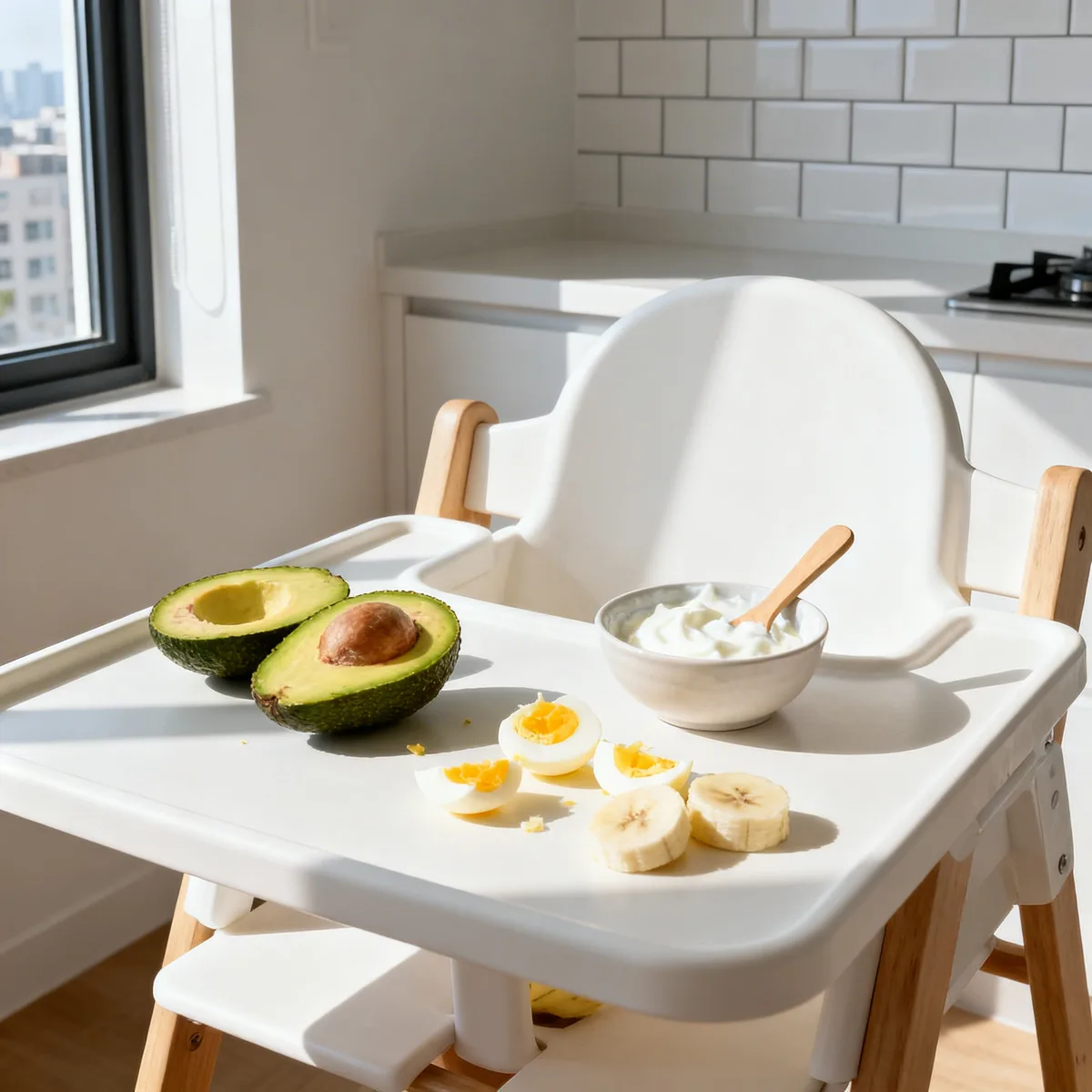
Soft finger foods that hold their shape — ripe avocado, small pieces of cooked sweet potato, soft-cooked pasta — are usually a good starting place. They’re easy to grip and gentle on gums.
This stage is messier. It’s slower. But it’s also the beginning of them actually enjoying food on their own terms — and that part is worth leaning into.
Here’s something nobody warns you about clearly enough: milk is filling. Really filling.
If your baby is still taking large bottles or long nursing sessions right before a meal, their stomach is already full. Of course they’re turning their head away from the spoon. They’re not being difficult — they’re just not hungry.
This is one of the most common reasons behind a baby refusing solids at 8 months, and it’s one of the easiest things to adjust once you see it.
The timing of milk feeds matters more than most people realize. Try offering solids about an hour to an hour and a half after a milk feed — not right after, not right before. That window is when they’re alert and comfortable, but not so hungry they’re already crying.
Volume is the other piece. At 8 months, milk is still the main nutrition source, so you’re not cutting feeds — you’re just being more deliberate about when they happen.
If you’re breastfeeding, shorter feeds before a meal can help. If you’re bottle feeding, dropping the volume slightly before a solid meal — even by an ounce — can make a real difference in how interested your baby is in what’s on their tray.
Watch for hunger cues before meals too. Reaching for food, watching you eat, opening their mouth — those are your green lights. A drowsy, just-fed baby is never going to be your best eater.
The goal right now isn’t replacing milk. It’s building a new rhythm — one where solids get a fair chance at a moment when your baby is actually ready to receive them.
Small shifts in timing often make a bigger difference than anything else you try.
Here’s the hard truth nobody warns you about: the more you push, the more they pull back.
When your baby is refusing solids at 8 months, the fear kicks in fast. You start hovering with the spoon. Doing the airplane. Sneaking in one more bite while they’re distracted. It comes from love — of course it does. But from where your baby sits, it feels like loss of control.

Babies are wired to resist force. It’s not defiance. It’s survival instinct. The moment feeding becomes a battle of wills, their nervous system is already on guard before the spoon even gets close.
Pressure at mealtimes — even gentle, well-meaning pressure — teaches your baby that the table is a stressful place. That association sticks. And it takes time to undo.
What actually helps is giving back control. Let them touch the food before they taste it. Put a piece on the tray and walk away. Eat something yourself and let them watch. You’re not being passive — you’re rebuilding trust.
This is called a division of responsibility in feeding: you decide what’s offered and when, your baby decides whether and how much. It sounds simple. Sitting through it when you’re worried is anything but.
The shift you’re looking for isn’t about trying harder. It’s about making the whole experience feel safe again — low stakes, no audience, no reaction when they refuse.
If the pressure spiral has been going on a while, give yourself grace too. The stress you’re carrying around mealtimes? Your baby can feel that. Letting go of the outcome — even a little — changes the energy in the room more than any new food strategy will.
And if anxiety around feeding is affecting more than just meals, it might be worth reading about postpartum hormones — sometimes what looks like a baby problem has roots in what’s happening in your own body.
Most of the time, a baby refusing solids at 8 months is a phase. It’s frustrating, but it’s normal. And then there are the times when something else is going on — and you need to know the difference.
Call your pediatrician if you notice any of these.
Allergic reactions: hives, swelling around the mouth, vomiting shortly after eating, or any trouble breathing. This is a call-now situation, not a wait-and-see.
Growth concerns: if your baby isn’t gaining weight as expected, or your doctor has flagged that they’re dropping percentiles, solids refusal becomes a medical conversation — not just a feeding strategy one.
Persistent gagging or retching — not the normal protective gagging reflex, but gagging on every texture, every time, even foods they’ve had before. That can point to oral sensory issues that a feeding therapist can actually help with.
Showing no interest in food at all, even watching others eat. At 8 months, curiosity about food is a developmental milestone. The AAP recommends introducing a variety of textures and flavors from around 6 months — by 8 months, some progression is expected.
Arching their back, crying, or seeming in pain during or after feeds. Reflux and food sensitivities can make eating genuinely uncomfortable. If mealtimes look like distress, not just dislike, that’s worth investigating.
Trust what you’re seeing. You’re with your baby every day. If something feels like more than a picky phase — if it feels like your baby is struggling — that instinct is worth following up on.
Your pediatrician isn’t there just for illness. Feeding concerns are exactly what they’re for. And if skin reactions are showing up around new foods, it’s also worth reading about baby eczema treatment — food introduction and skin flares can sometimes be connected.
Yes — it’s very common. Many 8-month-olds push food away due to lingering tongue thrust reflex, sensory preferences, or their emerging sense of autonomy. Most of the time, refusal is developmentally normal, not a sign of a problem.
At 8 months, solids are still supplementary. Most babies get the majority of calories from breast milk or formula (about 24-32 ounces daily), with solids gradually increasing — typically starting with 1-2 tablespoons and working up. Your pediatrician can give you personalized guidance based on your baby’s growth.
Start with foods your baby has already accepted, then vary texture and temperature gradually. Single-ingredient foods (iron-fortified cereals, soft fruits, mashed vegetables) are easier to introduce than mixed dishes. Some babies prefer room-temperature finger foods over warm purees — pay attention to what your baby gravitates toward.
Temporarily, yes — there’s no harm in pausing solids and trying again in a week or two if feeding feels like a battle. Around 8 months, some babies need more time. However, by 9-12 months, solids become increasingly important for iron and other nutrients, so persistent refusal is worth discussing with your pediatrician.
Not necessarily — but it depends on growth, milk intake, and overall development. If your baby is gaining weight well and meeting developmental milestones, slower solids progression is usually fine. If growth is plateauing or you notice signs of oral motor difficulty (gagging on everything, no lateral tongue movement, wet breathing), mention it to your doctor.